Product Introduction
Sodium Tripolyphosphate (STPP), also known as sodium triphosphate or pentasodium triphosphate, is a white, free-flowing phosphate salt with the formula Na₅P₃O₁₀ (CAS No. 7758-29-4). In food it is labeled E451(i). It dissolves readily in water and gives a mildly alkaline solution.
So what is sodium tripolyphosphate? In food processing, it is a multifunctional phosphate that helps meat, poultry and seafood hold moisture, keeps texture firm and juicy, and stabilizes emulsions. In industry, it works as a water softener, detergent builder and dispersant. This dual role is why sodium tripolyphosphate in food and in cleaning products is so widely used worldwide.
As a professional STPP supplier, manufacturer and exporter in China, WEHENGFOOD supplies food grade sodium tripolyphosphate and industrial grade (technical grade) STPP with stable quality and fast dissolving performance, even in ice-cold brine. We serve meat and seafood processors, detergent and ceramic manufacturers, and ingredient distributors, and we can also supply sodium hexametaphosphate and custom phosphate blends on request.
Certificate of Analysis
外观 Appearance | 白色粉末 White Powder | 白色粉末 White Powder | 合格 qualified | |||||
食品级三聚磷酸钠(Na5P3O10.),w/% Main Content(Na3PO4.) | ≥85.0 | 96.1 | 合格 qualified | |||||
总磷酸盐(以 P2O5计),w/ % Total phosphate ( P2O5) | 56.0-58.0 | 57.78 | 合格 qualified | |||||
氟化物(以F计),mg/kg Florid(F) | ≤20.0 | 6.8 | 合格 qualified | |||||
铅(Pb),mg/kg Lead(Pb) | ≤2.0 | 0.6 | 合格 qualified | |||||
砷(As),mg/kg Arsenic(As) | ≤3.0 | 0.2 | 合格 qualified | |||||
PH值(10g/L溶液) PH value in 10g/L solution | 9.1-10.1 | 10.1 | 合格 qualified | |||||
水不溶物,w/ % Water Insoluble Matters | ≤0.1 | 0.014 | 合格 qualified | |||||
重金属(以Pb计),mg/kg Lead(Pb) | ≤10.0 | <10 | 合格 qualified | |||||
结 论 Conclusion | 合 格 qualified | 检验单位:质检部Inspected by the QC Department | ||||||
备 注 Remarks | 保 质 期 两 年 Shelf Life:2 Years | |||||||
Functions of Sodium Tripolyphosphate in Food
- Water retention and yield improvement: STPP raises the water-holding capacity of muscle proteins, so less moisture is lost during soaking, cooking, freezing and thawing. The result is a better finished yield and less drip loss.
- Emulsion stability: It helps proteins bind fat and water into a smooth, stable emulsion, which keeps sausages and other emulsified meat products from fat separation and a greasy texture.
- Protein solubilization: STPP helps extract and dissolve salt-soluble myofibrillar proteins, which strengthens the gel network and gives a firmer, springier bite.
- Sequestering (chelating) effect: It binds metal ions such as calcium, magnesium and iron. This limits oxidation, protects color and flavor, and supports a longer shelf life.
- Texture, color and flavor: It leaves meat and seafood more tender and juicy, with a brighter, more even color and a cleaner taste after processing.
- Quality stability: By supporting a healthy pH and limiting oxidation, STPP works alongside salt, curing agents and cold-chain control to maintain product quality during storage.
Food Applications of Sodium Tripolyphosphate
Meat and Poultry Products
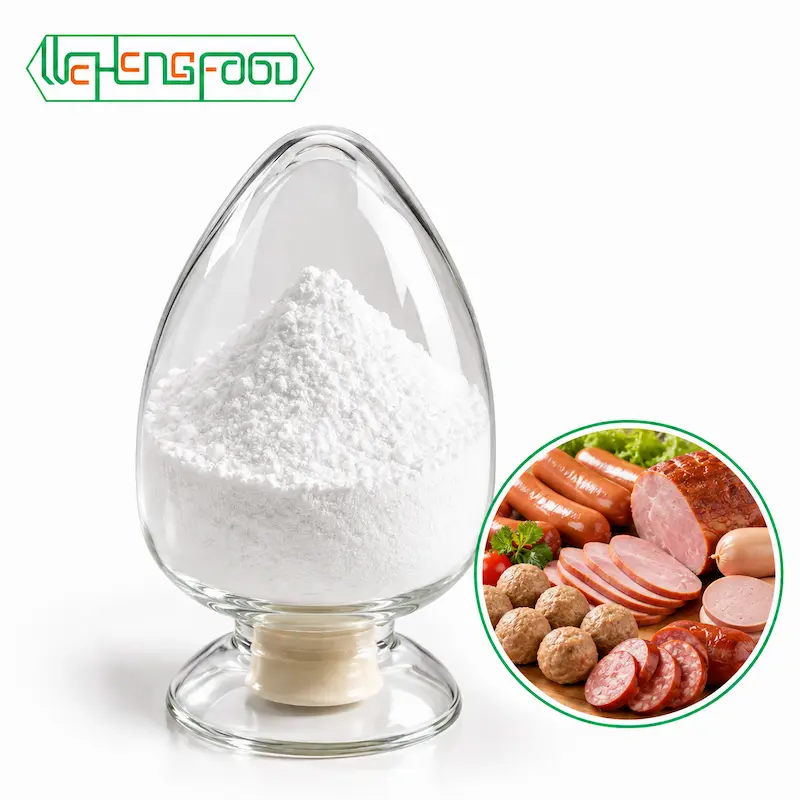
STPP is used in hamburger patties, ham, sausages, hot dogs, bacon, chicken nuggets and marinated meats. It improves binding, juiciness and slicing performance, and it reduces cooking loss.
Seafood Products
Seafood loses moisture quickly, oxidizes easily and can turn rancid in storage. A soak in STPP brine helps peeled shrimp, fish fillets and squid keep their natural juiciness and firm texture through freezing, thawing and cooking. Our food grade STPP dissolves quickly in ice-cold brine, which reduces clumping and makes good use of the dose. Typical applications include peeled shrimp, canned tuna and smoked fish.
Surimi and Fish Balls
It strengthens the gel and improves the elasticity of surimi-based products.
Other Foods
STPP is also used in processed cheese, instant noodles, some bakery products and pet food, where it acts as a buffering, emulsifying and texture-improving agent.
Usage note: The right dosage depends on the product type and on local food regulations. Please check the limits that apply in your market, or contact our team for formulation advice.
Industrial Uses of Sodium Tripolyphosphate (Technical Grade STPP)
Industrial grade sodium tripolyphosphate binds hard-water ions such as calcium and magnesium, and keeps fine particles evenly suspended. These two properties make it useful in many sectors:
- Detergents and Cleaning Products: The largest industrial use. In laundry powder, dishwashing products and industrial cleaners, STPP acts as a builder. It softens water, disperses dirt so it does not redeposit, and keeps the wash liquid stably alkaline. It is often formulated with sodium carbonate and surfactants.
- Ceramics and Tiles: As a deflocculant (dispersant) in ceramic slurry, it lowers viscosity so less water is needed. This means faster drying, lower energy use and fewer defects in tiles, sanitaryware and porcelain.
- Water Treatment: It controls scale and softens water in boilers, cooling circuits and pipelines by binding the ions that form deposits.
- Paper and Pulp: It serves as a dispersant for pigments and fillers in paper coatings, and supports some pulp bleaching and deinking processes.
- Textiles and Dyeing: In scouring and dyeing, it softens process water and helps dyes spread evenly for a more uniform color.
- Paints, Coatings and Pigments: It keeps solid particles stable in water-based paints and coatings, improving color consistency and storage stability.
- Oil Drilling and Mineral Processing: It helps control viscosity in drilling fluids and acts as a dispersant or depressant in ore separation.
- Leather and Metal Surface Treatment: It is used as a processing auxiliary in tanning and in some metal cleaning and degreasing formulations.
Factory
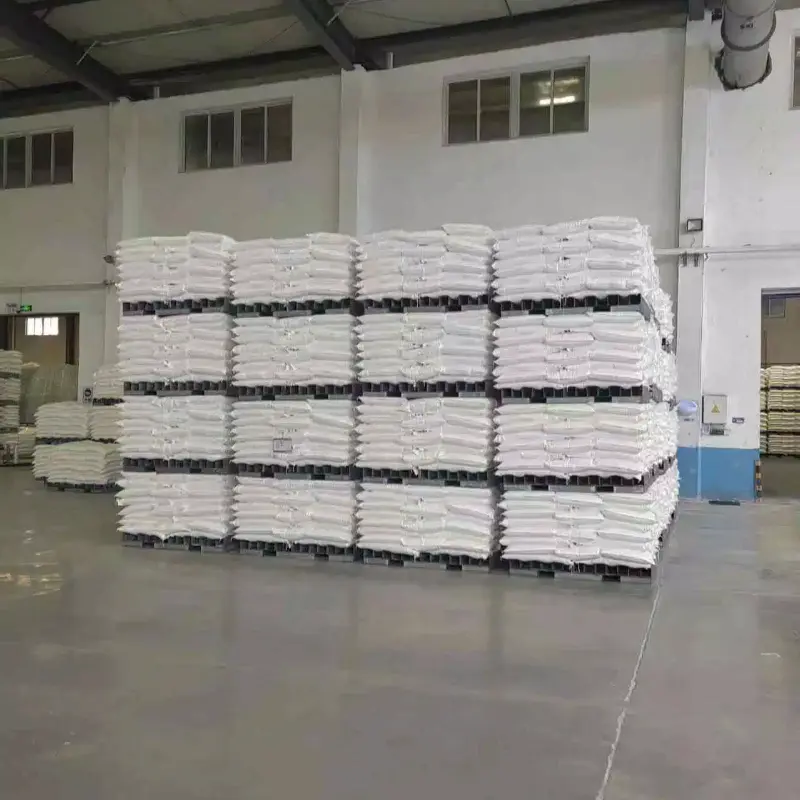
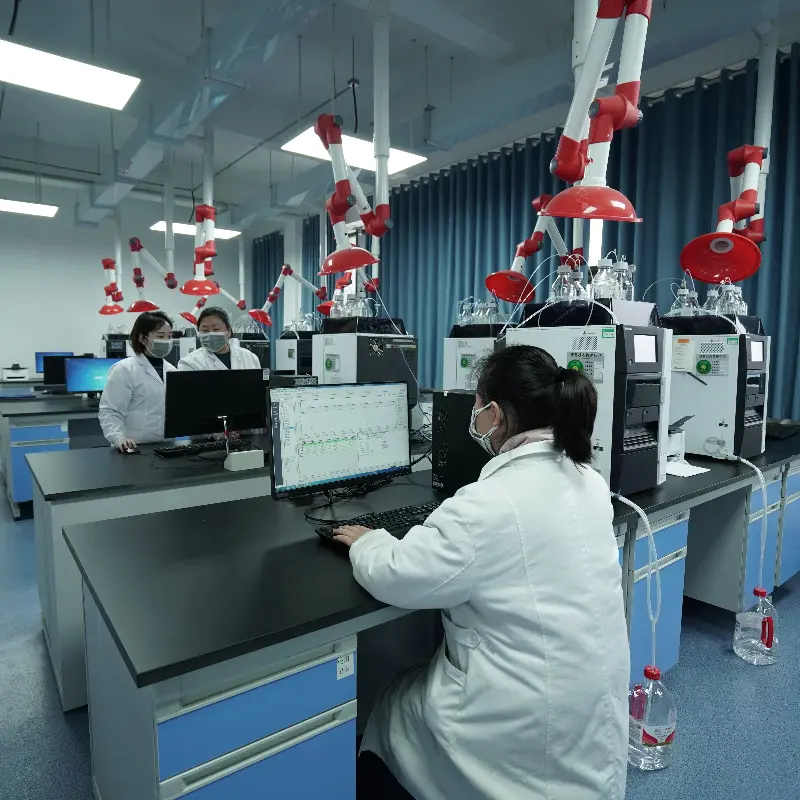
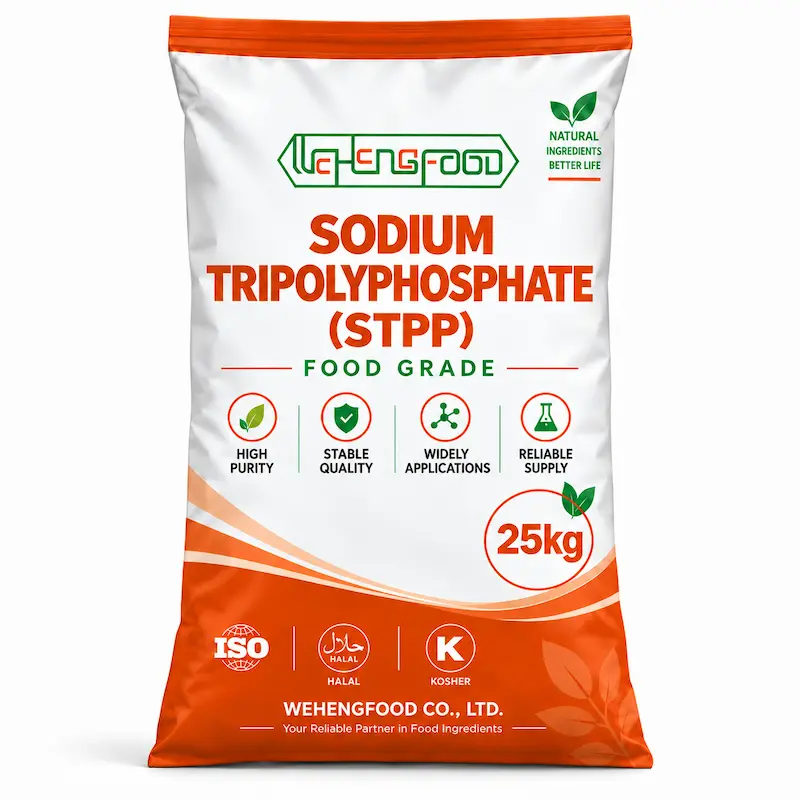
Package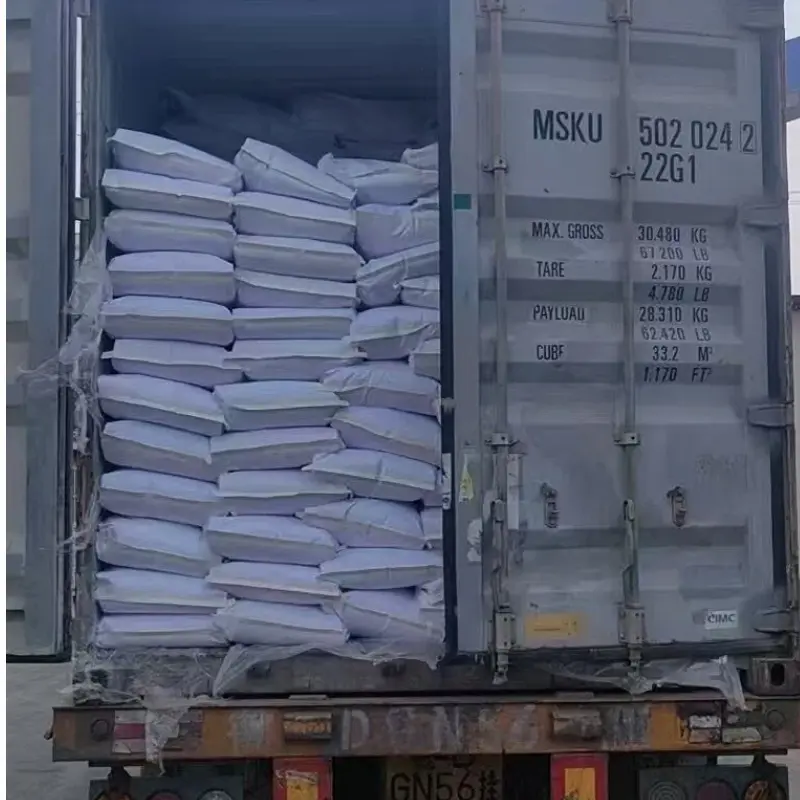
Exhibitions

FAQ
Q1: What is sodium tripolyphosphate (STPP), and is it the same as E451?
STPP is a phosphate salt (Na₅P₃O₁₀) used to retain moisture and improve texture in meat and seafood, and as a builder and dispersant in industry. In food it is the E451(i) form of the E451 group (triphosphates). Pentasodium triphosphate is another name for the same compound.
Q2: What is sodium tripolyphosphate used for in food?
It improves water retention, yield, tenderness and emulsion stability in ham, sausages, burgers, hot dogs, peeled shrimp, canned tuna and smoked fish. It also chelates metal ions, which helps protect color and flavor.
Q3: What is the difference between sodium tripolyphosphate and sodium hexametaphosphate?
Both are phosphates, but they behave differently. STPP is the standard choice for water retention and texture in meat and seafood. Sodium hexametaphosphate (SHMP) has stronger metal-binding power and is often used for stabilization and sequestration. Many processors combine the two in blends.
Q4: What is industrial grade sodium tripolyphosphate used for?
It is mainly used as a detergent builder. It is also used as a dispersant in ceramics, paints and paper coatings, and as a water softener and scale inhibitor in water treatment, textiles and mineral processing.
Q5: Is sodium tripolyphosphate safe in food, and how is it added?
STPP is an approved food additive in many countries when used within legal limits, so please follow the rules of your destination market. It is usually dissolved in cold water or brine for soaking, injection or tumbling, or mixed directly into minced meat for sausages and patties.
Q6: Are you a manufacturer or a trading company, and how can I get a quote?
WEHENGFOOD is a China STPP manufacturer, supplier and exporter, offering both food grade and industrial grade. Email nancy@wehengfood.com or use the WhatsApp button for specifications, samples and pricing.