
Papain Enzyme Tenderizer for Beef Tripe: A Biological Alternative to Alkali Soaking
WEHENGFOOD supplies bulk food-grade Papain enzyme tenderizer for hotpot, BBQ, and processed-meat manufacturers. For product specifications, samples, pricing, or bulk orders, please contact us at nancy@wehengfood.com.
Beef tripe, duck intestine, and tough cuts of beef are some of the biggest traffic-drivers on a hotpot or BBQ menu — and some of the easiest dishes to get wrong. Old beef is dense and chewy enough to draw complaints after a single bite. Tripe processed with traditional lye (sodium hydroxide) soaking swings between two failure modes: either it turns soft and slimy, or it stays tough and turns rubbery the moment it hits the hotpot broth. Duck intestine shrinks and stiffens in storage, driving up prep loss and making supply planning unpredictable. Food-grade papain, a plant-derived proteolytic enzyme, is built to solve exactly this class of problem: it breaks down the tough connective tissue and muscle fiber that make these cuts difficult, without the food-safety exposure or the yield loss that comes with chemical soaking.
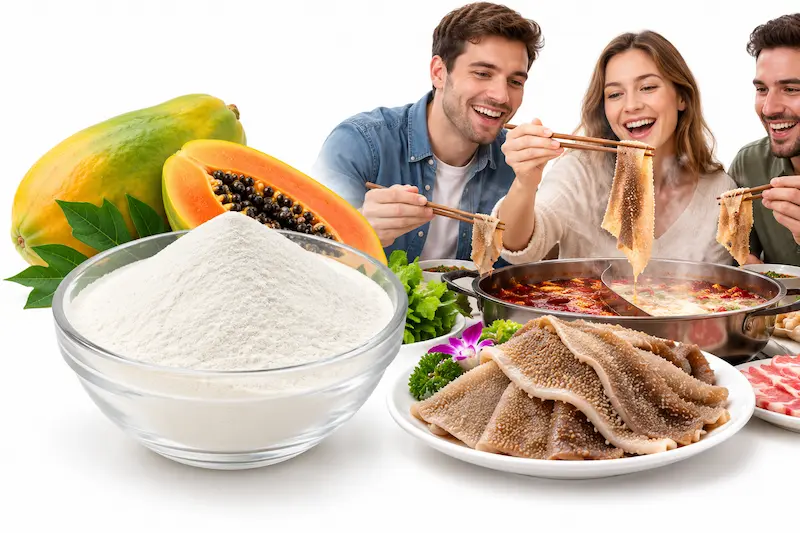
What Is Papain and Why Hotpot Kitchens Use It
A Proteolytic Enzyme Purpose-Built for Tough Cuts
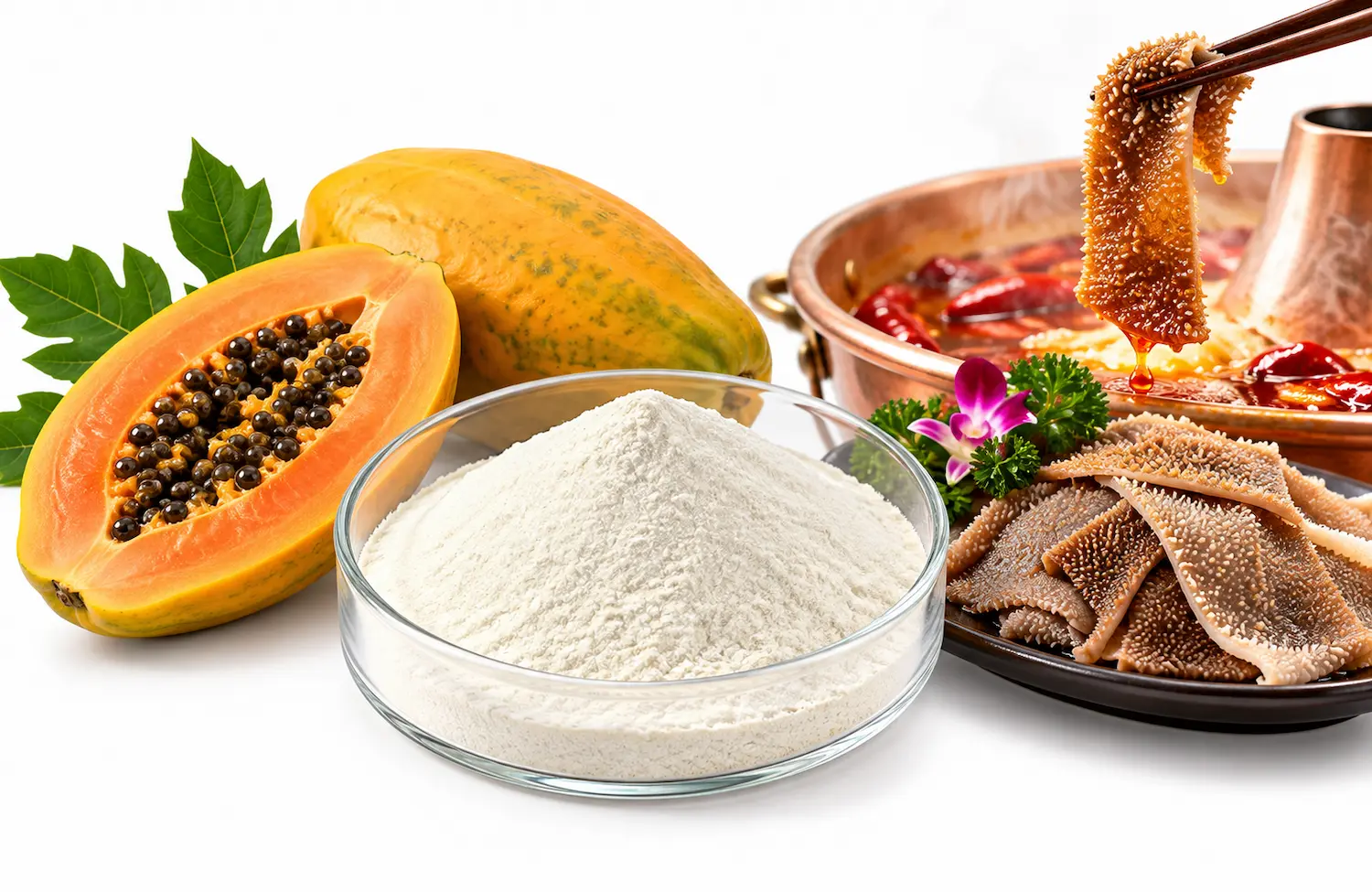
Papain is a cysteine protease extracted from papaya, long used in the food industry as a natural meat tenderizer. Unlike alkali soaking, which works by chemically swelling and partially dissolving muscle tissue, papain works enzymatically: it targets and cleaves the peptide bonds within the collagen and myofibrillar protein networks that make connective tissue tough, loosening the fiber structure while leaving the meat's own cell structure largely intact. That distinction is what allows papain-treated tripe, intestine, and beef to come out tender without the sliminess, excess shrinkage, or inconsistent bite that alkali processing is known for.
For a hotpot or BBQ operator, papain is also operationally simpler: a single food-grade enzyme preparation can be used across beef tripe, beef tripe (百叶/omasum), duck intestine, and various beef cuts, without having to stock and manage multiple chemical soaking agents in the back-of-house.
Alkali (Lye) Soaking
Chemically swells and partially dissolves muscle fiber; fast but hard to control, and prone to over-softening, over-hardening, and heavy shrinkage on reheating.Papain Enzyme Tenderizing
Enzymatically cleaves tough connective tissue and muscle fiber; controllable dose and time, higher yield, and a texture that holds up through repeated hotpot boiling.The Problem With Alkali (Lye) Soaking
Beef tripe, duck intestine, and beef are usually the highest-traffic, highest-margin items on a hotpot menu — which is also what makes their processing failures so costly. Old beef with dense connective tissue turns chewy and draws complaints. Lye-soaked tripe tends to land at one of two extremes: soft and slimy, or dry and stiff, and either way it toughens up quickly once it goes into the pot. Duck intestine shrinks and hardens in storage, which drives up prep loss and makes it harder to plan stock consistently.
Two figures are worth calling out. First, chemical soaking with lye or hydrogen peroxide can shrink finished yield by 45% or more, meaning a large share of the raw material purchased never reaches the plate. Second, both agents carry a residue risk: if a sampling inspection turns up excess residual lye or peroxide, the restaurant is directly exposed to a compliance penalty. A dish meant to draw customers in ends up creating operational risk instead.
How Papain Tenderizes Meat
Food-grade papain formulated for hotpot and BBQ use is designed to work directly on beef tripe, beef tripe/omasum, duck intestine, and beef, generally without needing to be combined with several additional processing aids — which simplifies back-of-house ingredient management. The enzyme is applied as a brief soak or rub, then rinsed before cooking; because it acts enzymatically rather than chemically, the dose and contact time can be tuned to the cut and the desired firmness.
Performance Data: Speed, Yield, Texture
Compared with a multi-hour or overnight lye-soak process, papain treatment is built for the pace of a working kitchen:
| Metric | Alkali (Lye) Soaking | Papain Enzyme Tenderizing |
|---|---|---|
| Tenderizing time | Extended soak, often batch-dependent and hard to standardize | As fast as 2 minutes for tripe and duck intestine |
| Finished yield | Shrinkage of 45%+ is common | Up to 22% higher yield than alkali processing |
| Texture after reheating | Prone to further toughening or excess softness on repeated boiling | Holds a crisp, springy bite (tripe) or tender chew (beef) through repeated hotpot boiling |
| Chemical residue risk | Residual lye/peroxide is a recurring compliance concern | No lye or peroxide involved in the tenderizing step |
| Flavor retention | Native meat flavor is partially washed out or altered | Original meat flavor is largely preserved |
Because papain works by targeted enzymatic action rather than by dissolving tissue outright, it also locks in more of the ingredient's original flavor: tripe stays crisp, beef turns tender rather than mushy, and duck intestine keeps its bite through repeated boiling — the combination hotpot diners are actually judging the dish on.
Papain vs Alkali Treatment for Hotpot Ingredients
The two approaches solve the "tough meat" problem through entirely different mechanisms, and the difference shows up directly in food-safety exposure and bottom-line yield:
| Factor | Alkali / Peroxide Soaking | Papain Enzyme Treatment |
|---|---|---|
| Mechanism | Chemical swelling / partial dissolution of tissue | Enzymatic cleavage of connective tissue and muscle fiber |
| Process control | Narrow window between under- and over-treatment | Dose and time can be tuned to cut and target texture |
| Regulatory exposure | Residue limits apply; repeat inspection risk | No lye/peroxide residue exposure from this step |
| Cost impact | Lower material cost, but high shrinkage erodes it | Comparable cost base with materially higher usable yield |
| Ingredient scope | Typically ingredient-specific dosing | One preparation adaptable across tripe, intestine, and beef |
Application Guide by Ingredient
Papain's dosing and contact time are adjusted by cut, but the underlying process is consistent across a hotpot or BBQ menu:
Beef Tripe & Beef Tripe (Omasum): a short papain treatment — around 2 minutes in a typical back-of-house setup — replaces multi-step lye processing, producing tripe that stays crisp rather than sliding into sliminess or excess firmness.
Duck Intestine: because duck intestine is thin and prone to shrinking in storage, papain treatment is dosed conservatively to loosen the tissue just enough to reduce prep loss without over-softening the casing.
Beef (Various Cuts): for denser, older beef cuts with heavy connective tissue, papain breaks down the tough fibers that would otherwise require long braising, delivering a softer chew while keeping the cut suitable for quick hotpot cooking.
Specifications: What to Check on a COA
A food-grade papain batch intended for meat tenderizing should come with a certificate of analysis covering at least the following parameters:
| Parameter | Typical Specification |
|---|---|
| Enzyme activity | Grade-dependent, expressed in U/mg or U/g |
| Appearance | Off-white to light yellow powder |
| Moisture | ≤ 8% |
| Heavy metals | Within food-grade enzyme limits |
| Microbiological limits | Meets food-grade enzyme preparation standards |
| Solubility | Readily soluble in water for soak/rub application |
Enzyme activity is the key process-control number for kitchen use: it determines the dose and contact time needed for a given cut, and it should be confirmed batch-to-batch if you are matching an existing house recipe.
Supplier & Sourcing Insights for Bulk Procurement
Consistent texture across dining rooms and shifts depends as much on supplier process control as on the spec sheet itself.
| Supplier Attribute | What to Verify | WEHENGFOOD Standard |
|---|---|---|
| Activity Consistency | Batch-specific COA with confirmed enzyme activity | COA provided with every shipment |
| Formulation Simplicity | Single preparation usable across tripe, intestine, and beef | One food-grade papain preparation for multiple cuts |
| Moisture Control | Dry, sealed packaging to prevent activity loss in transit | Moisture held at or below spec, moisture-resistant packaging |
| Minimum Order Quantity | Flexibility for trial batches vs. full-container runs | Trial orders available up to full 20' FCL bulk supply |
| Technical Support | Dosing guidance matched to your existing menu items | Dedicated technical support for dose and process matching |
Conclusion
Beef tripe, duck intestine, and beef are the dishes that bring diners back to a hotpot restaurant — and the ones most exposed when processing goes wrong. Alkali soaking solves the "tough meat" problem at the cost of yield, consistency, and residue-compliance risk. Food-grade papain solves the same problem enzymatically: a short, controllable treatment that tenderizes in roughly 2 minutes, lifts finished yield by up to 22% over alkali processing, and preserves the ingredient's own flavor and bite through repeated boiling. For an operator, that combination turns a recurring back-of-house headache into a differentiator on the menu — without raising menu prices to protect margin.
FAQ
Does papain change the flavor of beef tripe or beef the way alkali soaking does?
No — because papain works enzymatically on connective tissue and muscle fiber rather than chemically swelling or partially dissolving the meat, it preserves more of the ingredient's original flavor. Alkali-treated tripe and beef commonly lose native flavor and shrink further once they're reheated in the pot.
Can one papain preparation be used across tripe, duck intestine, and beef?
Yes — food-grade papain formulated for hotpot and BBQ use is designed to work across these cuts without combining several separate processing aids, which simplifies back-of-house inventory. Dose and contact time are still adjusted per cut, since thinner items such as duck intestine tenderize faster than a dense beef cut.
How much yield improvement can a restaurant actually expect versus alkali processing?
In comparative kitchen use, papain treatment has shown up to 22% higher finished yield than alkali processing, versus a shrinkage rate that can reach 45% or more under lye or hydrogen peroxide soaking. Exact gains vary by cut, raw material quality, and process control.
Source Food-Grade Papain in Bulk
WEHENGFOOD supplies COA-verified Papain enzyme tenderizer for hotpot, BBQ, and processed-meat manufacturers, with consistent enzyme activity, controlled moisture, and flexible order quantities from trial batches to full-container bulk supply. Our team can help match your current tripe, duck intestine, or beef processing recipe.
Request a Free Sample & QuoteReferences
- Bhat, Z. F., Morton, J. D., Mason, S. L., & Bekhit, A. E. A. Applied and emerging methods for meat tenderization: a comparative perspective. Comprehensive Reviews in Food Science and Food Safety, 2018.
- Naveena, B. M., et al. Effect of papain and ginger extract on the tenderness and quality of tough meat cuts. Meat Science, 2004.
- Ha, M., Bekhit, A. E. A., Carne, A., & Hopkins, D. L. Characterisation of commercial papain, bromelain, actinidin, and zingibain protease preparations for meat tenderisation. Food Chemistry, 2012.
- Codex Alimentarius / JECFA. Compendium of food additive specifications: papain (enzyme preparations for food use).
- Food industry technical guidance on organ-meat and offal processing: alkali/peroxide soaking versus enzymatic tenderization for tripe and intestine products, industry trade literature.