
How to Choose Tomato Paste: Cold Break vs Hot Break, Brix, a/b Value & Buying Guide
WEHENGFOOD supplies bulk food-grade Tomato Paste for ketchup, pasta sauce, pizza sauce, soup, and ready-meal manufacturers. For product specifications, samples, pricing, or bulk orders, please contact us at nancy@wehengfood.com.
Two tins of tomato paste can both say "double concentrated" and still behave completely differently in your sauce: one pours thin and tastes fresh, the other stands up on the spoon and reads dark and cooked. The difference is rarely on the front label. It comes from how the tomatoes were broken, how far they were concentrated, and how gently the paste was handled afterward, which is why searches such as "best tomato paste" and "tomato paste price" keep climbing while buyers still struggle to compare products. This guide explains what tomato paste is, how cold break and hot break differ, how to read Brix and the Hunter a/b color value, and what to put on a COA before you buy in bulk.
What Is Tomato Paste?
From Fresh Tomato to Concentrate
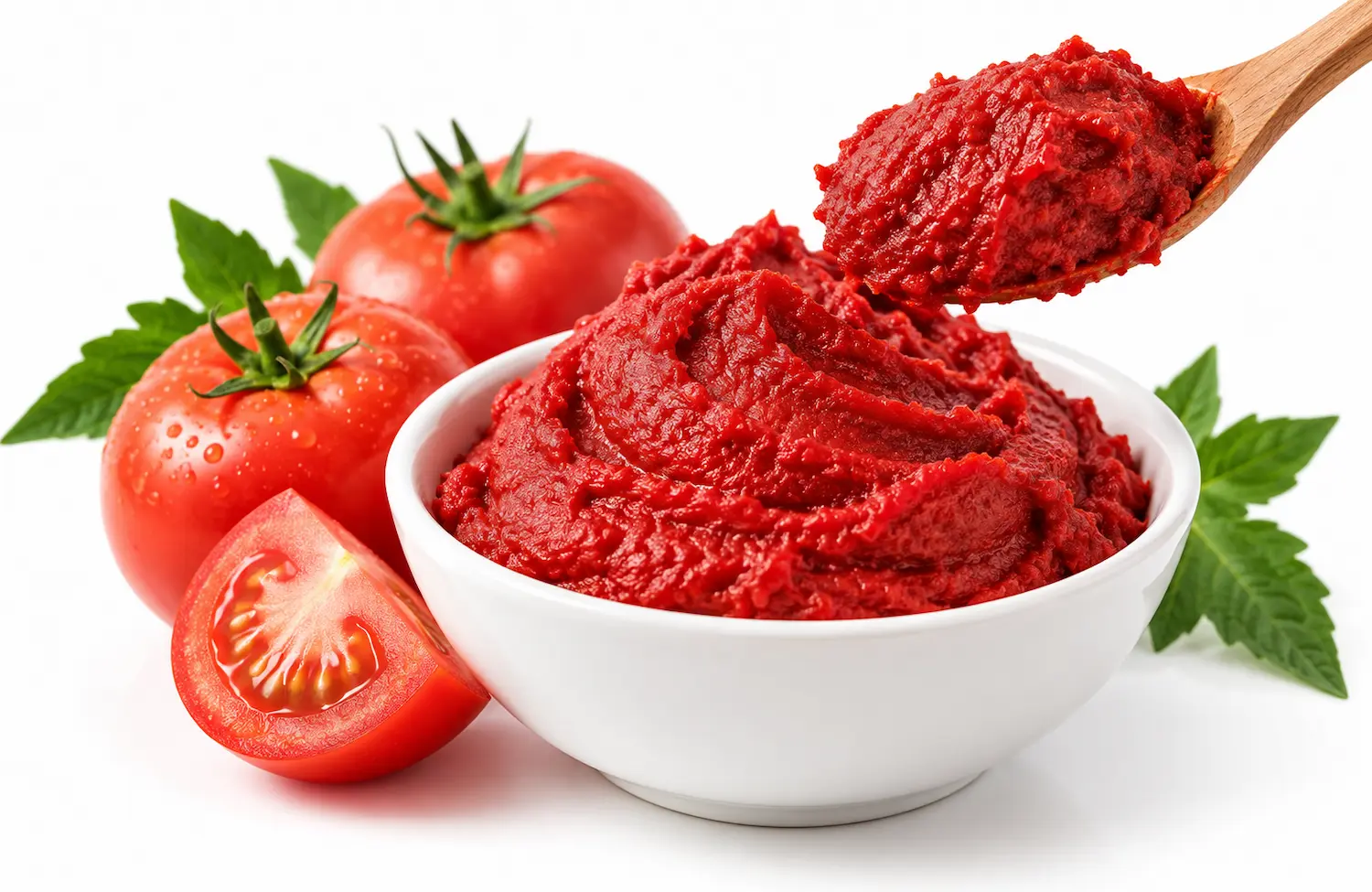
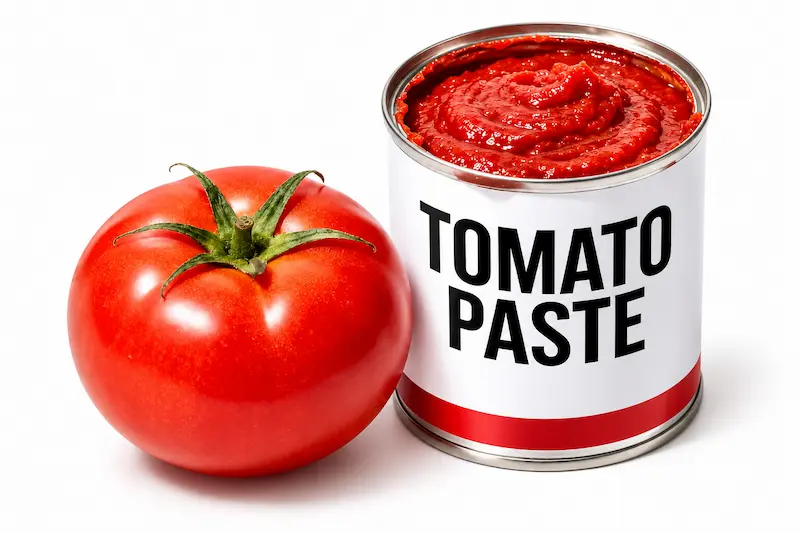
Tomato paste is fresh tomato that has been crushed, strained of skins and seeds, and evaporated under vacuum until most of its water is gone. What remains is a dense, deep-red concentrate, and "tomato paste ingredients" on a clean label should read simply: tomatoes, sometimes with a little salt or citric acid. In the United States, a product sold as tomato paste must contain at least 24% natural tomato soluble solids[3], while the international Codex standard for processed tomato concentrates sets its own minimum solids by category[4]. Industrial buyers typically work with much higher figures, usually 28–30% or 36–38%.
Because it is so concentrated, paste carries the flavor, color, and body of far more fresh fruit than its weight suggests, which is why it sits at the base of ketchup, pizza sauce, pasta sauce, soup, and braised dishes. Nutritionally, plain tomato paste is low in fat and sugar-dense only because water has been removed: about 82 kcal per 100 g, which works out to roughly 13 kcal per tablespoon[5].
Tomato Paste vs Tomato Sauce vs Puree vs Passata
Searches like "tomato paste vs tomato sauce" and "tomato puree vs tomato paste" are among the most common in this category, and the answer is mostly about how much water is left:
| Product | Typical Solids (Brix) | Texture | Typical Use |
|---|---|---|---|
| Tomato paste | 24%–40% | Very thick, spoonable | Base for sauces, ketchup, soups, and stews |
| Tomato puree | About 8%–24% | Thick, smooth liquid | Sauces and soups needing body without full concentration |
| Passata | About 5%–8% | Strained, pourable | Pasta sauces, quick pizza bases |
| Tomato sauce | About 8%–12%, often seasoned | Thin to medium | Ready-to-use sauce |
How Tomato Paste Is Made
Industrial tomato paste is made during a short harvest window and packed aseptically so it can be shipped and used all year. A typical production line follows this sequence:
| Step | What Happens |
|---|---|
| 1. Reception & sorting | Ripe tomatoes are washed and sorted to remove green, damaged, or moldy fruit, which directly affects color and mold count. |
| 2. Crushing & break | Fruit is crushed and heated either quickly (hot break) or at a lower temperature (cold break). This step sets the paste's viscosity and flavor profile. |
| 3. Pulping & refining | The crushed mass passes through screens that remove skins and seeds and leave a smooth juice-and-pulp stream. |
| 4. Evaporation | Water is removed under vacuum, usually in multi-stage evaporators, until the target Brix is reached. Low temperature and short residence time protect color. |
| 5. Deaeration & sterilization | The concentrate is deaerated and heat-sterilized so it is commercially sterile without damaging color or flavor. |
| 6. Aseptic filling | The paste is filled hot or cooled into sterile aseptic bags in drums, or into cans, tubes, or sachets for retail and foodservice. |
Cold Break vs Hot Break Tomato Paste
Fresh tomatoes contain enzymes, mainly pectin methylesterase and polygalacturonase, that break down pectin once the cells are crushed. Whether you let them work or stop them immediately is the core difference between the two processes[1].
Hot Break
Crushed fruit is heated rapidly to roughly 85–95°C, which inactivates the enzymes and preserves pectin. The result is a thicker, higher-viscosity paste with a more "cooked tomato" flavor.Cold Break
Crushed fruit is held at roughly 60–70°C, so the enzymes act briefly before the mass is heated further. The result is a thinner, easier-pumping paste with a fresher, brighter tomato flavor[1][6].| Attribute | Hot Break | Cold Break |
|---|---|---|
| Break temperature | About 85–95°C | About 60–70°C |
| Pectin & consistency | Pectin retained; high viscosity | Pectin partly degraded; lower viscosity |
| Bostwick flow (diluted sample) | Shorter flow (thicker) | Longer flow (thinner) |
| Flavor | Cooked, rounded, deeper tomato note | Fresher, brighter, closer to raw tomato |
| Best for | Ketchup, thick sauces, pizza sauce, long-cooked dishes | Juices, soups, light sauces, applications that need a pumpable concentrate |
A simple rule of thumb: if the finished product must be thick at a given solids level, such as ketchup or pizza sauce, hot break gives you more body for the same amount of paste. If you want freshness or an easy-flowing concentrate, cold break is usually the better fit. Neither is "better"; each is correct for a different recipe.
Brix: What "Double Concentrated" Really Means
Brix is the percentage of soluble solids in the paste, and it is the first number to compare when judging price and strength. Terms such as "double concentrated tomato paste" and "triple concentrated" are common on retail packs, but they are not strictly standardized, so always read the actual Brix:
| Common Trade Term | Typical Brix | Typical Use |
|---|---|---|
| Standard paste (28–30) | 28%–30% | Ketchup, sauces, soups; the usual bulk reference grade |
| Medium (30–32) | 30%–32% | Sauces needing slightly more body per kilogram |
| Triple concentrated (36–38 / 36–40) | 36%–40% | Tube paste, small retail packs, high-yield sauce bases |
a/b Value: Reading Tomato Paste Color
Color is measured with a Hunter Lab colorimeter. a reads redness, b reads yellowness, and the a/b ratio summarizes how red the paste looks. A higher ratio means a deeper red; a falling ratio shifts the paste toward orange and brown. Many buyers set a minimum around 1.9–2.0 and look for 2.0–2.3 on premium lots, though the exact target should come from your own specification and test method.
| a/b Range (indicative) | What It Usually Means | Buyer Takeaway |
|---|---|---|
| 2.0 and above | Deep, vivid red; well-preserved lycopene | Premium; suited to pizza sauce and retail-facing products |
| 1.8–2.0 | Good commercial red | Acceptable for most sauces and ketchup |
| Below 1.8 | Duller, browner, more heat damage | Check raw fruit ripeness, evaporation conditions, and storage |
Color is lost three ways: unripe or overripe fruit, long exposure to heat during evaporation, and warm storage after packing. That is why a/b should be read together with the production date and storage conditions, and not treated as a standalone quality number.
Specifications: What to Check on a COA
A bulk tomato paste batch should ship with a certificate of analysis covering at least the following parameters. Values below are typical industry ranges; agree final limits with your supplier:
| Parameter | Typical Specification |
|---|---|
| Brix (soluble solids) | 28–30%, 30–32%, or 36–38% (grade-dependent) |
| Break type | Hot break or cold break, stated on the COA |
| Color a/b (Hunter) | ≥ 1.9–2.0 (premium lots 2.0–2.3) |
| Consistency (Bostwick) | Measured at a standard diluted Brix; agreed range per application |
| pH | About 4.0–4.5 |
| Howard mold count | Within buyer limit, commonly ≤ 40% positive fields[7] |
| Black specks / defects | Counted on a standard sample; agreed limit per buyer |
| Microbiology | Commercially sterile |
Bostwick consistency is the one most often overlooked: it is a flow distance over a fixed time, so a lower reading means a thicker paste. Two pastes at the same Brix can differ widely in Bostwick depending on break type, which is why ketchup producers ask for it by name.
Choosing Tomato Paste by Application
Start from the finished product and work backwards. The ranges below are working starting points for paste addition; final levels depend on your target solids, recipe, and desired color:
| Application | Suggested Break Type | Suggested Brix | Typical Paste Level |
|---|---|---|---|
| Ketchup | Hot break | 28–30% | About 20%–35% of formulation |
| Pizza sauce | Hot break | 28–32% | About 20%–30% |
| Pasta sauce | Hot or cold break | 28–30% | About 10%–25% |
| Soups & ready meals | Cold break | 28–30% | About 3%–10% |
| Tube / sachet retail paste | Hot break | 36–40% | Packed directly |
If you are sourcing for one of these applications and want a grade matched to your recipe, our tomato paste page lists the available specifications.
Packaging, Storage & Shelf Life
Packaging determines how long the paste keeps its color and what it costs to handle:
- Aseptic bags in drums: the standard format for industrial supply, usually around 200–220 kg per drum, suited to ketchup and sauce plants.
- Cans: from small retail cans to large foodservice sizes. "Tomato paste can" is the most-searched format worldwide, so it is also the one consumers know best.
- Tubes and sachets: concentrated, resealable or single-use formats for retail and catering, usually 36–40% Brix.
Store unopened paste cool, dry, and out of direct sunlight; heat is the main cause of browning and a falling a/b value over time. Once opened, transfer canned paste to a sealed, non-metal container and refrigerate it: it keeps about 5–7 days. For longer storage, freeze it in tablespoon portions. Tube paste keeps longer in the refrigerator after opening because less surface is exposed to air.
What Drives Tomato Paste Price
"Tomato paste price" is one of the fastest-growing searches in this category, and the number on a quote is the sum of several variables, not one:
| Price Driver | Why It Matters |
|---|---|
| Brix | Higher Brix means more tomato per kilogram, so a higher unit price but lower cost per unit of solids. |
| Break type & consistency | Hot break yields a thicker paste for the same solids, which can reduce how much you need in thick sauces. |
| Color (a/b) & defects | Higher a/b and lower specks and mold count require better raw fruit and tighter process control. |
| Harvest & crop year | Raw tomato price and yield vary by season and region, and flow straight through to paste. |
| Packaging | Aseptic drum is cheapest per kilogram; cans, tubes, and sachets add packaging and filling cost. |
| Organic & certification | Organic tomato paste, which has seen strong recent search growth, costs more because of fruit sourcing and certification. |
| Freight & incoterms | Container loading, destination port, and payment terms change landed cost significantly. |
Supplier & Sourcing Insights for Bulk Procurement
Consistent paste from one shipment to the next depends as much on supplier process control as on the spec sheet.
| Supplier Attribute | What to Verify | WEHENGFOOD Standard |
|---|---|---|
| Batch COA | Brix, break type, a/b, Bostwick, pH, mold count, and defects per lot | COA provided with every shipment |
| Process Documentation | Evaporation conditions, sterilization, and aseptic filling records | Process records available on request |
| Color Retention | Production date and storage guidance to protect a/b value in transit | Packed and stored to limit heat exposure |
| Minimum Order Quantity | Flexibility for trial lots vs. full-container runs | Trial orders available up to full 20' FCL bulk supply |
| Technical Support | Grade recommendation matched to your recipe or existing paste | Dedicated technical support for specification matching |
Conclusion
Choosing tomato paste comes down to four decisions made in the right order: the break type that suits your product's texture, the Brix that suits your dilution and budget, an a/b color target that matches how your finished product should look, and a COA that documents all of them for every lot. Hot break builds body, cold break keeps freshness, higher Brix lowers cost per unit of solids, and a/b tells you how well the color survived processing and storage. Working with a supplier that states these values on every shipment, and can match them to your recipe, is what keeps your sauce consistent at scale.
FAQ
What is the difference between cold break and hot break tomato paste?
Hot break tomatoes are heated quickly to about 85–95°C right after crushing, which inactivates pectin-degrading enzymes and gives a thicker paste. Cold break tomatoes are crushed at about 60–70°C, so the enzymes stay active briefly and the paste is thinner with a fresher flavor.
What a/b value should good tomato paste have?
a/b is the ratio of Hunter redness (a) to yellowness (b); higher means a deeper red. Many buyers specify roughly 1.9–2.0 as a minimum and look for 2.0–2.3 on premium lots, but the exact target should be agreed in your own specification and test method.
What does double concentrated tomato paste mean?
The term is not strictly standardized. Double concentrated usually means about 28–30% Brix and triple concentrated about 36–40% Brix, so always confirm the actual Brix on the label or COA.
How do I convert tomato paste to tomato sauce?
Mix 1 part 28–30% Brix tomato paste with about 2–3 parts water, which gives roughly 7.5–10% Brix, then season and simmer to taste. Use less water for a thicker sauce and more for a lighter one.
What can I substitute for tomato paste?
Reduce tomato puree, passata, or tomato sauce by simmering until thick. As a rough guide, about 3 tablespoons of tomato sauce reduces to replace 1 tablespoon of paste, though flavor and color will be lighter than with true concentrate.
How long does tomato paste last in the fridge?
Opened canned tomato paste keeps about 5–7 days in a sealed non-metal container in the refrigerator. For longer storage, freeze it in tablespoon portions; tube paste generally lasts longer after opening because less of it is exposed to air.
Source Tomato Paste in Bulk
WEHENGFOOD supplies COA-verified Tomato Paste for ketchup, sauce, pizza, and soup manufacturers, with batch-specific Brix, color, and consistency data and flexible order quantities from trial lots to full-container bulk supply. Tell us your target break type, Brix, and a/b value, and our team can help match a grade to your recipe.
Request a Free Sample & QuoteReferences
- Barrett, D. M., Garcia, E., & Wayne, J. E. (1998). Textural modification of processed tomatoes. Critical Reviews in Food Science and Nutrition, 38(3), 173–258.
- Gould, W. A. (1992). Tomato Production, Processing and Technology (3rd ed.). CTI Publications.
- U.S. Food & Drug Administration. 21 CFR 155.191, Tomato concentrates. Code of Federal Regulations.
- Codex Alimentarius. CXS 57-1981, Standard for Processed Tomato Concentrates. FAO/WHO.
- U.S. Department of Agriculture. FoodData Central: Tomato products, canned, paste, without salt added. fdc.nal.usda.gov.
- Hayes, W. A., Smith, P. G., & Morris, A. E. J. (1998). The production and quality of tomato concentrates. Critical Reviews in Food Science and Nutrition, 38(7), 537–564.
- AOAC International. Official Method 965.41, Howard mold count in tomato products. Official Methods of Analysis.