
Acid-Treated Starch for Gummy Candy: Production Process, Function & Dosage Guide
WEHENGFOOD supplies bulk food-grade Acid-Treated Starch for gummy, jelly, and starch-based candy manufacturers. For product specifications, samples, pricing, or bulk orders, please contact us at nancy@wehengfood.com.
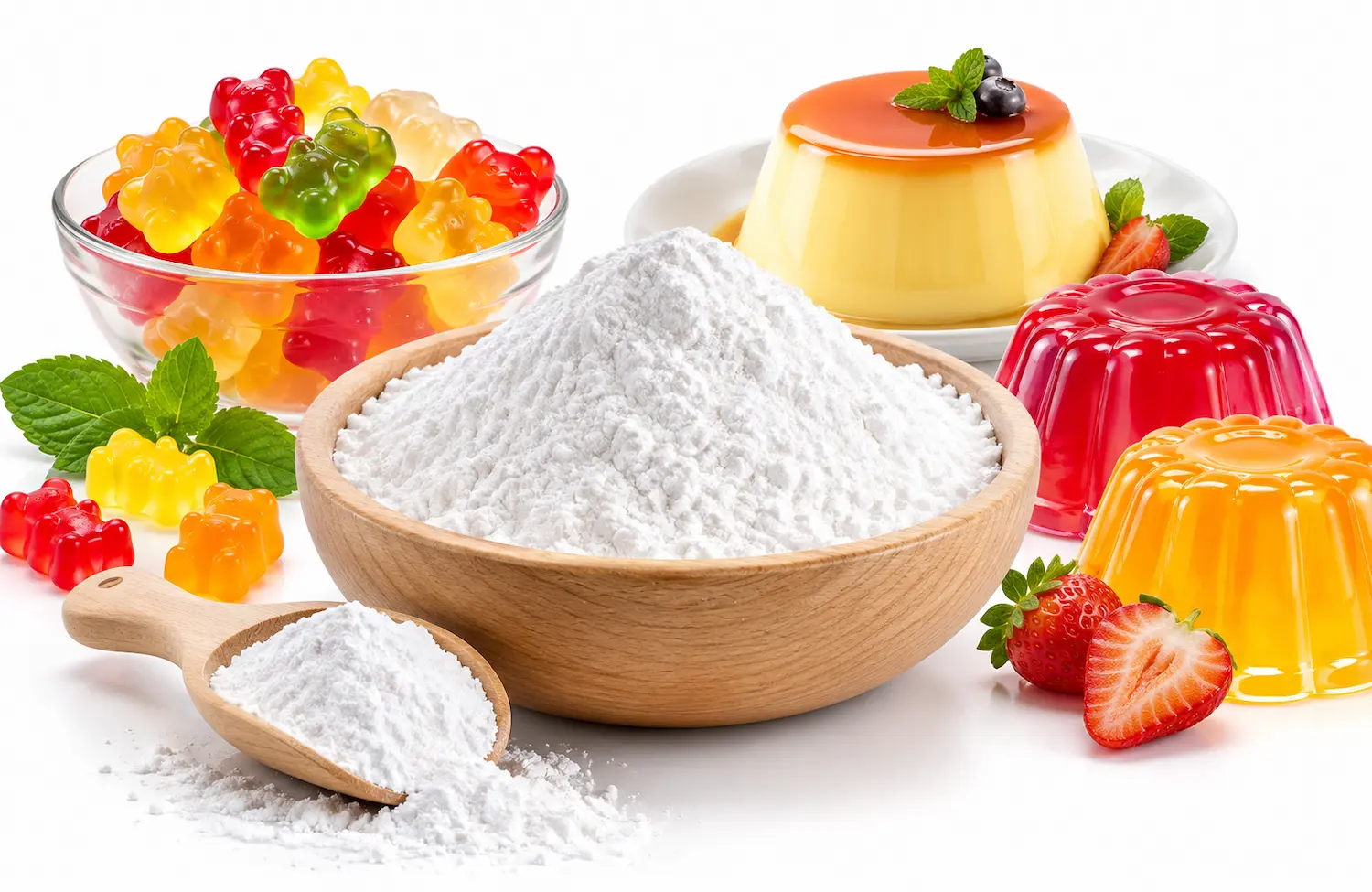
Gelatin-free gummies and starch jelly candies depend on a starch that behaves almost the opposite of how native corn starch behaves: it needs to boil down to a thin, easy-to-deposit syrup, then set into a firm, non-sticky gel once it cools. Native starch can't do both at once — cook it down and the paste stays thick and hard to mold; thin it enough to pour and the finished gel is weak. Acid-treated starch (also called acid-thinned or thin-boiling starch) is built specifically to resolve that trade-off, which is why it remains the standard starch base for gummy bears, jelly candy, and chewy nougat-style confections across the industry.
What Is Acid-Treated Starch?
From Native Starch to "Thin-Boiling" Starch
Acid-treated starch (INS/E1401) is produced by hydrolyzing native starch — typically corn or tapioca — with a dilute mineral acid under controlled, sub-gelatinization temperature. The acid selectively cleaves glycosidic bonds within the amorphous regions of the starch granule while leaving the granule itself intact, which shortens the starch chains and reduces molecular weight without destroying the semi-crystalline structure. The result is a starch that still needs cooking to gelatinize, but once cooked, its paste is far less viscous than native starch at the same concentration, so it earned the trade name "thin-boiling starch."
That drop in hot viscosity is exactly what confectionery producers need: it lets a kitchen or continuous cooker push starch concentration much higher — often well above what native starch would allow — while keeping the syrup fluid enough to deposit into candy molds. Once the hot syrup cools, the shortened starch chains re-associate quickly and tightly, producing a gel that is considerably firmer than native starch would give at the same solids level[1].
Lower-Fluidity Grades
Less acid-hydrolysis, so the syrup boils to a heavier viscosity and sets into a short, firm gel — favored when a dense, less stringy bite is the target.Higher-Fluidity Grades
More acid-hydrolysis, so the syrup boils thinner and pours more easily, but the set gel is comparatively weaker and more stringy — favored for easier depositing at very high solids[1].How Acid-Treated Starch Is Manufactured
Acid-treated starch is a wet-process modification carried out entirely below the starch's gelatinization temperature, so the granule shape is preserved even as its internal chains are shortened. A typical production sequence looks like this:
| Step | What Happens |
|---|---|
| 1. Slurry preparation | Native corn or tapioca starch is slurried in water to a controlled concentration and the starting pH/temperature are checked before acid is introduced. |
| 2. Acid hydrolysis | Dilute hydrochloric acid is metered in slowly while the slurry is held at a mild, sub-gelatinization temperature (well under boiling) so the granules hydrolyze internally without swelling or rupturing. |
| 3. Reaction & fluidity control | The batch is held at temperature for a fixed reaction window, with in-process sampling against an alkali-fluidity test until the target fluidity (viscosity reduction) is reached. |
| 4. Neutralization | Once the target fluidity is hit, the slurry is cooled and neutralized with a dilute alkali to stop the reaction and bring the starch to a food-safe pH. |
| 5. Washing & dewatering | The neutralized starch is washed to remove residual salts and hydrolysis by-products, then dewatered. |
| 6. Drying & packaging | The washed starch is dried to a controlled moisture level, screened, and packed — moisture control at this stage matters because acid-treated starch is prone to caking if it picks up humidity in storage. |
Why Acid-Treated Starch Performs So Well in Gummy Candy
Confectionery formulators keep coming back to acid-treated starch because the same modification that lowers hot viscosity also improves several downstream handling and eating qualities at once:
- Low hot viscosity, high solids: allows the syrup to be cooked down to high solids content and still deposit cleanly into starch molds or silicone trays without excessive pump or pour resistance.
- Higher cold gel strength relative to viscosity: compared with native starch at an equivalent hot viscosity, acid-treated starch sets into a noticeably firmer gel, which is why it can replace part or all of the gelatin in a gummy formulation[2][5].
- Clean release, low tack: properly modified acid-treated starch produces gummies that do not stick to the mold, the wrapper, or the teeth, while still delivering a chewy, resilient bite[3].
- Storage stability: the finished candy holds its texture over shelf life rather than weeping or re-hardening excessively, which keeps mouthfeel consistent from the day it's packed to the day it's opened.
Independent gel-strength studies on acid-thinned starch back this up directly: acid hydrolysis raises the starch's relative crystallinity and solubility while lowering its swelling power, and gels prepared from acid-thinned starch in sugar solution show both higher gel strength and better paste clarity than gels from native starch — both desirable attributes for gum candy applications[4]. Comparative work on gummy candies made with acid-thinned starch has also confirmed that hardness and chewiness scale predictably with the starch dosage used, giving formulators a controllable lever for texture[6].
Specifications: What to Check on a COA
A food-grade acid-treated starch batch should come with a certificate of analysis covering the following parameters:
| Parameter | Typical Specification |
|---|---|
| Whiteness | ≥ 88 |
| Fineness | ≥ 99% |
| Moisture | ≤ 14% |
| Spot count | ≤ 3.0 |
| pH | 5.0–8.0 (adjustable per customer requirement) |
| Alkali fluidity | 14–20 s (grade-dependent) |
Alkali fluidity is the key process-control number: it is the practical proxy for how much the starch has been thinned, and it should be requested and matched batch-to-batch if you are replicating an existing gummy formulation.
Formulating Gummies: A Working Dosage Table
Exact dosage depends on the finished solids target, mold type, and desired bite, but the following ranges reflect typical starting points for starch-based gummy and jelly candy:
| Component | Typical Dosage | Role |
|---|---|---|
| Acid-Treated Starch | 8%–18% of formulation | Primary gelling base; sets the finished firmness and chew |
| Sugar / glucose syrup | Balance to target solids | Sweetness, texture, and shelf-stable water activity |
| Cook temperature | Approx. 95–105°C | Fully gelatinizes the starch and drives off excess moisture |
| Deposit temperature | Grade-dependent, just above set point | Late enough that viscosity allows clean molding, early enough to avoid premature gelling |
| Molding / setting time | Several hours to overnight, in starch mogul or silicone molds | Allows the gel network to fully develop before demolding |
Acid-Treated Starch vs Other Modified Starches for Confectionery
Acid treatment is one of several ways to modify starch for candy use, and each route trades off differently:
| Modification | Effect on Hot Viscosity | Effect on Finished Gel | Typical Confectionery Use |
|---|---|---|---|
| Acid-treated (thin-boiling) | Sharply reduced | Firm, clean-release gel | Gummy bears, jelly candy, starch-molded sweets |
| Oxidized starch | Reduced, with lower gelatinization temperature | Clear, low-tack film; weaker set than acid-treated at equal dose | Nougat, mallow coatings, glazes |
| Cross-linked starch | Largely unchanged or increased | Highly shear/acid stable, but not primarily used for gel strength | Fillings, sauces requiring process stability |
| Hydroxypropylated (etherified) starch | Reduced gelatinization temperature | Softer, more elastic, freeze-thaw stable | Fruit fillings, dairy, frozen desserts |
Application Scenarios Beyond Gummy Candy
Gummy and jelly candy are the highest-volume use, but the same low-viscosity/high-gel-strength profile is useful across several adjacent confectionery and food formats.
Nougat & Chewy Candy: acid-treated starch is used alongside or in place of part of the gelatin/gum system to control chew and prevent stickiness.
Starch-Molded Jelly Sweets: the classic starch-mogul jelly candy format relies on acid-treated starch's ability to be cast at high solids and demold cleanly from the starch tray.
Coffee Whitener / Creamer Base: more heavily hydrolyzed (higher-fluidity) acid-treated starch grades are used as a low-viscosity carbohydrate filler in powdered creamer applications.
Paper & Textile Sizing: outside food, the same low-viscosity, high-solids paste is used as a surface-sizing and adhesive base in papermaking and textile warp sizing.
Supplier & Sourcing Insights for Bulk Procurement
Consistent gummy texture batch after batch depends as much on supplier process control as on the spec sheet.
| Supplier Attribute | What to Verify | WEHENGFOOD Standard |
|---|---|---|
| Alkali Fluidity Consistency | Batch-specific COA with fluidity, whiteness, and moisture | COA provided with every shipment |
| Protein/Fat Removal | Thorough washing to avoid excess foaming on rehydration | Extended wash cycle for food-grade batches |
| Moisture Control | Dry, well-sealed packaging to prevent caking in transit and storage | Moisture held at or below 14%, moisture-resistant packaging |
| Minimum Order Quantity | Flexibility for trial batches vs. full-container runs | Trial orders available up to full 20' FCL bulk supply |
| Technical Support | Grade recommendation matched to your existing gummy or jelly texture | Dedicated technical support for formulation matching |
Conclusion
Acid-treated starch solves a problem that native starch can't: it lets a confectionery producer cook down to high solids at low viscosity, then set into a gel that is firmer, cleaner-releasing, and more consistent than native starch would allow. The manufacturing step that makes this possible — controlled acid hydrolysis below the gelatinization temperature, tracked against an alkali-fluidity target — is also what determines batch consistency, which is why fluidity, whiteness, and moisture on the COA matter as much as the product name. Working with a supplier that documents fluidity and moisture on every shipment, and can help match an existing formulation, is what keeps gummy texture consistent at scale.
FAQ
Can acid-treated starch fully replace gelatin in a gummy formulation?
In many starch-jelly and mogul-cast gummy formats, yes — acid-treated starch alone or blended with a small amount of native/high-amylose starch is a long-standing gelatin-free base. For gelatin-mimicking "bounce," it is often blended with other thin-boiling or crosslinked starches to fine-tune elasticity.
What causes foaming or discoloration when the starch is dissolved?
Foaming is usually residual protein or fat from the raw starch that wasn't fully washed out during processing — it doesn't affect performance but points to a supplier's washing thoroughness. Discoloration is more often a storage/moisture issue, since acid-treated starch absorbs humidity readily and can cake or yellow if stored too long before use.
What information should I send a supplier to match my current gummy texture?
Ideally your target alkali fluidity range and current dosage, or a sample of the finished candy. At minimum, describe your cook solids, deposit temperature, and whether you're targeting a firm mogul-cast jelly or a softer chewy gummy.
Source Acid-Treated Starch in Bulk
WEHENGFOOD supplies COA-verified Acid-Treated Starch for gummy, jelly, and confectionery manufacturers, with consistent alkali fluidity, controlled moisture, and flexible order quantities from trial batches to full-container bulk supply. Our team can help match your current gummy texture or develop a custom fluidity grade for your application.
Request a Free Sample & QuoteReferences
- Eisley, J. Candy creations with starch and starch derivatives: fluidity grades, gel strength, and blending strategies for gummy and jelly confectionery. Food & Nutrition Science - SupplySide, 2023.
- Ulbrich, M., et al. (2019). Functional properties of acid-thinned potato starch: impact of modification, molecular starch characteristics, and solution preparation. Starch – Stärke, 71(9–10).
- Roquette Innovation Hub. Vegan gummy formulation with thin-boiling starch: low hot viscosity and minimal cooking requirements for heat-sensitive gummies. roquette.com.
- Characterization of acid-thinned cassava starch and its technological properties in sugar solution. Food Hydrocolloids / ScienceDirect, 2021.
- Starch-based jelly gum confections and starch jelly candy formulation patents describing thin-boiled starch fluidity ranges and processing. USPTO.
- Pereira, A. D., et al. (2022). Gummy candies produced with acid-thinned cassava starch: physical and sensory evaluation. Journal of Food Processing and Preservation, 46, e16661.