
How to Choose Calcium Propionate: BASF Pure Acid vs Domestic Propionic Acid Grades
WEHENGFOOD supplies bulk food-grade Calcium Propionate made from either domestic (byproduct-route) or BASF pure propionic acid, depending on the purity and cost target of your application. For product specifications, samples, pricing, or bulk orders, please contact us at nancy@wehengfood.com.
Not every calcium propionate on the market is made the same way. The finished powder looks identical on a spec sheet — same CAS number, similar assay — but the propionic acid used to make it can come from two very different routes: a domestically produced acid, typically recovered as a byproduct of other chemical processes, or a purpose-built, high-purity propionic acid such as BASF's, made specifically as a virgin petrochemical product. That raw-material choice is the single biggest factor behind the odor, color, and consistency differences buyers notice between calcium propionate batches, and it's the first thing a buyer should ask about before comparing price per ton.
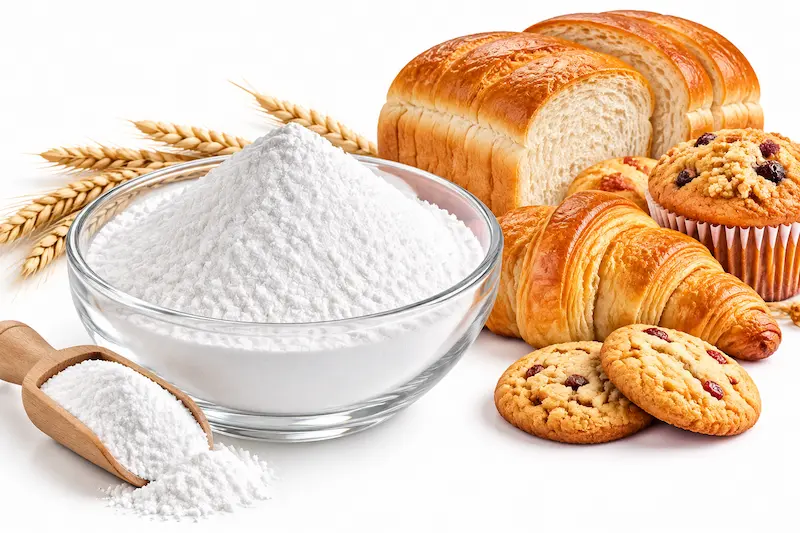
Two Manufacturing Routes: Domestic Acid vs. BASF Pure Acid
What "Domestic Acid" Usually Means
In China, a large share of merchant propionic acid is produced as a co-product or recovered stream of other chemical manufacturing processes rather than as a dedicated, purpose-built product. This "domestic acid" route is generally lower cost, and calcium propionate made from it is priced accordingly — but the trade-off is tighter control needed over trace impurities, residual odor compounds, and batch-to-batch color consistency, since the acid's purity profile is shaped by whatever upstream process it came from rather than being optimized from the start for a food-grade calcium salt.
BASF's propionic acid, by contrast, is manufactured as a dedicated petrochemical product via a continuous, purpose-built process[1]. Because the acid is made specifically to a pure propionic acid specification rather than recovered from another process stream, calcium propionate produced from it tends to start from a more consistent, higher-purity feedstock — which is why buyers in this market often refer to it simply as "pure acid" (纯酸) grade.
Domestic (Byproduct-Route) Acid
Lower raw-material cost; more variation in trace impurities and odor between batches; commonly the more price-competitive option for cost-sensitive, non-critical applications.BASF Pure Propionic Acid
Purpose-built, higher and more consistent purity; typically lighter color and milder residual odor in the finished calcium propionate; commands a price premium reflecting the feedstock cost.How the Raw Acid Affects Calcium Propionate Quality
Calcium propionate itself is simple chemistry: propionic acid neutralized with calcium hydroxide, then crystallized, filtered, and dried[2]. Because the reaction doesn't remove every trace impurity in the starting acid, whatever is present in the propionic acid — moisture, color bodies, minor organic by-products — tends to carry through into the finished salt to some degree. That's the practical reason the acid source shows up in three places buyers can actually check on a sample:
- Odor: propionic acid itself has a sharp, pungent smell, and finished calcium propionate is expected to have only a faint, near-neutral odor; a stronger residual odor is often the first sign of a lower-purity feedstock or an under-controlled drying step.
- Color and appearance: pure-acid-route calcium propionate typically dries to a whiter, more uniform powder; batches with more color are not necessarily out of spec, but usually indicate more impurities carried through from the acid.
- Batch-to-batch consistency: a dedicated, purpose-built acid source gives a manufacturer a more stable starting point to hold assay and appearance steady shipment after shipment, compared with an acid supply that can vary with its upstream process.
Side-by-Side Comparison
| Factor | Domestic (Byproduct) Acid Grade | BASF Pure Acid Grade |
|---|---|---|
| Feedstock origin | Recovered/co-product propionic acid from domestic chemical processes | Purpose-built virgin propionic acid |
| Typical odor | Slightly more noticeable, more batch variation | Faint, more consistently neutral |
| Typical color | Can trend slightly off-white | Whiter, more uniform |
| Price positioning | More cost-competitive | Premium, reflecting feedstock cost |
| Best fit | Cost-sensitive feed and general industrial applications | Sensory-critical food and beverage applications |
Why It Matters by Application
Calcium propionate is used wherever mold and rope-forming bacteria need to be controlled without disrupting taste or aroma[3], so how sensitive the end application is to a faint residual odor or a slightly off-white tint should drive which grade makes sense.
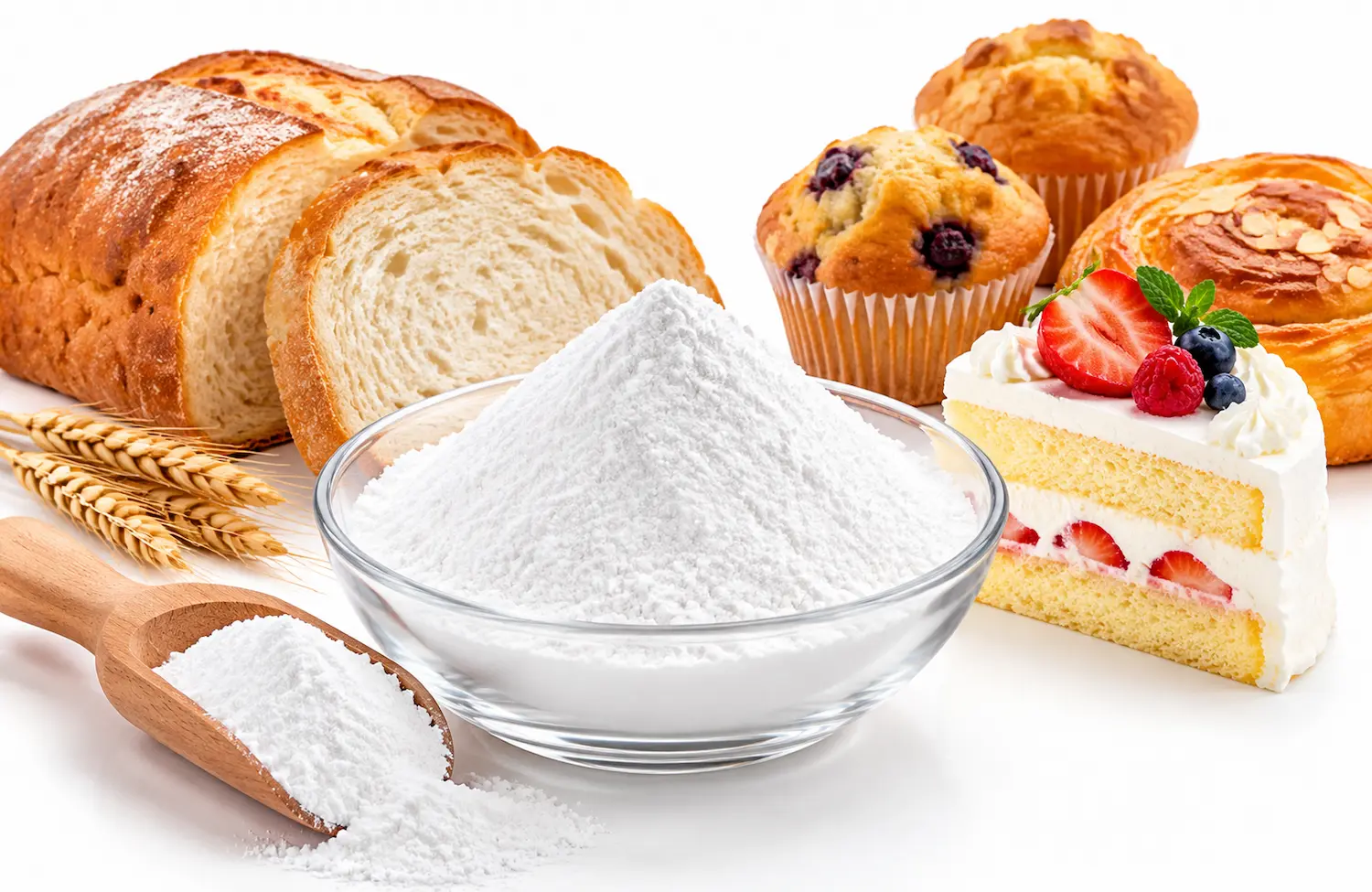
Bread & Bakery: Bread and other baked goods are the highest-volume use of calcium propionate as a mold inhibitor, and any off-odor is far more noticeable in a fresh, warm loaf than in most other food matrices — one reason bakery customers are often the most sensitive to acid source.
Dairy & Cheese: Applications where flavor carry-through is a concern typically favor the more consistently neutral pure-acid grade, especially for premium or export-grade products.
Animal Feed & Silage: Feed-grade uses are generally far less sensitive to trace odor or color, which is where the more cost-competitive domestic acid grade is most commonly and appropriately used.
General Industrial Preservation: Non-food or lower-sensory-priority uses can typically absorb the cost savings of the domestic acid grade without any noticeable trade-off.
Making the Choice: A Decision Framework
Rather than defaulting to "cheapest available" or "premium brand only," matching the grade to the application's actual sensitivity avoids overpaying where it isn't needed and under-specifying where it is.
- Sensory sensitivity: fresh bakery, dairy, or beverage applications where any off-odor is noticeable → BASF pure acid grade.
- Cost-driven, lower sensory risk: feed, silage, or industrial preservation → domestic byproduct acid grade is usually adequate.
- Export or premium retail products: where consistency across shipments matters for brand reputation → pure acid grade for tighter batch-to-batch stability.
- Existing supply to match: if switching suppliers, request a sample of your current material alongside its acid source so the new supplier can match, rather than guess at, the expected odor and color profile.
| Business Priority | Recommended Direction |
|---|---|
| Bread & bakery mold inhibition | BASF pure acid grade for minimal residual odor |
| Dairy, cheese, premium/export products | BASF pure acid grade for consistency |
| Animal feed & silage preservation | Domestic byproduct acid grade for cost efficiency |
| General industrial preservation | Domestic byproduct acid grade |
Supplier & Sourcing Insights for Bulk Procurement
Consistent quality shipment after shipment depends as much on supplier transparency about the acid source as on the finished spec sheet.
| Supplier Attribute | What to Verify | WEHENGFOOD Standard |
|---|---|---|
| Acid source disclosure | Whether domestic byproduct acid or a branded pure acid (e.g. BASF) was used | Acid source confirmed and documented for every order |
| Certifications | ISO9001, ISO22000, Kosher, Halal status | Full certification package available on request |
| Batch Verification | Batch-specific COA with assay, appearance, and odor notes | COA provided with every shipment |
| Minimum Order Quantity | Flexibility for trial batches vs. full-container runs | Trial orders available up to full 20' FCL bulk supply |
| Packaging | Moisture-resistant packaging appropriate for the target market | 25kg bags with moisture-resistant liner, customizable |
Conclusion
Calcium propionate's basic chemistry doesn't change between grades, but the propionic acid behind it does — and that single upstream choice is what separates a slightly off-odor, more variable powder from a consistently neutral, whiter one. For bakery, dairy, and other sensory-sensitive or export-facing applications, calcium propionate made from BASF's pure propionic acid is usually worth the premium. For feed, silage, and general industrial preservation, the domestic byproduct acid grade typically delivers the same functional mold and bacteria control at a lower cost. Asking a supplier directly which acid source went into your batch — and getting that confirmed on the COA — is the simplest way to make sure the grade you're paying for is the grade you're actually getting.
FAQ
What's the actual difference between "domestic acid" and "BASF acid" calcium propionate?
The finished salt is chemically the same calcium propionate either way. The difference is the propionic acid used to make it: domestic acid is typically recovered as a byproduct of other chemical processes, while BASF's acid is a purpose-built, high-purity petrochemical product. That feedstock difference shows up mainly in odor, color, and batch-to-batch consistency.
Is domestic-acid calcium propionate lower quality or unsafe?
No — both routes produce food-grade calcium propionate that meets standard assay specifications and is approved for use as E282. The difference is more about sensory consistency and trace impurity control than food safety.
Which grade should I use for bread and bakery products?
The BASF pure acid grade is generally preferred for bakery applications, since fresh, warm baked goods make any residual odor more noticeable than in most other product formats.
Can I use the domestic acid grade for animal feed?
Yes. Feed and silage applications are generally far less sensitive to trace odor or color, making the domestic byproduct acid grade a cost-effective, appropriate choice for most feed uses.
How can I verify which acid source was used before I place a bulk order?
Ask your supplier to confirm the propionic acid source in writing and request a current Certificate of Analysis along with a physical sample. Color and odor are quick checks you can run yourself before committing to a full shipment.
Is there a price difference between the two grades?
Yes. Because BASF's pure propionic acid costs more to produce than domestically recovered acid, calcium propionate made from it is typically priced at a premium reflecting that feedstock cost.
Source Calcium Propionate in Bulk — Either Grade
WEHENGFOOD supplies COA-verified Calcium Propionate made from either domestic byproduct-route or BASF pure propionic acid, with ISO9001/ISO22000/Kosher/Halal certification and flexible order quantities from trial batches to full-container bulk supply. Tell us your application and sensory requirements, and our team will confirm which acid source and grade fits.
Request a Free Sample & QuoteReferences
- Chemcess. Propionic acid: properties, reactions, production (including the BASF hydrocarbonylation process), and uses. chemcess.com.
- BASF Aktiengesellschaft. Preparation of calcium propionate — process patent. freepatentsonline.com.
- Healthline. Calcium propionate: uses and safety as a food preservative (E282), including FDA/WHO/FAO approval status. healthline.com.