Product Introduction
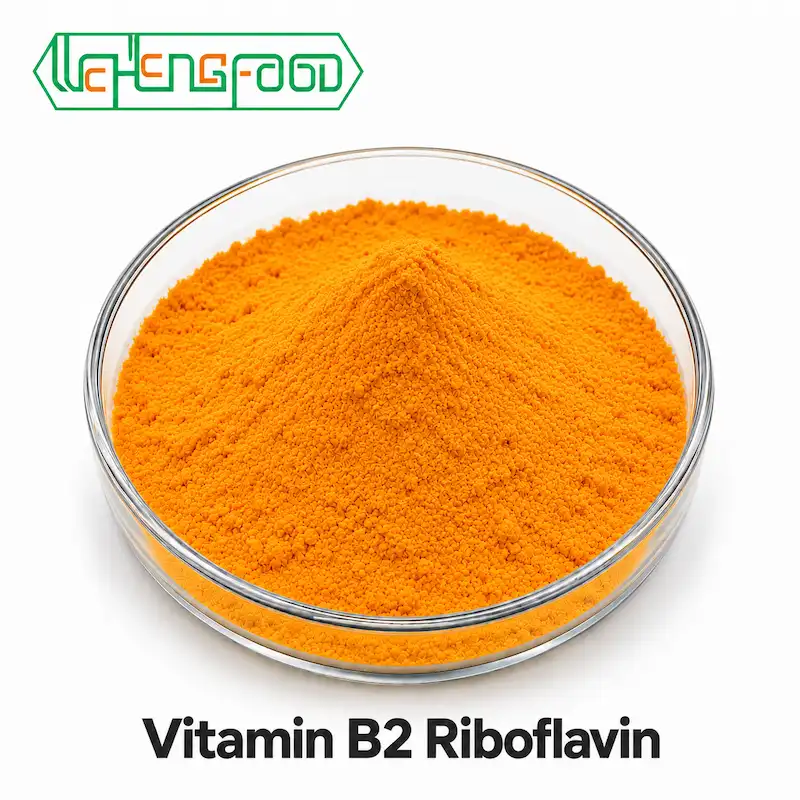
Vitamin B2, also known as riboflavin, is a water-soluble B vitamin that the human body cannot store in large amounts, so it must be supplied regularly through food or supplements. Chemically, the vitamin B2 structure consists of an isoalloxazine ring joined to a ribitol side chain, which gives it its characteristic orange-yellow color and green-yellow fluorescence.
WEHENGFOOD is a China supplier, manufacturer and exporter of Vitamin B2 (Riboflavin) powder for food, beverage, nutraceutical and feed customers worldwide. Our riboflavin is produced by microbial fermentation, offering consistent purity, good batch-to-batch stability and reliable bulk supply. It is suitable both as a vitamin B2 supplement ingredient and as a fortifier or natural-looking yellow colorant in finished foods.
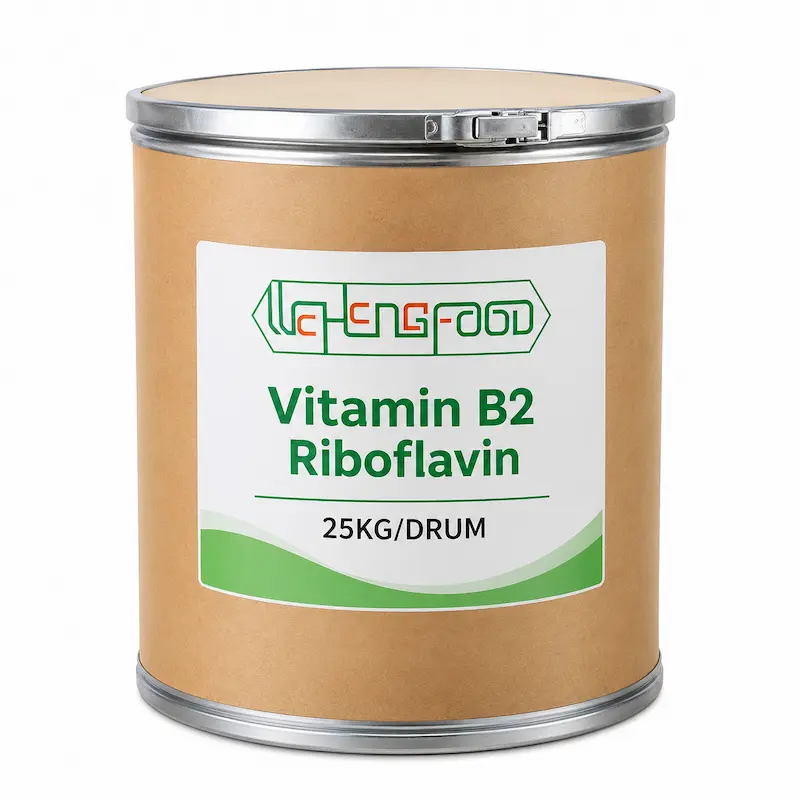
Riboflavin is sensitive to light, so we pack it in light-protective, moisture-resistant packaging to keep potency stable during transport and storage.
Certificate of Analysis
Test Item | Specification | Result |
Appearance | Orange-yellow crystalline powder | Conforms |
Identification | Passes test | Conforms |
Assay (w/w %) | 98.0–102.0 | 100.4 |
Specific Optical Rotation, αₘ (20°C, D) [° · dm² · kg⁻¹] | −120 to −140 | −132 |
Lumiflavin (A) | 0.025 max | 0.004 |
Residue on Ignition (w/w %) | 0.3 max | 0.06 |
Loss on Drying (w/w %) | 1.5 max | 0.44 |
Heavy Metals (as Pb) (mg/kg) | 10 max | < 10.0 |
Arsenic (as As) (mg/kg) | 2 max | < 2.0 |
Conclusion | The product is inspected in accordance with the stated standard; the results conform to the requirements and the product is judged to be qualified. |
Remarks | Storage: Store at ambient temperature. |
Functions of Vitamin B2
When buyers ask “what is vitamin B2” or about the function of vitamin B2, the answer starts with energy metabolism. Riboflavin is the precursor of two coenzymes, FMN and FAD, which are essential for converting carbohydrates, fats and proteins into usable energy.
- Energy metabolism: supports the release of energy from macronutrients.
- Healthy skin, eyes and mucous membranes: one of the classic benefits of vitamin B2. A shortage can show up as angular cheilitis (cracks at the corners of the mouth), sore lips and a swollen tongue.
- Antioxidant support: FAD is needed to regenerate glutathione, a key cellular antioxidant.
- Interaction with other B vitamins: riboflavin is required to activate vitamin B6 and folate, which is why it is often formulated in vitamin B1, B2 and B6 combinations and vitamin B complex products.
- Migraine research: high-dose riboflavin (commonly 400 mg per day) has been studied for migraine prevention. Claims on finished products depend on local regulations.
Marginal vitamin B2 deficiency is more likely in people with restricted diets, high physical activity, or low intake of dairy and meat. This is why fortification and supplementation remain important.
Applications and Uses
- Dietary supplements: vitamin B2 tablets, capsules, softgels, gummies and powders, as a single ingredient or in B-complex and multivitamin blends.
- Food fortification: breakfast cereals, flour, bread, pasta and rice, to replace B2 lost in milling and processing.
- Beverages: energy drinks, sports drinks, functional waters and powdered drink mixes, where riboflavin is also a recognizable yellow tint.
- Infant formula and clinical nutrition: formulated to meet B2 requirements in complete nutrition.
- Food colorant (E101): natural-looking yellow in sauces, dairy desserts, confectionery and snacks.
- Animal feed: poultry, swine and aquaculture feed, to support growth and feed conversion. Feed grade is available on request.
- Pharmaceutical and cosmetic: vitamin preparations and skin and hair care formulas.
Common Natural Sources of Vitamin B2
For content and labeling reference, the main food sources of vitamin B2 are milk, yogurt and cheese, eggs, lean meat, liver, almonds, mushrooms, spinach and fortified cereals. Fortified foods rely on added riboflavin to deliver a consistent, labelled dose, which is where an ingredient supplier comes in.
Factory
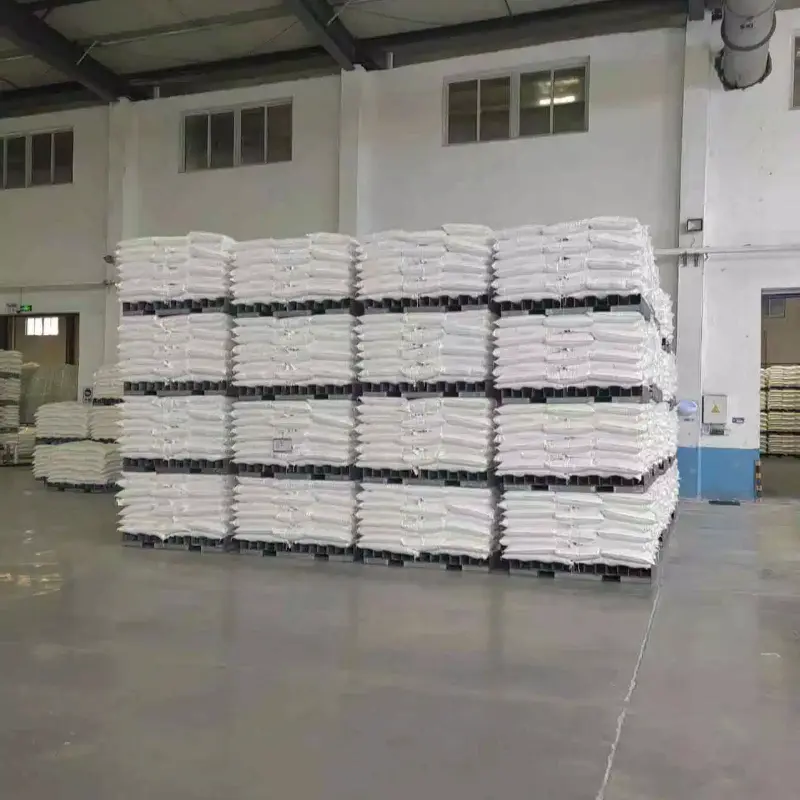
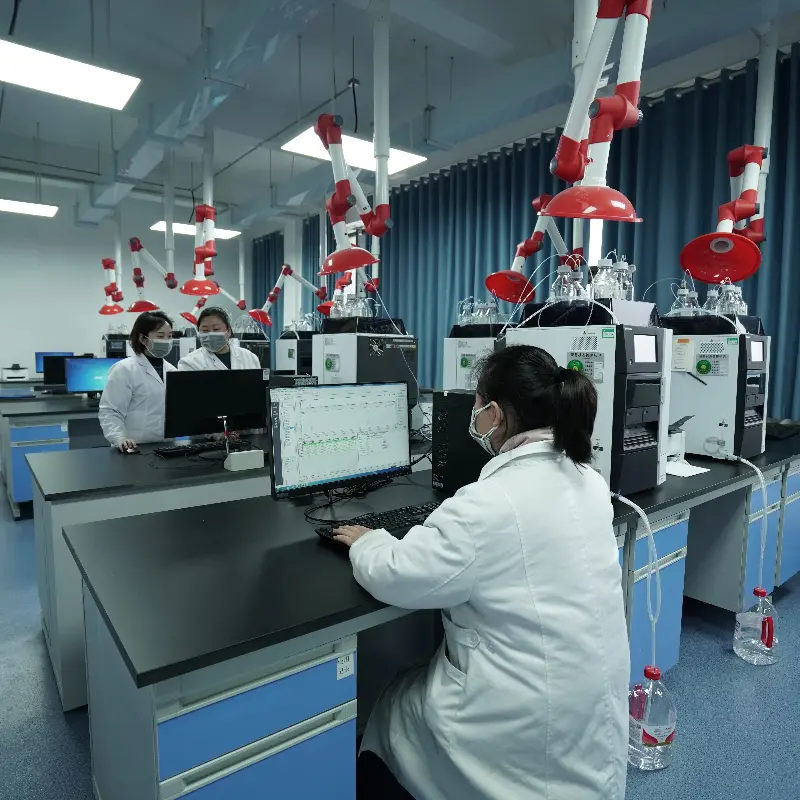
Package
Exhibitions

FAQ
Q1. What is Vitamin B2 (Riboflavin) used for?
Vitamin B2 is used to support energy metabolism, healthy skin, eyes and the nervous system. In industry, it is used in dietary supplements, fortified foods and beverages, infant formula, animal feed and as the yellow food colorant E101.
Q2. What is the difference between riboflavin and vitamin B2?
There is no difference. Riboflavin is the chemical name of vitamin B2. On labels you may see “riboflavin,” “vitamin B2” or “E101” when it is used as a colorant.
Q3. Why does riboflavin need light-protective packaging?
Riboflavin degrades when exposed to light, especially UV. Light-protective, sealed packaging and storage in a cool, dry place keep potency stable.
Q4. Can riboflavin be used in both supplements and food fortification?
Yes. It can be used as a standalone vitamin B2 supplement ingredient or blended into B-complex premixes, and it is widely added to cereals, flour, beverages and nutrition products.
Q5. Do you offer food grade and feed grade riboflavin?
Yes. Food grade is our main offering for supplements and fortified foods. Feed grade is available on request. Contact us with your required grade and potency.
Q6. What is your minimum order quantity for Vitamin B2?
Our minimum order quantity is 25 KGS.