Product Introduction
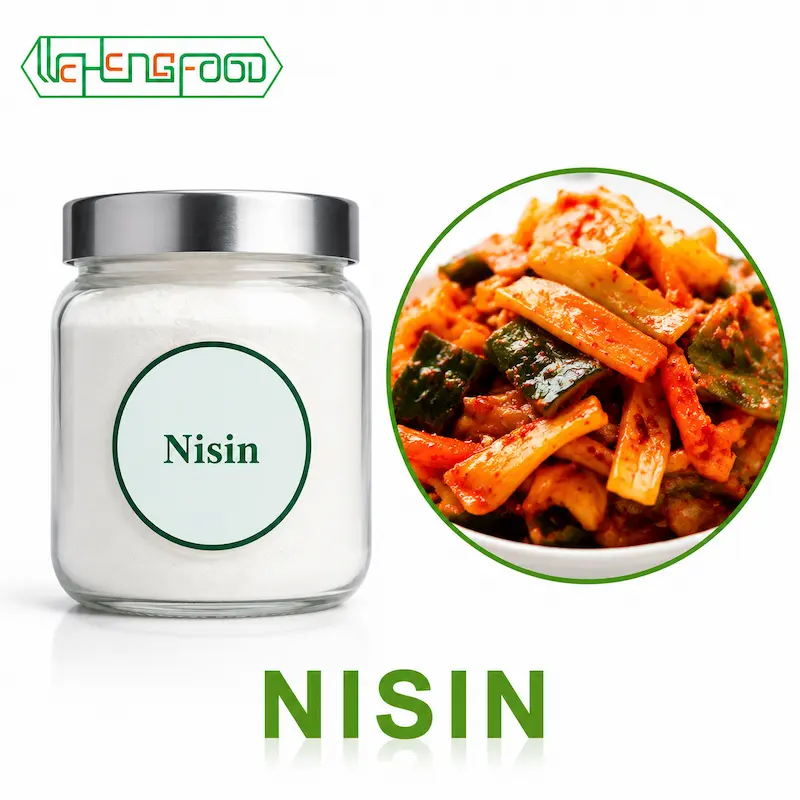
As a leading China nisin factory, exporter, and wholesale supplier, WEHENGFOOD manufactures both Nisin A and Nisin Z at multiple potency grades to meet different food-processing and export requirements, backed by our own production base and full documentation (COA, MSDS, Halal, Kosher on request).
| 规格型号 (Grade) |
|---|
| 900 IU/mg |
| 1000 IU/mg |
| 1100 IU/mg |
| 2000 IU/mg |
| 2200 IU/mg |
What Is Nisin?
Nisin is a natural antimicrobial polypeptide (bacteriocin) produced by Streptococcus lactis / Lactococcus lactis fermentation. It is a highly effective, non-toxic, GRAS-recognized natural food preservative that has been used commercially since the 1950s, approved by FAO/WHO as a biological preservative and listed by the US FDA and China’s GB 2760 national food additive standard.
Nisin naturally occurs in three main variants — Nisin A, Nisin Z, and Nisin Q — which differ by a single amino acid residue at position 27 (histidine in Nisin A vs. asparagine in Nisin Z). Nisin A and Nisin Z are the two variants currently produced at industrial scale worldwide. Their antibacterial potency (minimum inhibitory concentration) is essentially the same; Nisin Z shows slightly better diffusion in lipid-based matrices, but in practice the two grades are used interchangeably at the same dosage.
Product Features
- High purity with low batch-to-batch variation
- Light brown, uniform, fine powder with high saturation
- Excellent solubility — dissolves clearly without residue, forming a clean/whey-like solution
- Uniform particle size and good flowability for easy dosing
- Mild odor; does not affect the original flavor of food products
- High potency options available, including grades above 20,000 IU/mg equivalent for concentrated applications
Certificate of Analysis
ITEM | STANDARD | RESULTS |
| Appearance | Light brown to cream white powder | Conforms |
| Potency (IU/ mg) | 1000 Min | 1120 |
| Loss on drying (%) | 3 Max | 0.5 |
| pH (10% solution) | 3.1- 3.6 | 3.4 |
| Arsenic | ≤ 1 mg/kg | < 1 mg/kg |
| Lead | ≤ 1 mg/kg | < 1 mg/kg |
| Mercury | ≤ 1 mg/kg | < 1 mg/kg |
| Total heavy metals ( as Pb) | ≤ 10 mg/kg | < 10 mg/kg |
| Sodium chloride (%) | 50 Min | Conforms |
| Total plate count | ≤ 10 cfu/g | Conforms |
| Coliform bacteria | ≤ 30 MPN/ 100g | Conforms |
| E.coli/ 5g | Negative | Negative |
| Salmonella/ 10g | Negative | Negative |
Functions and Usages
Mechanism & Antibacterial Spectrum
Nisin acts as a bacteriostatic and bactericidal agent that is highly effective against Gram-positive bacteria and bacterial spores, including heat-resistant spore-formers. It has no activity against Gram-negative bacteria, yeasts, or molds — for full-spectrum protection, nisin is often combined with natamycin (anti-mold/yeast) or ε-polylysine (broad-spectrum) in compound preservative systems.
Applications
Nisin is widely used as a natural preservative and shelf-life extender across the following food categories (maximum use levels per China GB 2760, for reference — actual regulatory limits vary by country):
| Food Category | Max. Usage (g/kg) |
|---|---|
| Dairy products (pasteurized/UHT milk, fermented milk) | 0.5 |
| Pickled vegetables | 0.5 |
| Processed edible fungi and algae | 0.5 |
| Braised dried tofu | 0.5 |
| Pre-made (prepared) meat products | 0.5 |
| Cooked meat products | 0.5 |
| Cooked aquatic products (ready-to-eat) | 0.5 |
| Bread | 0.3 |
| Pastries / baked goods | 0.3 |
| Coarse-grain sausage products | 0.25 |
| Instant wet noodle / rice-noodle sausage products | 0.25 |
| Egg products (excluding dehydrated/liquid egg) | 0.25 |
| Soy sauce | 0.2 |
| Fermented sauce/paste | 0.2 |
| Compound seasonings | 0.2 |
| Beverages (excluding packaged drinking water, fruit/vegetable juice, and concentrates) | 0.2 |
| Vinegar | 0.15 |
Typical end applications include: processed meats and sausages, deli/cured meats, dairy and fermented milk products, baked goods, mooncakes and pastries, sauces and condiments, pickled vegetables, and beverages — anywhere long shelf life and clean-label preservation are required.
Nisin A vs. Nisin Z
| Item | Nisin A | Nisin Z |
|---|---|---|
| CAS No. | 1414-45-5 | 137061-46-2 |
| Molecular Formula | C143H230N42O37S7 | C141H229N41O38S7 |
| Molecular Weight | 3354.07 | 3331.05 |
| Antibacterial spectrum | Gram-positive bacteria, spores | Gram-positive bacteria, spores |
| MIC (minimum inhibitory concentration) | Equivalent to Nisin Z | Equivalent to Nisin A |
| Diffusion in lipid matrices | Standard | Slightly better |
| Recommended dosage | Same as Nisin Z | Same as Nisin A |
Why Source Nisin from WEHENGFOOD
- Direct China nisin manufacturer with in-house fermentation and purification — competitive factory pricing, no middleman markup
- Multiple potency grades (900–2200 IU/mg) and both Nisin A and Nisin Z available to match your formulation and country-specific regulatory limits
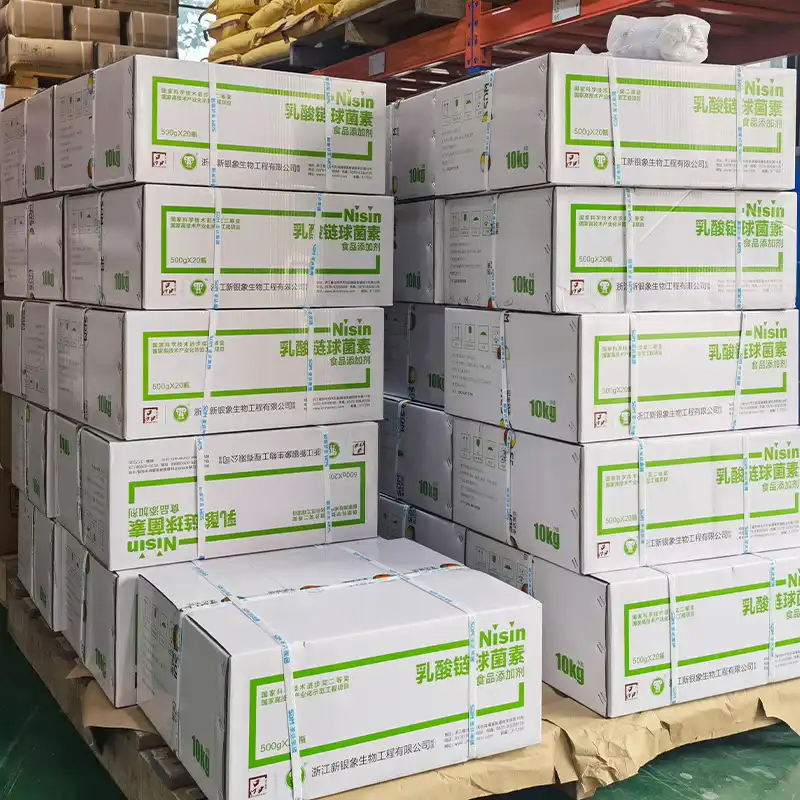
- Custom packaging (bottles, bags, drums) and private-label options for wholesale and bulk export
- Full documentation support: COA, MSDS, specification sheets, Halal/Kosher certificates
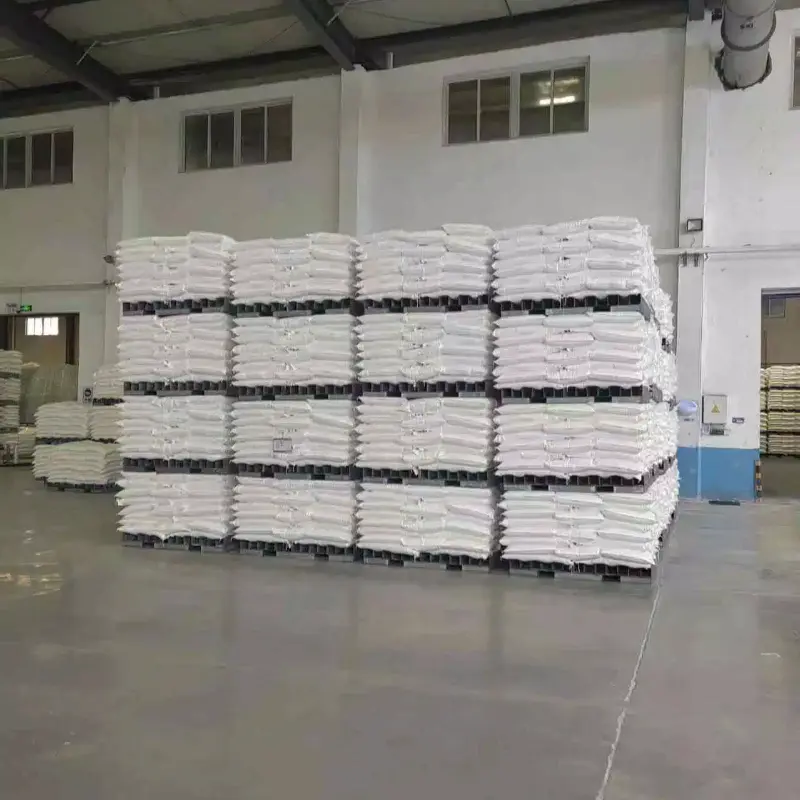
- Reliable bulk supply and export experience shipping worldwide
Factory
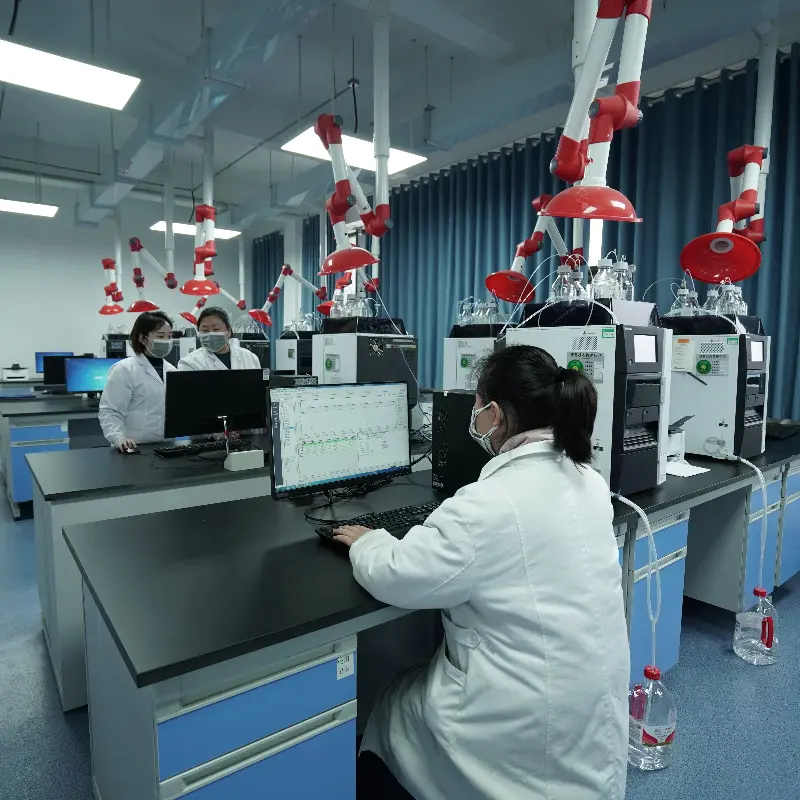
Package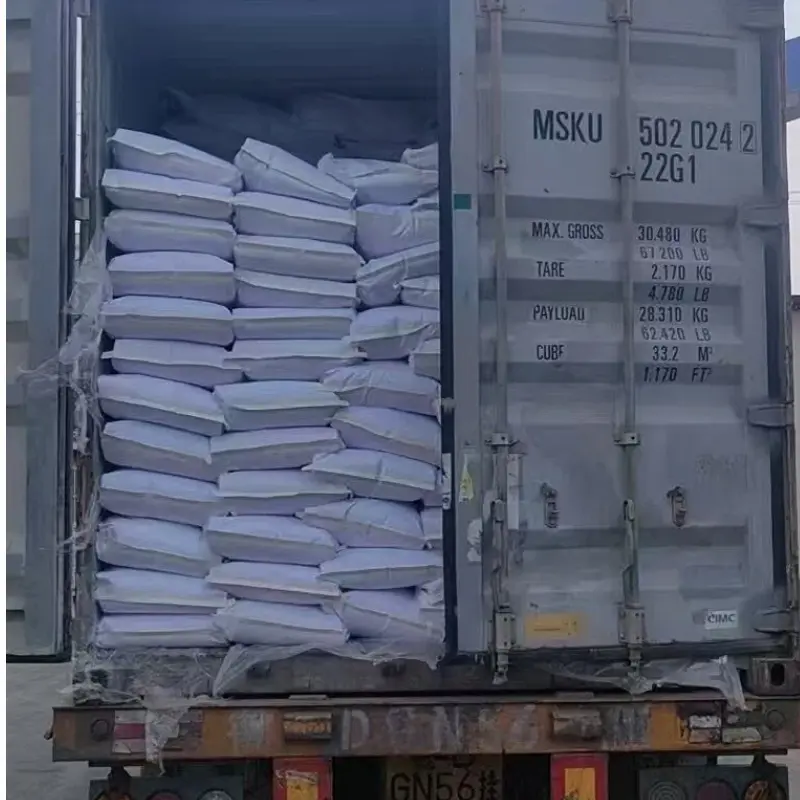
Exhibitions

FAQ
Q1: What is the difference between Nisin A and Nisin Z?
They differ by one amino acid at position 27 of the peptide chain. Their antibacterial activity and recommended dosage are essentially the same; Nisin Z diffuses slightly better in fat-based food matrices.
Q2: What potency grades of nisin does WEHENGFOOD supply?
We supply 900 IU/mg, 1000 IU/mg, 1100 IU/mg, 2000 IU/mg, and 2200 IU/mg grades, with higher-potency options available on request.
Q3: Is nisin effective against mold and yeast?
No. Nisin targets Gram-positive bacteria and bacterial spores only. For mold/yeast control, it is typically paired with natamycin, or with ε-polylysine for broader-spectrum protection.
Q4: What is the minimum order quantity (MOQ) for nisin?
Our standard MOQ is 1000 KG; smaller trial quantities can be arranged for new customers.
Q5: How should nisin be stored, and what is its shelf life?
Nisin should be stored in a cool, dry, sealed container away from direct sunlight. Shelf life is 2 years under proper storage conditions.
Q6: Can nisin be used in organic or clean-label products?
Yes. As a naturally fermented bacteriocin, nisin is widely accepted in clean-label and natural preservation systems, and is approved under FAO/WHO, US FDA, EU (E234), and China GB 2760 standards.