Product Introduction
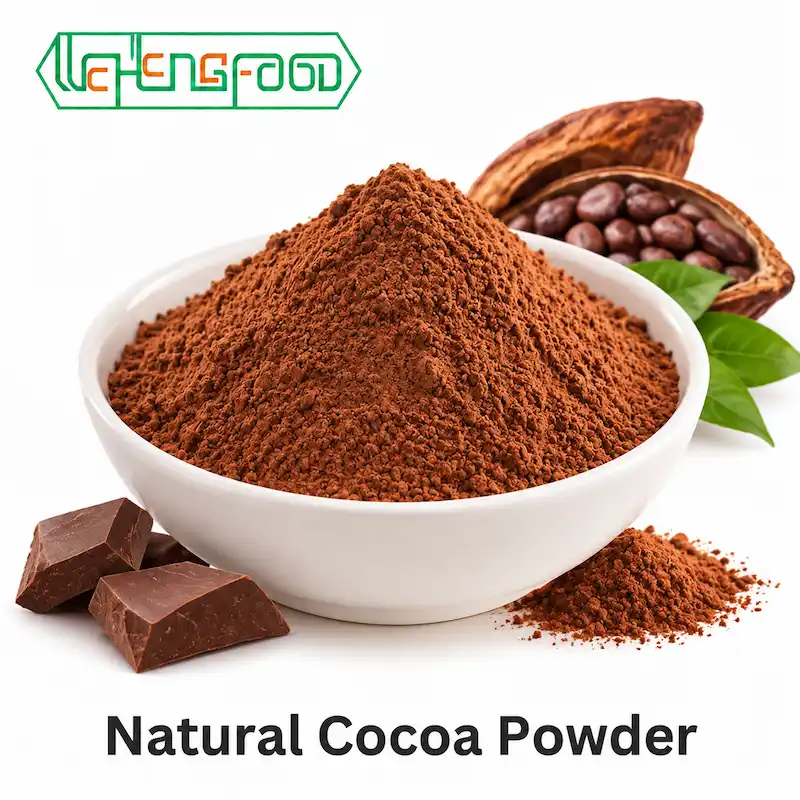
Natural cocoa powder is made from roasted cocoa beans that are ground into cocoa liquor and pressed to remove part of the cocoa butter. The resulting cake is then milled into a fine powder. The beans are not treated with an alkali, so the powder keeps its natural acidity, light reddish-brown color and sharp, fruity chocolate flavor. This is why it is also called non-alkalized cocoa powder or non-Dutched cocoa powder.
Our unsweetened natural cocoa powder contains no added sugar, milk solids or flavorings. It is 100% cocoa, which gives food manufacturers full control over sweetness and fat in their own formulas. WEHENGFOOD is a China supplier, exporter and factory-direct partner for bulk cocoa powder. We supply bakeries, confectionery plants, beverage producers and ingredient distributors worldwide.
Certificate of Analysis
Item | Specification | Result |
Color | Brown | Standard |
Fat content | 10%-12% | 10.75% |
PH Value | 5.0-5.8 | 5.35 |
Moisture | ≤5% | 3.50% |
Fineness (though 200mesh) | ≥97% | 97.84% |
Total Ash | ≤10% | 8.3% |
Total plate count | ≤5000cfu/g | 310cfu/g |
Yeast count | ≤50cfu/g | 30cfu/g |
Mould count | ≤50cfu/g | 30cfu/g |
E-coli | Negative | Negative |
Salmonella | Negative | Negative |
Staphylococcus | Negative | Negative |
Pathogenic Bateria | Negative | Negative |
Conclusion | The product conforms to corporation standard. | |
Key Functions
1. Delivers authentic chocolate flavor and color. Natural cocoa powder has a bright, slightly acidic and fruity cocoa note. It gives baked goods and desserts a classic chocolate taste and a warm reddish-brown color.
2. Works as a leavening partner. Natural cocoa powder has a pH below 7, so it reacts with baking soda (sodium bicarbonate) to produce carbon dioxide. Recipes built around baking soda, such as devil’s food cake, brownies and many cookies, rely on this reaction for rise and a tender crumb.
3. Adds flavor without added sugar. Because it is unsweetened, it can be used in low-sugar and sugar-free formulations. Sweetness can be set separately with sugar, allulose, erythritol or other sweeteners.
4. Contributes natural cocoa solids. Cocoa powder carries cocoa polyphenols (including flavanols), fiber and minerals such as magnesium. These are naturally present in cocoa and vary by bean origin and processing. Natural powder is made without the alkalizing step used for Dutch-process cocoa.
5. Provides controlled fat content. The 10–12% cocoa butter left in the powder gives a rich mouthfeel without making the powder greasy. It also stays free-flowing, so it is easy to handle in dry mixes.
Applications
- Bakery: cakes, brownies, cookies, muffins, chocolate bread and cake mixes
- Confectionery and fillings: chocolate coatings, spreads, fillings, truffle dusting and compound chocolate
- Beverages: hot chocolate, ready-to-mix cocoa drinks, milk-based drinks and instant powders
- Frozen desserts: chocolate ice cream, popsicles and frozen yogurt
- Dairy: chocolate milk, yogurt and puddings
- Dry mixes and cereals: breakfast cereals, protein shakes, nutrition bars and snack coatings
Natural vs. Dutch Process vs. Black Cocoa Powder
Buyers often ask which type suits their recipe. The main difference is whether the cocoa is treated with an alkali.
| Natural Cocoa Powder | Dutch-Process (Alkalized) Cocoa Powder | Black Cocoa Powder | |
|---|---|---|---|
| Alkali treatment | No | Yes, moderate | Yes, heavy |
| pH | About 5.0–6.0 | About 7.0–8.0 | Usually above 8 |
| Color | Light reddish-brown | Dark brown | Very dark, near black |
| Flavor | Bright, fruity, slightly acidic | Smooth, mellow | Deep, mild, very dark |
| Best leavener | Baking soda | Baking powder | Baking powder |
In a recipe that calls for baking soda, natural cocoa powder is the standard choice. Dutch-process and black cocoa suit applications where deep color and a smooth flavor matter more. They are best paired with baking powder. WEHENGFOOD can discuss alkalized grades if your formulation needs them.
Cacao vs. cocoa: The two words come from the same plant. “Cacao” usually describes minimally processed products, such as cold-pressed powder or nibs. “Cocoa” usually describes beans that have been roasted at higher temperatures and processed into powder. Natural cocoa powder is the roasted, pressed and milled form.
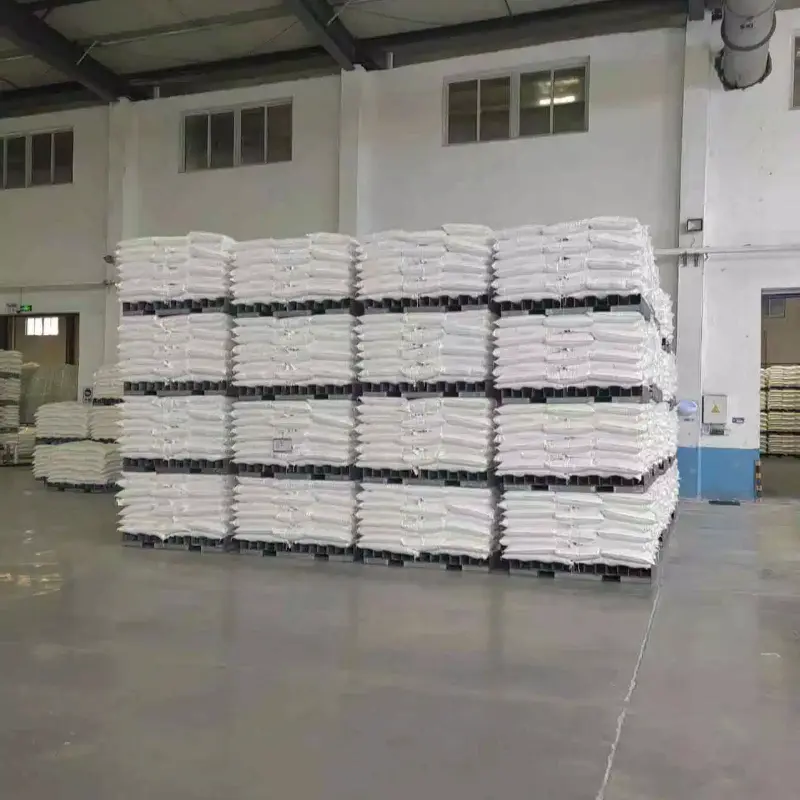
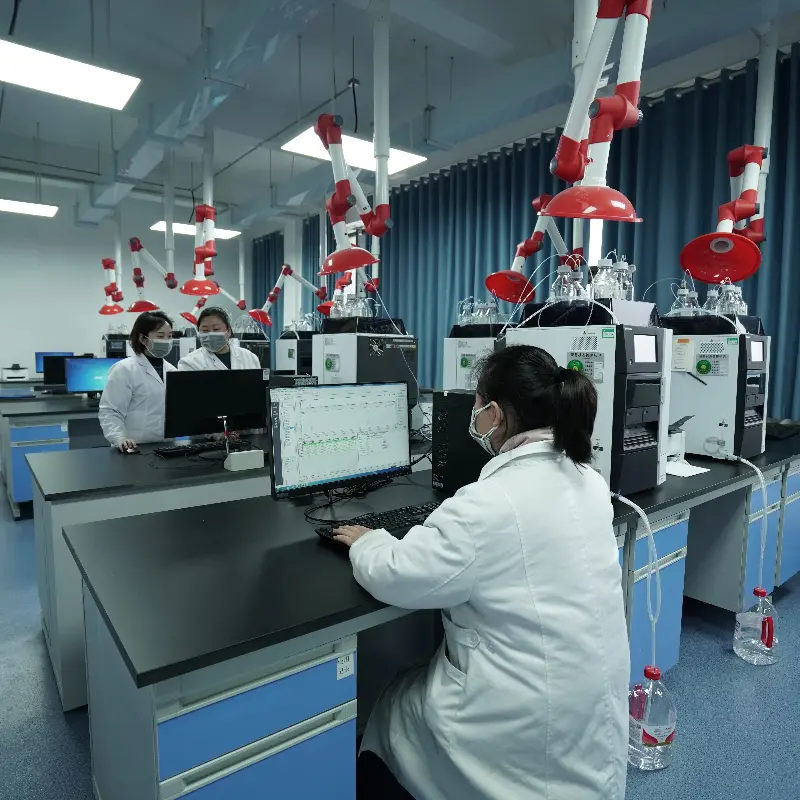
Factory
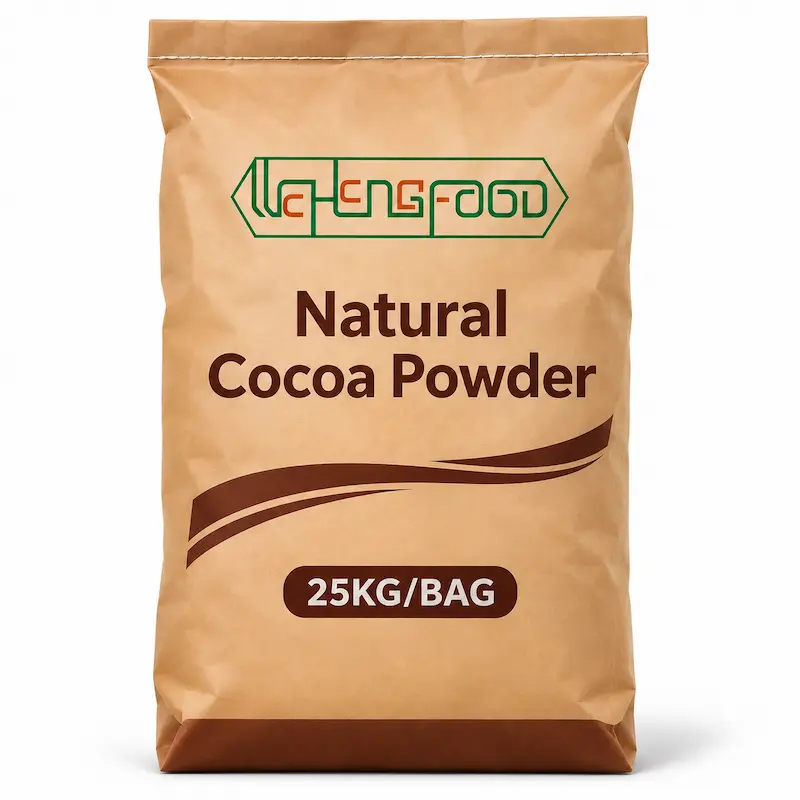
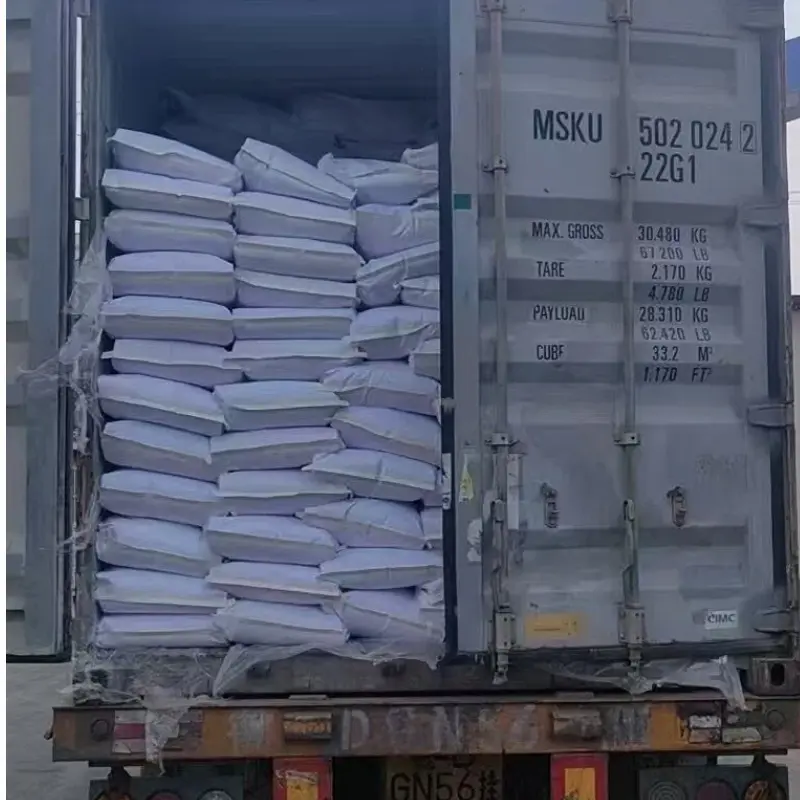
Package
Exhibitions

FAQ
Q1: What is the difference between natural cocoa powder and Dutch process cocoa powder?
Natural cocoa powder is not treated with alkali, so it keeps its natural acidity (pH about 5.0–6.0), a lighter reddish-brown color and a bright, fruity chocolate flavor. Dutch process (alkalized) cocoa powder is treated with an alkali. This raises the pH to about 7.0–8.0 and gives a darker color and a milder, smoother taste. Natural cocoa powder is the standard choice for recipes built around baking soda.
Q2: Can I use natural cocoa powder in recipes that call for baking soda?
Yes. Natural cocoa powder is acidic, so it reacts with baking soda (sodium bicarbonate) to release carbon dioxide. This helps cakes, brownies and cookies rise and gives a tender crumb. If a formula was developed with Dutch process cocoa and baking powder, switching to natural cocoa powder may require adjusting the leavening system.
Q3: What are the typical cocoa butter content and pH of your unsweetened natural cocoa powder?
Our unsweetened natural cocoa powder typically has 10–12% cocoa butter and a pH of 5.0–6.0, measured in a 10% suspension. It has no added sugar, milk solids or flavorings. A COA is available for each batch, and specifications can be adjusted on request.
Q4: Which products can natural cocoa powder be used in?
Natural cocoa powder is widely used in cakes, brownies, cookies, cake mixes, chocolate spreads, fillings, hot chocolate and instant cocoa drinks. It also goes into chocolate ice cream, chocolate milk, yogurt, puddings, cereals and nutrition bars. Because it is unsweetened, manufacturers can set sweetness and fat levels in their own formulas.
Q5: What is your lead time for natural cocoa powder orders?
Our lead time is about 14 days after order confirmation and receipt of the advance payment. Exact timing depends on order quantity and shipping schedule. For large or customized orders, we confirm the production and shipment dates before the order is finalized.
Q6: What are your payment terms?
We require a 50% advance payment to start production, and the remaining 50% is paid against a copy of the bill of lading (B/L). This is the standard arrangement for our export orders.