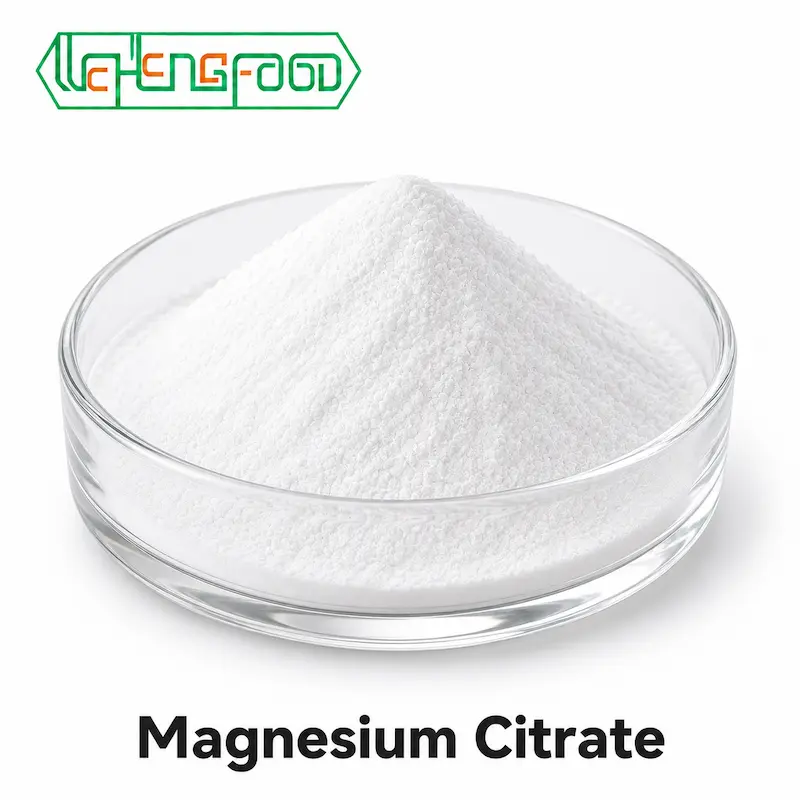
Product Introduction
Magnesium citrate is the magnesium salt of citric acid. It is one of the most widely used organic magnesium sources in dietary supplements, functional foods and beverages. As a China manufacturer, supplier and exporter, WEHENGFOOD supplies two grades of magnesium citrate powder: magnesium citrate anhydrous and magnesium citrate nonahydrate. Buyers can choose the form that fits their formulation and packaging.
Magnesium is involved in energy metabolism, muscle and nerve function and bone health. Organic salts such as citrate are popular because they dissolve more readily than magnesium oxide, and several human studies report better absorption for citrate than for oxide. That is why magnesium citrate appears so often in finished magnesium citrate supplements, including tablets, capsules, powders, gummies and drink mixes.
Anhydrous vs. Nonahydrate at a Glance
| Magnesium Citrate Anhydrous | Magnesium Citrate Nonahydrate | |
|---|---|---|
| Formula | Mg₃(C₆H₅O₇)₂ | Mg₃(C₆H₅O₇)₂·9H₂O |
| CAS No. | 3344-18-1 | 153531-96-5 |
| Magnesium content (theoretical) | ~16% | ~12% |
| Appearance | White to off-white powder | White to off-white powder |
| Typical use | Tablets, capsules, high-dose or compact formulas | Powder blends, drink mixes, food fortification |
Anhydrous grade delivers more elemental magnesium per gram, so each tablet or capsule can be smaller. It is moisture-sensitive, so it should be kept in sealed packaging. Nonahydrate has a lower magnesium content because of its crystal water, but it is a stable hydrate that suits powder and beverage applications where dose size matters less. Specifications and particle size can be adjusted to your requirements.
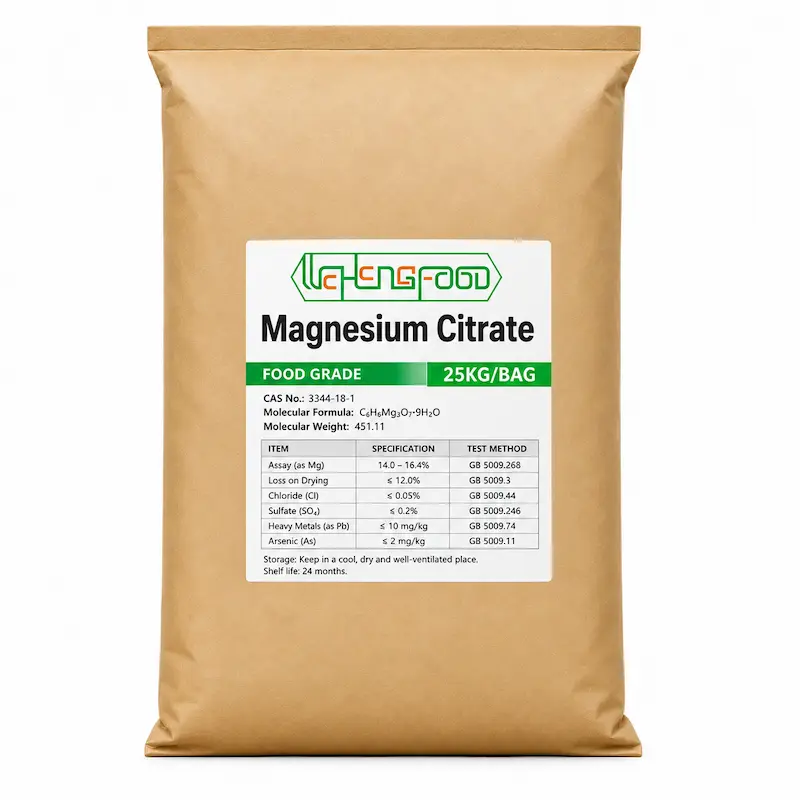
Certificate of Analysis
检验项目 | 标准 | 检验结果 |
感官要求 | 白色或淡黄色细粉 | 符合规定 |
理化指标 |
|
|
鉴别试验 | 通过试验 | 通过试验 |
镁含量(干基计),ω/% | 14.5–16.4 | 15.50 |
氯化物(以Cl计),ω/% | ≤0.05 | <0.05 |
硫酸盐,ω/% | ≤0.2 | <0.2 |
砷(As)/(mg/kg) | ≤3 | <3 |
重金属/(mg/kg) | ≤50 | <50 |
钙含量,ω/% | ≤1 | 0.02 |
铁(Fe)/(mg/kg) | ≤200 | <200 |
PH(50mg/ml) | 5.0–9.0 | 6.68 |
水分,ω/% | ≤2 | 0.46 |
Functions
- Magnesium supplementation: a bioavailable magnesium source for people who do not reach their daily intake through diet.
- Muscle and nerve support: magnesium contributes to normal muscle function and nervous system function.
- Energy metabolism: magnesium helps reduce tiredness and fatigue as part of normal energy-yielding metabolism.
- Bone health: magnesium contributes to the maintenance of normal bones and teeth.
- Acidity regulator: in foods and beverages it serves as a buffering and acidity-regulating agent (E345).
- Osmotic effect: at higher doses magnesium citrate draws water into the intestine. This is the basis of its use in laxative-type products for occasional constipation. Regulatory status and permitted claims differ by country, so check local rules for your market.
Applications
- Dietary supplements: tablets, hard capsules, softgel blends, powders and gummies, alone or in a magnesium complex with other minerals.
- Sleep and relaxation formulas: brands often include magnesium in evening-routine products alongside ingredients such as L-theanine. Claims should follow local regulations.
- Functional foods and beverages: mineral fortification of drink powders, effervescent tablets and sports nutrition products.
- Pharmaceutical and OTC products: magnesium supplement and saline laxative-type formulations, subject to local regulation.
- Combination products: calcium and magnesium formulas, or blends with vitamin D and zinc.
How Magnesium Citrate Compares with Other Magnesium Forms
Buyers often ask how magnesium citrate vs magnesium glycinate and magnesium citrate vs magnesium oxide differ. In short:
- Citrate vs. oxide: oxide has a high magnesium percentage and a low cost, but it dissolves poorly and is generally less well absorbed. Citrate costs more and is more soluble.
- Citrate vs. glycinate (bisglycinate): glycinate is a chelated form often marketed for calm and sleep and is usually gentler on the stomach, but it is more expensive. Citrate offers good solubility at a more accessible price. Many brands carry both or use a magnesium complex.
The right choice depends on your target market, dose, dosage form and positioning, and WEHENGFOOD can supply the citrate grade that suits it.
Factory
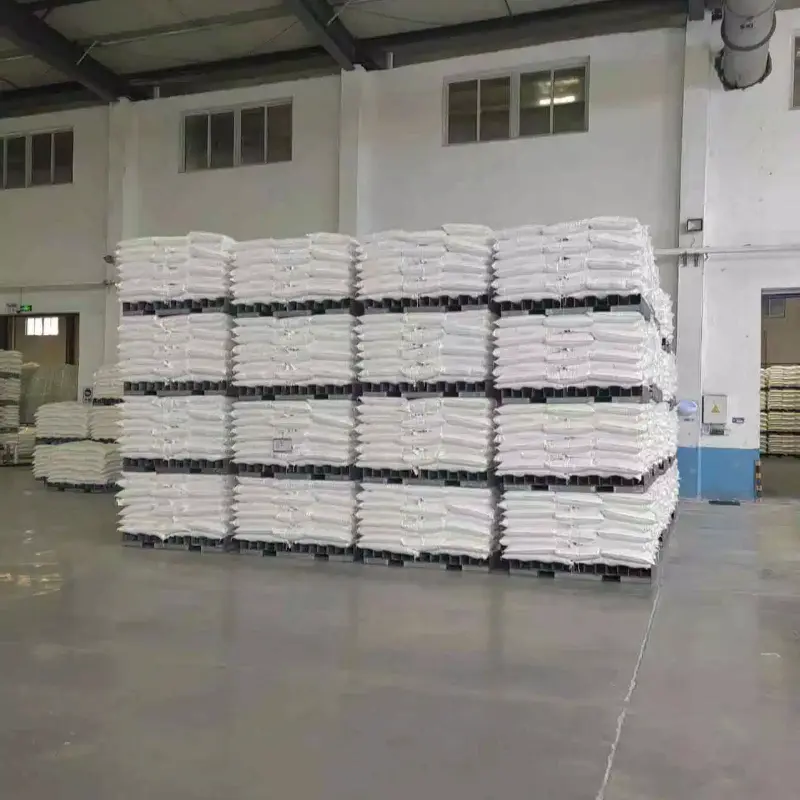
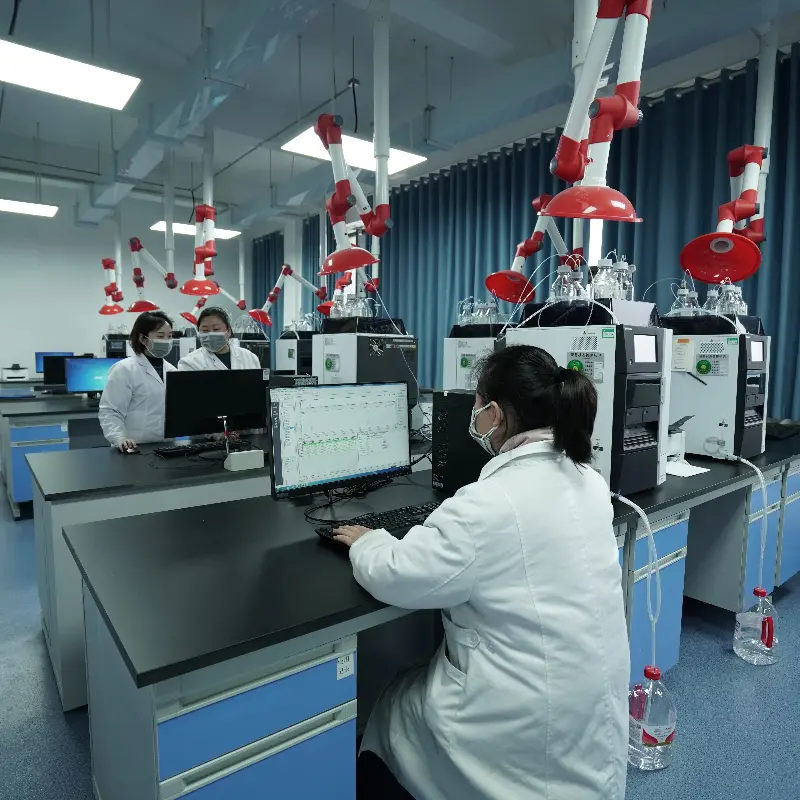
Package
Exhibitions

FAQ
Q1: What is the difference between magnesium citrate anhydrous and nonahydrate?
Anhydrous contains no crystal water and has a magnesium content of about 16%. Nonahydrate carries nine molecules of water and contains about 12% magnesium. Anhydrous suits compact tablets and capsules, while nonahydrate is common in powders and drink mixes.
Q2: How does magnesium citrate compare with magnesium glycinate?
Both are well-absorbed organic magnesium sources. Glycinate is often chosen for relaxation-focused products and is typically gentler on digestion, while citrate offers good solubility at a lower cost. Many finished products use both.
Q3: How does magnesium citrate compare with magnesium oxide?
Magnesium oxide has more elemental magnesium per gram but lower solubility and absorption. Magnesium citrate is more soluble and is generally considered better absorbed.
Q4: Does magnesium citrate cause side effects?
At high doses it can cause loose stools or stomach discomfort because of its osmotic effect. Formulators should set the serving size within local intake guidelines and label products accordingly.
Q5: Which finished product forms can use magnesium citrate powder?
It is used in tablets, capsules, powders, gummies, effervescent tablets and drink mixes. Anhydrous grade is often preferred where tablet or capsule size is limited, and nonahydrate where a powder blend is used.
Q6: What are your payment terms for magnesium citrate?
Our standard payment terms are 50% advance payment, with the remaining balance paid against a copy of the bill of lading (B/L). This applies to both anhydrous and nonahydrate orders.