
Banaba Leaf Extract Benefits: Corosolic Acid for Blood Sugar Support & Anti-Glycation Skincare
WEHENGFOOD is a supplier of Banaba Extract, sourced directly from quality growing regions with no middleman markup, stable supply, batch-controlled quality, and a full set of compliance documents and COA reports. For specifications, samples, pricing, or bulk orders, please contact us at nancy@wehengfood.com.
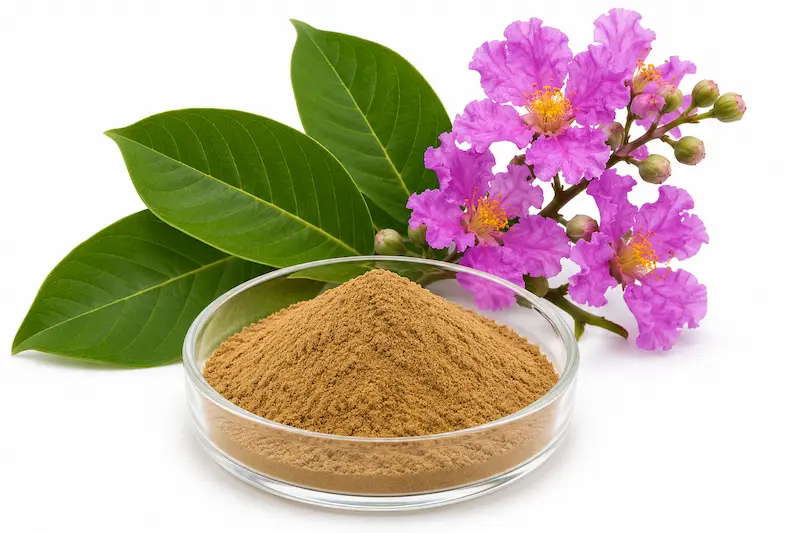
Most blood-sugar botanicals work by slowing carbohydrate digestion. Banaba leaf takes a different route: its best-studied compound, corosolic acid, is associated with helping cells take up glucose and respond better to insulin. The same leaf extract also carries antioxidant polyphenols that make it a credible natural ingredient for anti-glycation skincare. That combination, one raw material that can anchor two product lines, is why banaba leaf extract keeps appearing on the shortlist of both supplement and cosmetic formulators. This guide walks through the real banaba extract benefits, what the evidence supports, how to calculate dosage from corosolic acid grade, and what to verify before you buy in bulk.
What Is Banaba Leaf Extract?
A Traditional Herb With a Defined Marker Compound
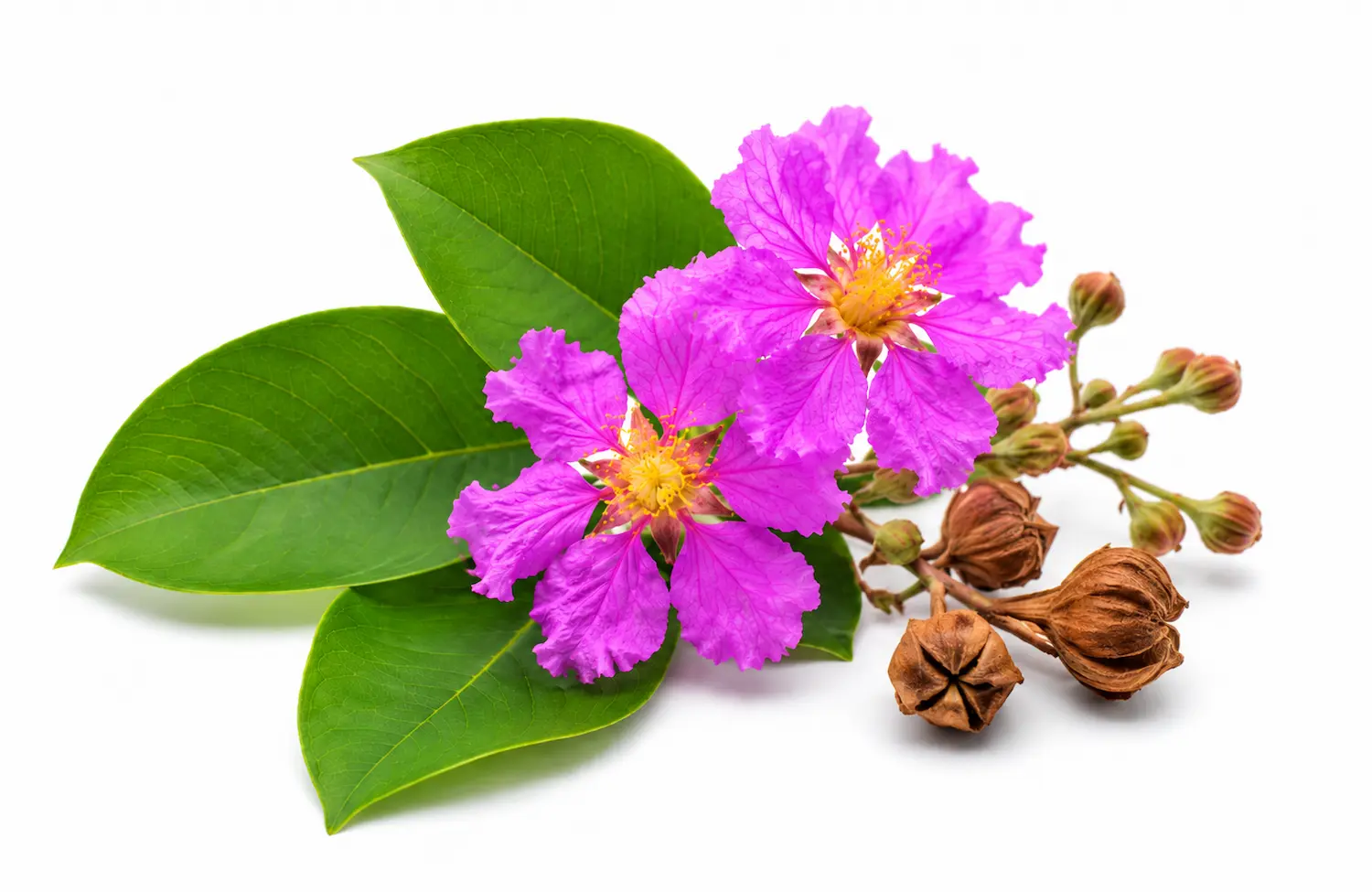
Banaba is the leaf of Lagerstroemia speciosa (giant crape myrtle), a tree native to the Indian subcontinent and Southeast Asia. The leaf has a long history in Ayurvedic practice and in Philippine folk medicine, where it was traditionally prepared as a tea. Modern supplement and cosmetic use is built on standardized banaba leaf extracts, with corosolic acid, a pentacyclic triterpenoid, as the principal marker compound[1].
Corosolic acid is not the only active. Banaba leaves also contain ellagitannins (including lagerstroemin), ellagic acid, and gallic acid. These polyphenols contribute antioxidant activity and are part of the reason whole-leaf extracts are not interchangeable with isolated corosolic acid[1].
Corosolic Acid
Triterpenoid marker compound. Linked in cell and animal studies to glucose-transporter (GLUT4) activity and improved glucose uptake; the basis for standardizing extracts to a stated percentage[2].Ellagitannins & Phenolics
Lagerstroemin, ellagic acid, and gallic acid. Contribute free-radical scavenging and antioxidant capacity, the property that supports the topical and anti-inflammatory positioning[1].Internal Use: Banaba Extract Benefits for Metabolic Health
In dietary supplements, the appeal of banaba is that it addresses glucose handling at the cellular level rather than only blocking carbohydrate digestion. The main banaba benefits supported by the research literature are:
- Supports healthy post-meal blood glucose: In cell models, banaba extract and corosolic acid stimulated glucose uptake, and corosolic acid promoted GLUT4 translocation in diabetic mice[2][3]. In a small human study, a single 10 mg dose of corosolic acid lowered plasma glucose after an oral glucose challenge in people with impaired glucose tolerance[4].
- Insulin sensitivity support: Early cell work showed insulin-like glucose-uptake activity from a banaba extract in adipocytes[3], and a dose-dependence trial of a standardized extract (1% corosolic acid) in type 2 diabetic volunteers reported lower blood glucose over several weeks[5].
- Lipid and weight-management support: Banaba extract showed anti-obesity activity in a high-fat-diet mouse model alongside its glucose effects[6], which is why it is often positioned in weight-management formulas. Human evidence here is thinner than for glucose.
- Antioxidant and anti-inflammatory activity: The polyphenol fraction scavenges free radicals in vitro, supporting use in formulas aimed at the low-grade oxidative and inflammatory load that accompanies metabolic stress[1][6].
- Gentle for long-term use: As a traditional herbal ingredient, banaba is generally positioned for daily, long-term nutritional support in office workers and people managing sugar intake.
Banaba vs Other Glucose-Support Botanicals
Buyers evaluating a metabolic formula usually compare banaba with other plant ingredients. Their primary mechanisms differ, which is also why they are sometimes combined rather than substituted:
| Ingredient | Primary Mechanism (as commonly described) | Formulation Notes |
|---|---|---|
| Banaba leaf extract | Glucose uptake into cells and insulin sensitivity via corosolic acid; GLUT4 involvement | Standardized by corosolic acid %; mild herbal profile |
| Berberine | Activates AMPK, a cellular energy sensor; also affects glucose and lipid metabolism | Strong effect size in studies; regulatory status and labeling rules vary by market; GI tolerance is a common formulation concern |
| White mulberry leaf | Inhibits alpha-glucosidase, slowing carbohydrate digestion (via DNJ) | Works in the gut; pairs naturally with an uptake-focused ingredient like banaba |
Because banaba acts on glucose uptake while digestion-blocking ingredients act earlier in the process, the two mechanisms are complementary, which is the logic behind many multi-ingredient glucose-support blends.
Topical Use: Banaba Extract in Anti-Glycation Skincare
Glycation is the non-enzymatic reaction between sugars and skin proteins such as collagen. It produces advanced glycation end products (AGEs), which cross-link collagen, stiffen the dermal matrix, and contribute to the yellowish, dull, less elastic look associated with early skin aging[7]. Ingredients that scavenge free radicals and limit glycation-related oxidative stress are therefore attractive for "anti-glycation" serums and firming creams.
| Skincare Benefit | Rationale for Banaba Extract |
|---|---|
| Anti-glycation positioning | Aimed at reducing AGE formation upstream, rather than only masking its visible results, to help protect collagen from cross-linking and stiffening |
| Antioxidant protection | Ellagitannin and phenolic content scavenges free radicals, helping defend against oxidative damage and early collagen loss |
| Soothing | Anti-inflammatory activity of the leaf polyphenols supports calmer-looking skin where glycation-related redness is a concern |
| Brightening of dull, yellowed skin | Targets the sallow tone associated with glycation, suited to anti-glycation essences and firming creams |
Specifications: What to Check on a COA
Banaba extract is sold in several standardization levels. A reliable batch should come with a certificate of analysis covering at least the following:
| Parameter | What to Confirm |
|---|---|
| Corosolic acid content | Grade (%) stated and measured by HPLC, matched batch to batch |
| Botanical identity | Lagerstroemia speciosa leaf, with plant part and extraction solvent stated |
| Loss on drying / moisture | Within the stated limit, to control caking and stability |
| Heavy metals | Lead, arsenic, cadmium, and mercury results against your target market limits |
| Pesticide and residual solvent | Test reports provided for the destination market |
| Microbiology | Total plate count, yeast and mold, and pathogen screens |
The corosolic acid percentage is the number that drives both efficacy and cost, so it should be verified by a method stated on the COA, not just quoted in a brochure.
Formulating With Banaba Extract: A Working Dosage Table
The simplest way to formulate is to work backwards from the corosolic acid amount you want per serving, then divide by the extract grade:
| Target Corosolic Acid per Serving | Extract Grade | Extract Needed per Serving |
|---|---|---|
| 10 mg | 1% | 1,000 mg |
| 10 mg | 2% | 500 mg |
| 10 mg | 5% | 200 mg |
| 10 mg | 10% | 100 mg |
Published human studies used different doses, from standardized extracts at 1% corosolic acid in a dose-response design[5] to a single 10 mg corosolic acid dose in a glucose-challenge study[4], so your target should be set with your own clinical and regulatory review. For topical products, banaba extract is typically evaluated at low single-digit inclusion levels in the water phase; confirm solubility, color, and preservative compatibility in your own base before scaling.
Application Scenarios
Blood-sugar and metabolic-health supplements: capsules, tablets, and powder sticks that pair banaba with chromium, mulberry leaf, or other glucose-support ingredients.
Weight-management formulas: a plant-based component in lipid and weight-support blends aimed at people managing sugar and calorie intake.
Functional beverages and teas: stick packs and functional drink powders where a clean, plant-forward label is the selling point.
Anti-glycation skincare: serums, essences, and firming creams positioned around anti-AGE, antioxidant, and brightening benefits with an Ayurvedic, plant-derived story.
One raw material, two product lines: a brand that already sells a metabolic supplement can extend the same botanical into a skincare line, reducing the number of new ingredients to qualify, source, and document, and giving both lines a shared "clean, traditional botanical" story.
Supplier & Sourcing Insights for Bulk Procurement
For a standardized botanical, consistent corosolic acid content and clean documentation matter as much as the price per kilogram.
| Supplier Attribute | What to Verify | WEHENGFOOD Standard |
|---|---|---|
| Sourcing Model | Whether the supplier buys direct from the producing region or through layers of intermediaries | Direct supplier sourcing straight from quality growing regions, with no middleman markup |
| Batch Consistency | Corosolic acid % and key parameters stable across lots | Batch-controlled quality with COA for every shipment |
| Compliance Documents | Full documentation set for your destination market | Complete compliance documentation available on request |
| Supply Stability | Ability to support repeat orders without gaps | Stable, planned supply |
| Technical Support | Grade recommendation matched to supplement or cosmetic use | Support for grade selection by application |
Conclusion
Banaba leaf extract earns its place on two fronts. In supplements, corosolic acid offers a glucose-uptake and insulin-sensitivity mechanism that complements digestion-focused ingredients. In skincare, its antioxidant polyphenols support an anti-glycation story for brands targeting early skin aging. The evidence is promising but not yet at the level of large clinical trials, so credible product claims, clear COA data, and the right corosolic acid grade matter more than marketing language. Working with a direct supplier who documents each batch and can advise on grade selection keeps both quality and cost under control.
FAQ
What is the main active compound in banaba leaf extract?
Corosolic acid, a pentacyclic triterpenoid, is the best-studied marker compound. Banaba leaves also contain ellagitannins such as lagerstroemin, plus ellagic and gallic acid, which add antioxidant activity.
What corosolic acid grade should I choose for a supplement?
Start from the corosolic acid amount you want per serving and divide by the grade percentage. For example, 10 mg of corosolic acid needs 500 mg of a 2% extract or 200 mg of a 5% extract. Higher grades reduce fill weight but cost more per kilogram.
Can banaba extract be used in cosmetics as well as dietary supplements?
Yes. It is used in skincare for its antioxidant and anti-glycation positioning. Supplement-grade and cosmetic-grade material have different solubility, color, and microbiological requirements, so tell your supplier the intended use when requesting a sample.
Does banaba extract interact with diabetes medication?
Because it may lower blood glucose, additive effects with glucose-lowering medication are theoretically possible. Finished products should advise consulting a healthcare professional, and claims must follow the rules of each target market.
Source Banaba Extract in Bulk
WEHENGFOOD supplies COA-verified Banaba Extract as a direct supplier: direct sourcing, no middleman markup, stable supply, and a full set of compliance documents. Our team can help you choose a corosolic acid grade for supplement or skincare development.
Request a Free Sample & QuoteReferences
- Stohs, S. J., Miller, H., & Kaats, G. R. (2012). A review of the efficacy and safety of banaba (Lagerstroemia speciosa L.) and corosolic acid. Phytotherapy Research, 26(3), 317–324.
- Miura, T., Itoh, Y., Kaneko, T., et al. (2004). Corosolic acid induces GLUT4 translocation in genetically type 2 diabetic mice. Biological & Pharmaceutical Bulletin, 27(7), 1103–1105.
- Liu, F., Kim, J., Li, Y., Liu, X., Li, J., & Chen, X. (2001). An extract of Lagerstroemia speciosa L. has insulin-like glucose uptake-stimulatory and adipocyte differentiation-inducing activities in 3T3-L1 cells. The Journal of Nutrition, 131(9), 2242–2247.
- Fukushima, M., et al. (2006). Effect of corosolic acid on postchallenge plasma glucose levels. Diabetes Research and Clinical Practice, 73(2), 174–177.
- Judy, W. V., et al. (2003). Antidiabetic activity of a standardized extract (Glucosol) from Lagerstroemia speciosa leaves in type II diabetics: a dose-dependence study. Journal of Ethnopharmacology, 87(1), 115–117.
- Klein, G., Kim, J., Himmeldirk, K., Cao, Y., & Chen, X. (2007). Antidiabetes and anti-obesity activity of Lagerstroemia speciosa. Evidence-Based Complementary and Alternative Medicine, 4(4), 401–407.
- Gkogkolou, P., & Böhm, M. (2012). Advanced glycation end products: key players in skin aging? Dermato-Endocrinology, 4(3), 259–270.