Product Introduction
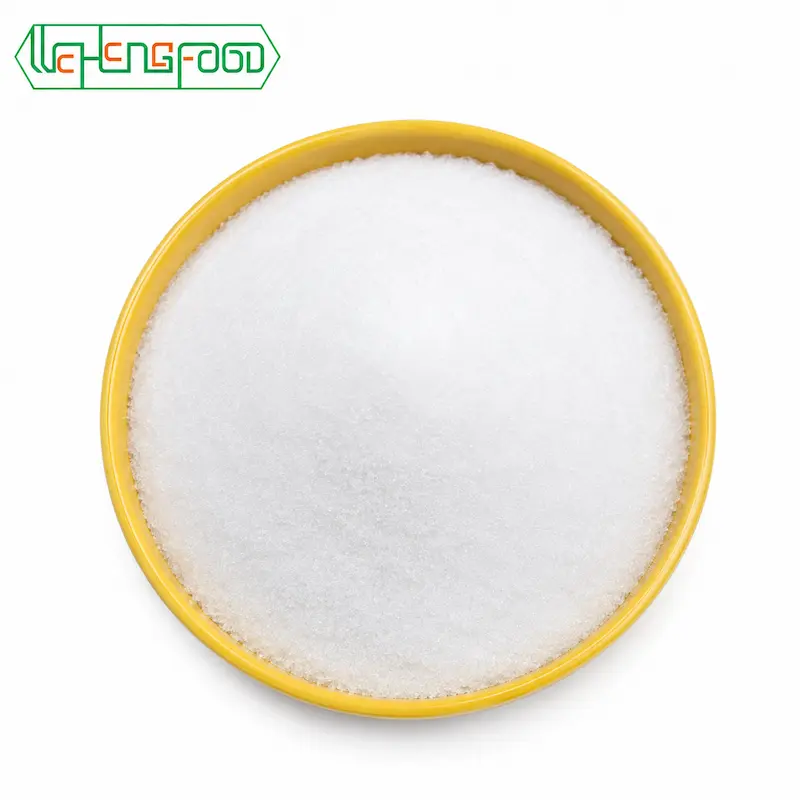
Citric Acid Monohydrate is a widely used food additive and acidity regulator with the chemical formula C₆H₈O₇·H₂O and CAS No. 5949-29-1. It is a white crystalline powder or granule with a clean, distinctly sour taste and good water solubility.
As a professional supplier of food additives, WEHENGFOOD supplies Citric Acid Monohydrate for food, beverage, pharmaceutical, personal care and industrial applications. We offer multiple particle sizes, including 8-16 mesh, 8-40 mesh and 30-100 mesh, allowing customers to select the appropriate grade and particle size according to their production process.
Citric acid is widely used as an acidity regulator, flavoring ingredient, pH adjuster and chelating agent. It is commonly found in beverages, confectionery, sauces, dairy products, processed foods and other formulations. Its combination of acidity, solubility and functional performance makes it one of the most commonly used organic acids in the food industry.
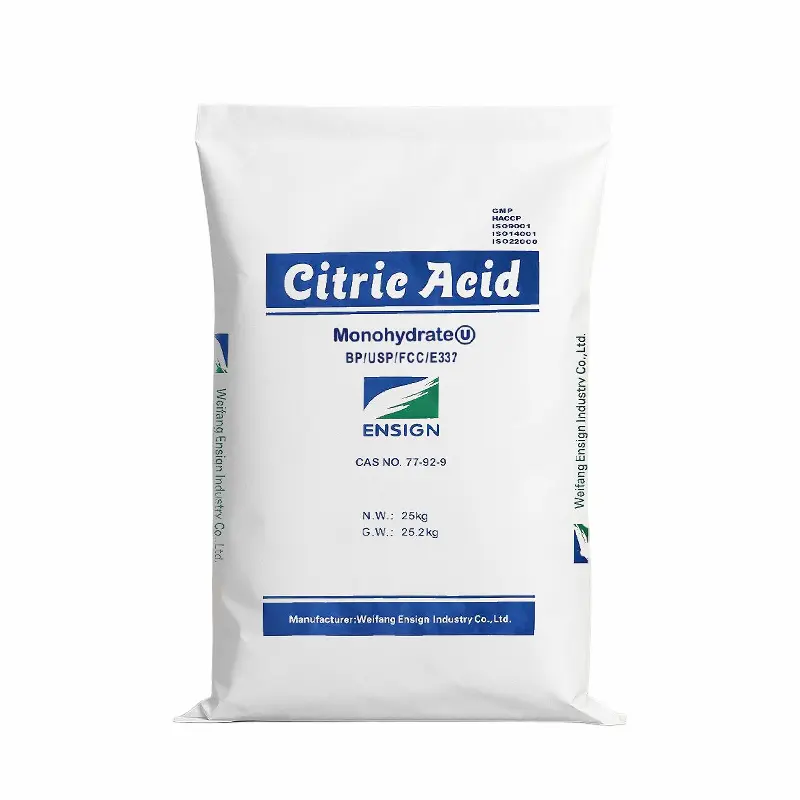
WEHENGFOOD provides competitive pricing on Citric Acid Monohydrate with quality comparable to commonly purchased brands such as ENSIGN, TTCA and RZBC, subject to the agreed specification and quality standard.For customers who are looking to reduce raw material costs without unnecessarily changing their formulation or supply chain, our Citric Acid Monohydrate can be a cost-effective alternative.
At the same time, we maintain a friendly and cooperative relationship with major brands and suppliers in the industry. WEHENGFOOD is also able to supply and distribute ENSIGN, TTCA, RZBC and other established citric acid brands according to customer requirements.This means customers can source both our competitive alternative and major branded products through one supplier, making procurement more flexible and efficient.
Certificate of Analysis
Item | Unit | Quality Standards | Analysis Results |
Characters | — | White or almost white, crystalline powder, colourless crystals or granules. Odorless, has a strongly acid taste. effloresces in dry air. Very soluble in water, freely soluble in ethanol. | Pass |
Identification | — | Pass Test | Pass |
Appearance of solution | — | Pass Test | Pass |
Assay | % | 99.5~ 100.5 | 99.9 |
Water | % | 7.5~ 8.8 | 8.65 |
Readily Carbonisable Substances | — | Pass Test | Pass |
Sulphated Ash (Residue on Ignition) | % | ≤0.05 | 0.02 |
Sulfate | mg/kg | ≤150 | <150 |
Oxalate | mg/kg | ≤100 | <100 |
Lead | mg/kg | ≤0.5 | <0.05 |
Arsenic | mg/kg | ≤1.0 | <0.3 |
Mercury | mg/kg | ≤1.0 | <0.5 |
Aluminium | mg/kg | ≤0.2 | <0.2 |
Heavy Metals | mg/kg | ≤5.0 | <5.0 |
Bacterial endotoxins | IU/mg | ≤0.5 | <0.5 |
Conclusion:The product is in conformity with BP/USP/FCC/E330 | |||
Functions and Usages
What Is Citric Acid Used For?
Citric acid (INS 330 / E330) is a multifunctional food-grade ingredient, naturally found in citrus fruits and produced commercially by fermentation. It works as an acidulant, preservative, flavor enhancer, pH regulator, and chelating agent across food, beverage, pharmaceutical, and cleaning industries.
1) Acidulant & pH Regulator
Adjusts and stabilizes pH in soft drinks, juices, jams/jellies (aids pectin gel formation), wine, and canned fruits and vegetables.
2) Natural Preservative
Lowers pH to inhibit bacteria, yeast, and mold — extending shelf life in canned foods, sauces, and preserves, and preventing browning in cut produce.
3) Flavor Enhancer
Adds a clean, citrus-like tartness that balances sweetness in candy, ice cream, sodas, teas, and baked goods.
4) Chelating Agent (Sequestrant)
Binds trace metal ions to prevent oxidation and off-flavors, protecting color and quality in oils, fats, and processed meats; also boosts the effectiveness of antioxidants like tocopherols.
5) Pharmaceutical & Supplement Use
Used in effervescent tablets, buffering systems, and mineral supplements (as citrate salts) to improve stability and absorption.
6) Industrial & Cleaning Applications
A biodegradable, eco-friendly descaling and water-softening agent for household and industrial cleaning products.
Citric Acid Monohydrate vs. Anhydrous
| Form | CAS No. | Key Trait | Best For |
|---|---|---|---|
| Monohydrate | 5949-29-1 | ~8% water content | Standard food & beverage use |
| Anhydrous | 77-92-9 | ≤0.5% water | Powdered mixes, effervescent tablets |
Both meet BP/USP/FCC/E330 standards and are GRAS-recognized.
Factory

Package
Exhibitions

FAQ
Q1: What is Citric Acid Monohydrate?
Citric Acid Monohydrate is a naturally occurring organic acid (C6H8O7·H2O) produced through the fermentation of carbohydrate sources such as corn starch or molasses, widely used as an acidulant, preservative, and flavor enhancer in food, beverage, and industrial applications.
Q2: What is the difference between Citric Acid Monohydrate and Anhydrous Citric Acid?
Citric Acid Monohydrate contains one molecule of water and is typically used in applications where moisture stability is not a concern, while Anhydrous Citric Acid has the water removed, making it better suited for dry mixes and powdered products that require longer shelf life and low moisture content.
Q3: What specifications and grades are available?
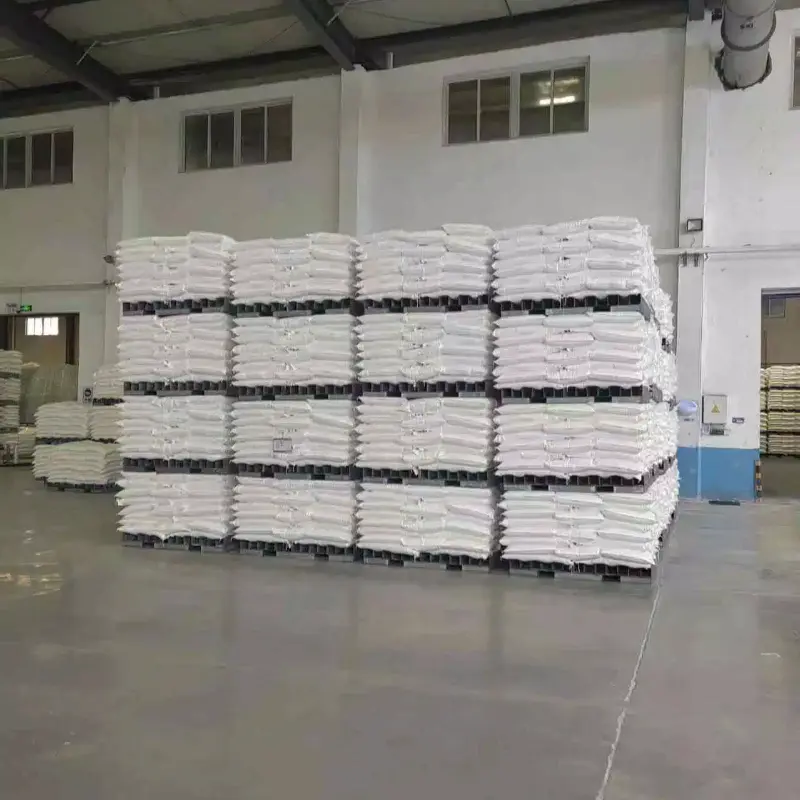
We supply Citric Acid Monohydrate in Food Grade and BP/USP Pharmaceutical Grade, with purity ≥99.5%, available in granular, fine granular, and powder forms, packed in 25kg bags or customized packaging upon request.
Q4: What are the main applications of Citric Acid Monohydrate?
Citric Acid Monohydrate is widely used as an acidity regulator in beverages, jams, and candies, as a preservative in canned foods, as a chelating agent in industrial cleaning products, and as a buffering agent in pharmaceuticals and cosmetics.
Q5: Is Citric Acid Monohydrate safe for food use?
Yes, Citric Acid Monohydrate is generally recognized as safe (GRAS) by the FDA and complies with FCC, EU, and Halal/Kosher standards, making it suitable for food, beverage, and pharmaceutical formulations worldwide.
Q6: How should Citric Acid Monohydrate be stored?
Citric Acid Monohydrate should be stored in a cool, dry, and well-ventilated area, away from direct sunlight and moisture, with a typical shelf life of 24 months when kept in its original sealed packaging.