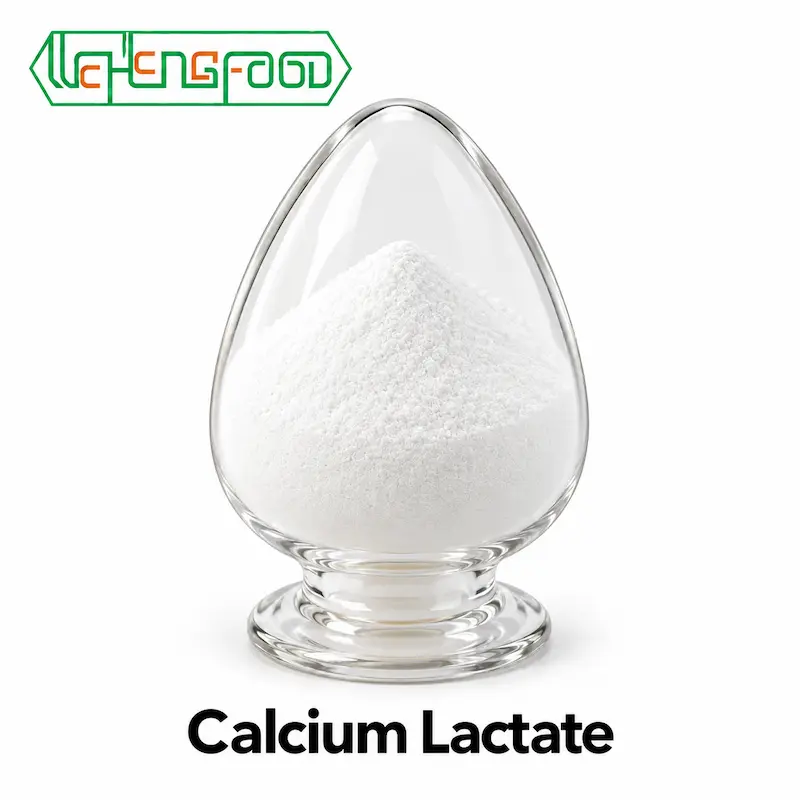
Product Introduction
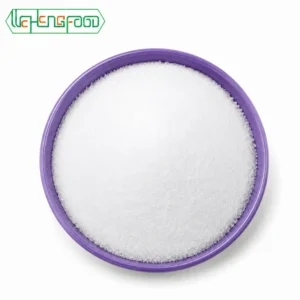
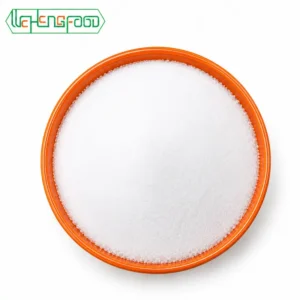
Calcium lactate is the calcium salt of lactic acid. It is made by neutralizing lactic acid, usually from fermentation, with a calcium source. The result is a white, nearly odorless calcium lactate powder that dissolves readily in water. Its formula is C₆H₁₀CaO₆, and it is most often supplied as calcium lactate pentahydrate (with five molecules of crystal water). It is also available in an anhydrous form.
Both forms are used as a food-grade calcium source and as a multifunctional food additive (E327). The two forms differ mainly in calcium content. The anhydrous form contains roughly 18% elemental calcium, and the pentahydrate roughly 13%.
As a China supplier, exporter and factory-direct source of calcium lactate, WEHENGFOOD supplies both grades for food, beverage, nutraceutical and pharmaceutical customers worldwide.
Key Features
- High bioavailability: Calcium lactate is dissolved before it is absorbed, so it works well as a calcium lactate supplement ingredient.
- High solubility: It dissolves more easily than calcium carbonate, which suits clear beverages, syrups and liquid formulations.
- High calcium content: It is an efficient calcium source for fortification without strongly affecting taste.
- High stability: It stays stable in processing, in storage and across a wide range of formulations.
Certificate of Analysis
Test Item | Standard | Result |
Assay,w/% | 98.0~101.0 | 98.9 |
Loss on drying,w/% | 22.0-27.0 | 24.7 |
Aqueous solubility | Pass the test | Qualified |
Free acid and basicity | Pass the test | Qualified |
Volatility fat acids | Pass the test | Qualified |
Lead ,mg/kg, ≤ | 10 | <10 |
Heavy metals,mg/kg,≤ | 20 | <20 |
Arsenic,mg/kg,≤ | 2.0 | <2 |
Iron,w/%,≤ | 0.005 | <0.005 |
Fluoride,w/%,≤ | 0.0015 | <0.0015 |
Sulphate,w/%,≤ | 0.075 | <0.075 |
Chloride,w/%,≤ | 0.05 | <0.05 |
Magnesium and Alkali Salts,w/%,≤ | 1 | <1 |
Functions of Calcium Lactate
1. Calcium Supplementation (Nutrient Fortification)
Calcium lactate is widely used to fortify foods and beverages with calcium. In calcium lactate vs calcium carbonate comparisons, carbonate has more calcium by weight. Calcium lactate is chosen where better solubility, a milder taste and good dispersion matter. Compared with other organic calcium salts such as calcium citrate and calcium gluconate, it offers a balanced mix of calcium content, solubility and cost. Related blends such as calcium lactate gluconate are used where very high solubility is needed, for example in effervescent tablets and clear drinks.
2. Firming Agent
Calcium ions bind with pectin in plant cell walls and help fruit and vegetables keep their crunch. Calcium lactate is a popular firming agent for fresh-cut apples, melons, pickles and canned vegetables. It works without the bitter or salty aftertaste that calcium chloride can leave.
3. Gelling Agent
Calcium lactate supplies the calcium ions that set alginate and low-methoxyl pectin gels. This is the basis of sodium alginate and calcium lactate spherification, used for popping boba, caviar-style pearls, fruit spheres and restructured foods. Compared with calcium chloride, the gel forms more gently and the flavor is cleaner.
4. Flavouring Agent
Calcium lactate gives a mild, slightly sweet taste and helps round off flavors. It also helps reduce bitterness in some formulations.
5. Stabilizer and Thickener
Calcium lactate improves texture and structure in gels, desserts and dairy-style products. It helps stabilize proteins and hydrocolloids and supports body in the finished product.
Applications of Calcium Lactate
Beverages and Dairy Alternatives: Calcium-fortified juices, plant-based milks (soy, oat, almond), sports drinks and vegan dairy-free yogurts. It dissolves cleanly and does not leave chalky sediment.
Fruit and Vegetable Processing: Firming for fresh-cut fruit, canned and pickled vegetables, and fruit preparations.
Spherification and Molecular Gastronomy: Gelling bath for sodium alginate in popping boba, fruit caviar and edible pearls.
Bakery and Cereals: Calcium enrichment in bread, cereals and baked snacks. It also acts as a mild leavening-support ingredient and dough conditioner.
Confectionery and Gummies: Calcium fortification and texture support in gummies, jellies and sugar-free sweets.
Dietary Supplements and Nutraceuticals: Raw material for calcium tablets (for example calcium lactate tablet 500 mg and 300 mg formats), capsules, powders and effervescent products, often combined with vitamin D3 or magnesium lactate in bone-health formulas.
Pharmaceutical and Specialty Uses: Excipient and calcium source in oral formulations. Calcium lactate is also commonly dissolved into a calcium lactate solution for liquid and clear-drink applications.
Animal Nutrition: Calcium source in selected feed and pet-nutrition applications.
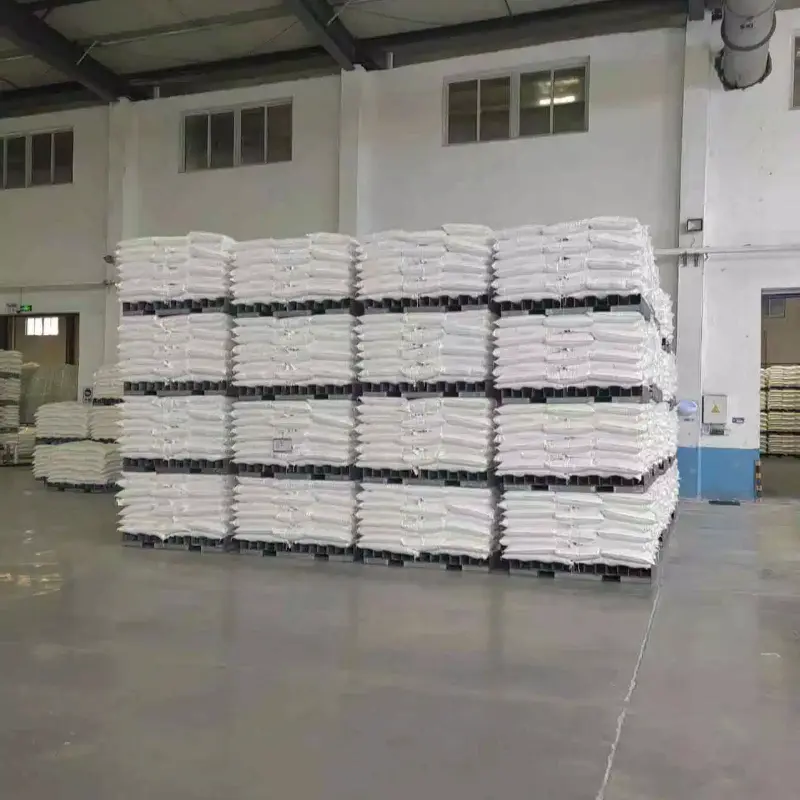
Factory

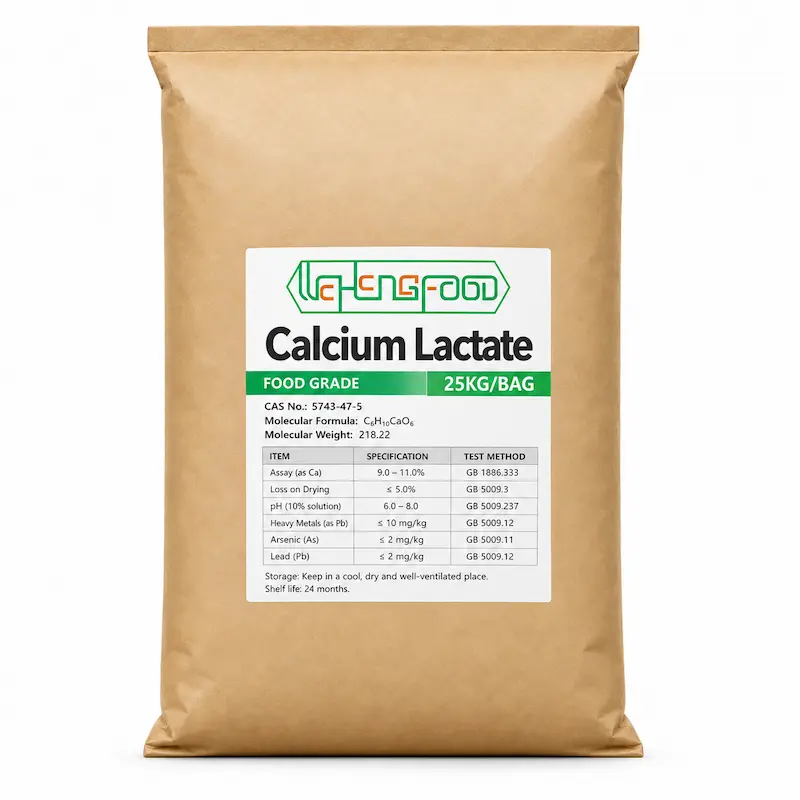
Package
Exhibitions

FAQ
Q1: What is calcium lactate, and what is it used for?
Calcium lactate is the calcium salt of lactic acid, supplied as a white, odorless, water-soluble powder (formula C₆H₁₀CaO₆). It is used in food and beverage fortification as a calcium source. It also serves as a firming agent for fruit and vegetables, a gelling agent for sodium alginate spherification, and a stabilizer in dairy-style and bakery products. It is a common ingredient in calcium supplement tablets and powders.
Q2: What is the difference between calcium lactate pentahydrate and anhydrous calcium lactate?
Calcium lactate pentahydrate contains five molecules of crystal water and about 13% elemental calcium. The anhydrous form has no crystal water and about 18% calcium. Pentahydrate is the more common grade for general food and beverage use. Anhydrous suits formulas where moisture must be kept low or a higher calcium load is needed. WEHENGFOOD supplies both grades.
Q3: How does calcium lactate compare with calcium carbonate, calcium citrate and calcium gluconate?
Calcium carbonate has the highest calcium content (about 40%) but dissolves poorly in water. Calcium lactate (13–18%) dissolves much better, so it suits clear beverages, syrups and liquid products with a mild taste. Calcium citrate (about 21%) is also well absorbed and slightly more acidic in flavor. Calcium gluconate (about 9%) is highly soluble but low in calcium per gram. The best choice depends on your target calcium level, solubility and taste requirements.
Q4: Can calcium lactate be used with sodium alginate for spherification?
Yes. Calcium lactate supplies the calcium ions that gel sodium alginate, and it is widely used for popping boba, fruit caviar and edible pearls. It gives a cleaner, less bitter taste than calcium chloride and forms the gel more gently, which gives better control over sphere size and texture. It can be dissolved in water to make a calcium lactate solution bath or added directly into the formulation (reverse spherification).
Q5: Is calcium lactate suitable for vegan and clean-label products?
Yes. Our calcium lactate is made from lactic acid obtained by fermentation and a calcium source, with no animal-derived raw materials, so it fits vegan and plant-based formulations. It is a recognized food additive (E327) and is widely used in calcium-fortified plant milks, juices, gummies and dietary supplements.
Q6: What is the minimum order quantity for calcium lactate?
The minimum order quantity for calcium lactate is 100 KGS. This applies to both calcium lactate pentahydrate and anhydrous grades, so you can order a trial quantity before moving to full-container shipments.