Product Introduction
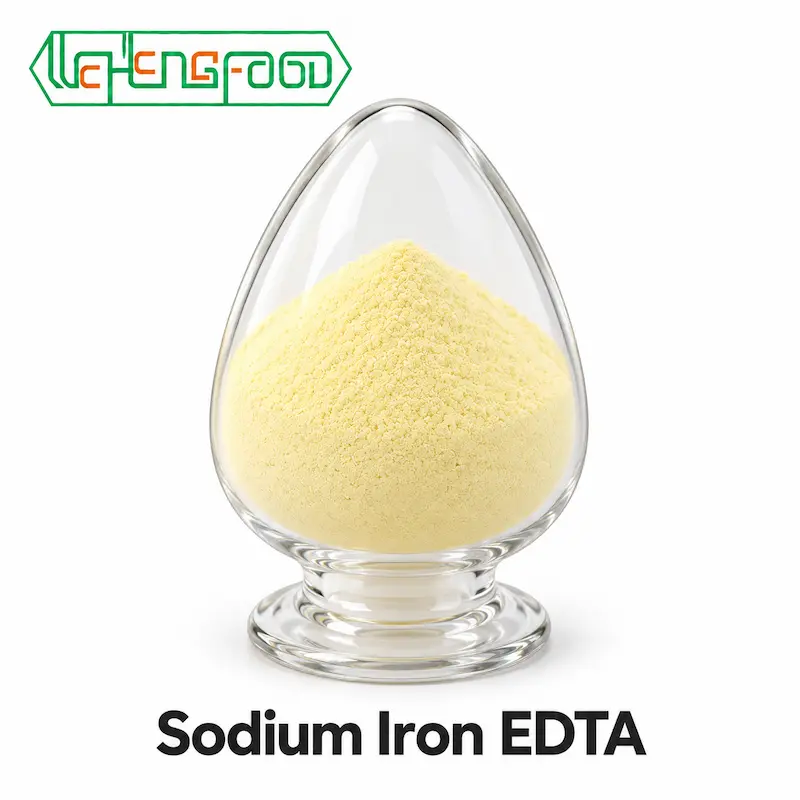
Sodium Iron EDTA (also written NaFeEDTA, ferric sodium EDTA or Fe EDTA) is a light yellow to yellow crystalline powder. It is a chelate in which one iron(III) ion is held inside an ethylenediaminetetraacetic acid (EDTA) molecule, with sodium as the counter-ion. The trihydrate form has the molecular formula C₁₀H₁₂FeN₂NaO₈·3H₂O and a molecular weight of about 421.1, which gives an iron content of roughly 13%.
If you are asking what is EDTA in a food context, it is a chelating agent: its molecular “cage” binds metal ions. Common EDTA salts such as disodium EDTA and calcium disodium EDTA are used as sequestrants to protect color and flavor. Sodium Iron EDTA works differently. Here the EDTA is already bound to iron, so the compound is used to deliver iron in food fortification, not to remove metals.
The chelate structure is what makes NaFeEDTA useful. Iron in plant-based diets is often poorly absorbed because phytates and polyphenols bind it in the gut. The EDTA ring helps keep the iron available in these conditions, so NaFeEDTA is widely recommended for foods eaten with cereals, legumes and other high-phytate staples. It is also stable in acidic, salty liquids, where simple iron salts tend to cause off-colors or precipitation.
As a China supplier, manufacturer and exporter of food ingredients, WEHENGFOOD™ supplies food-grade Sodium Iron EDTA to fortification programs, sauce producers and premix manufacturers worldwide.
Certificate of Analysis
Test Item | Specification | Test Result |
Appearance | Light yellow powder | Conforms |
Identification | Pass test | Pass |
Iron (Fe), % | 12.5–13.5 | 13.17 |
EDTA, % | 65.5–70.5 | 68.41 |
Loss on drying, % | ≤ 13.5 | 12.50 |
Free iron (as Fe³⁺), % | ≤ 0.05 | < 0.05 |
pH (10 g/L solution) | 3.5–5.5 | 4.60 |
Water-insoluble matter, % | ≤ 0.1 | < 0.1 |
Nitrilotriacetic acid, %* | ≤ 0.1 | < 0.1 |
Chloride (as Cl), % | ≤ 0.06 | < 0.06 |
Sulfate (as SO₄), % | ≤ 0.06 | < 0.06 |
Lead (Pb), mg/kg | ≤ 1.0 | < 1.0 |
Total arsenic (as As), mg/kg | ≤ 1.0 | < 1.0 |
Functions of Sodium Iron EDTA
1. Bioavailable iron fortification. NaFeEDTA supplies iron in a form that remains absorbable in the presence of phytic acid and polyphenols. Studies in high-phytate diets have reported higher absorption than ferrous sulfate. This is why public-health programs often consider it for staple foods.
2. Good sensory and processing stability. Iron added to liquid foods can cause darkening, metallic taste or sediment. The chelated form is far less reactive, which helps in sauces, condiments and beverages with long shelf lives.
3. Compatibility with salty and acidic matrices. The compound stays dissolved and stable in soy sauce, fish sauce and similar high-salt products.
4. Lower interaction with other nutrients. Because the iron is protected inside the chelate, it is less likely to catalyze oxidation of fats, vitamins and flavors than free iron salts.
5. Dosing flexibility. The iron content is known and consistent, so formulators can calculate the dose from the target iron per serving and the local fortification regulation.
Uses and Applications
- Sauces and condiments: soy sauce and fish sauce are the best-known carriers. Iron-fortified soy sauce and fish sauce programs in China and Vietnam used NaFeEDTA for this reason.
- Cereal and flour products: wheat flour, maize flour and other cereal staples, especially where phytate content is high.
- Complementary foods and nutrition products: premixes, infant cereals and other fortified products, subject to local rules.
- Seasonings and curry/spice blends: salty or acidic powders and pastes that are consumed regularly.
- Beverages and functional drinks: where a stable, low-reactivity iron source is needed.
Food Grade vs. Fertilizer Grade
Fe EDTA also appears in agriculture as a chelated iron micronutrient fertilizer, which is why some searches for Fe EDTA mix the two uses. The food-grade Sodium Iron EDTA from WEHENGFOOD™ is made and tested for food use. Fertilizer-grade material should not be used in food.
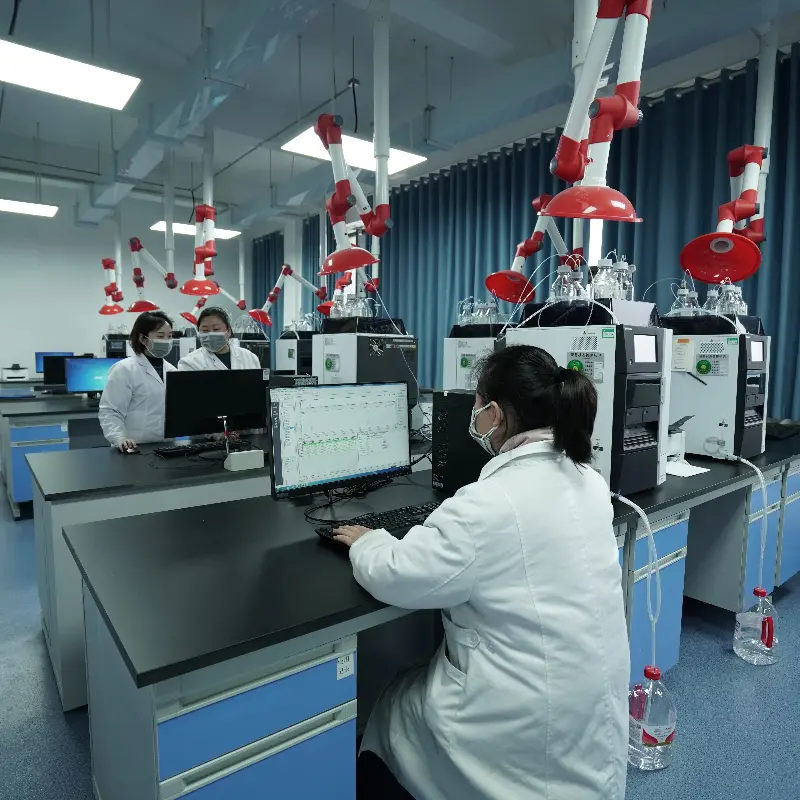
Factory
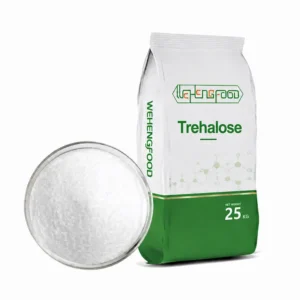
Package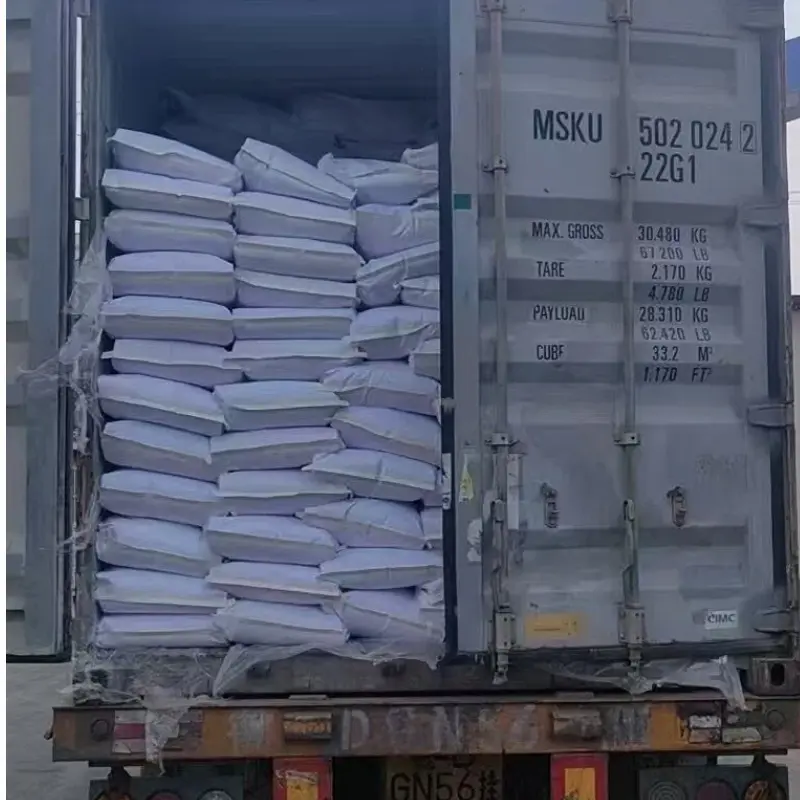
Exhibitions

FAQ
Q1: What is Sodium Iron EDTA (NaFeEDTA) and how is it different from disodium EDTA?
Sodium Iron EDTA (NaFeEDTA, Fe EDTA) is a chelated iron compound used as an iron fortificant in food. Its EDTA molecule is already bound to iron, so it adds iron to food. Disodium EDTA and calcium disodium EDTA are free chelating agents used as sequestrants, and they bind metal ions already present in the food. The two types are not interchangeable.
Q2: Why is Sodium Iron EDTA used to fortify soy sauce, fish sauce and cereals?
NaFeEDTA stays absorbable in diets high in phytates and polyphenols, which bind iron from simple salts such as ferrous sulfate. It is also stable and low-reactive in salty, acidic liquids. This makes it a practical choice for soy sauce, fish sauce, and cereal staples such as flour, where color change and off-flavors are common problems with other iron sources.
Q3: What is the iron content and what does the formula look like?
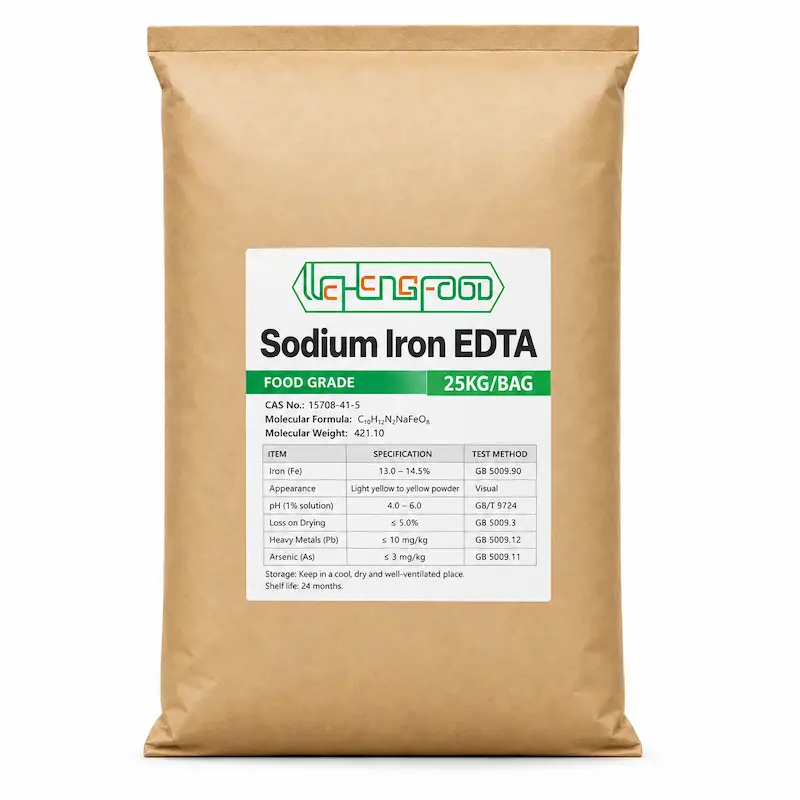
The trihydrate form has the formula C₁₀H₁₂FeN₂NaO₈·3H₂O and a molecular weight of about 421.1. Its iron content is roughly 13%, and commercial food-grade material is typically 12.5%–13.5%. The powder is light yellow to yellow and dissolves in water. Please check the exact values against the COA of your batch.
Q4: Is Sodium Iron EDTA safe and permitted in food?
JECFA and other international bodies have evaluated NaFeEDTA as an iron source for food fortification programs, and it is used in several countries. Permitted foods and maximum levels differ by market, so check the rules of your destination country (for example EU, US or Asia) before launch. It is a food ingredient and is not related to EDTA chelation therapy.
Q5: What is the difference between food-grade Sodium Iron EDTA and Fe EDTA fertilizer?
Fe EDTA is also sold as a chelated iron micronutrient fertilizer for crops. The chemistry is similar, but fertilizer grade is not made or tested for human consumption. Food-grade Sodium Iron EDTA is produced for food use and supplied with a COA, MSDS and specification sheet. Never use fertilizer-grade material in food.
Q6: What is the minimum order quantity for Sodium Iron EDTA?
The minimum order quantity for Sodium Iron EDTA is 100 KGS. Samples and a COA are available for evaluation before you place a bulk order.