Product Introduction
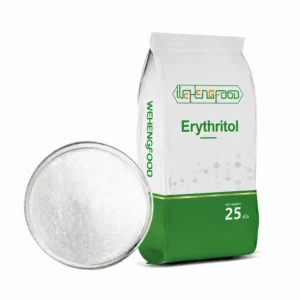
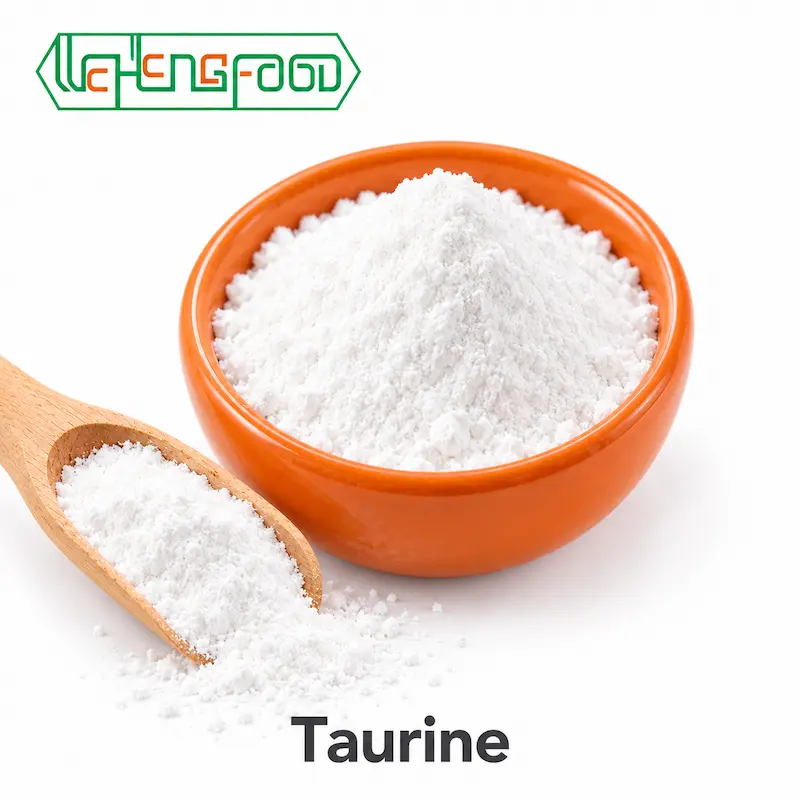
Taurine is a sulfur-containing amino acid found naturally in the human body, especially in the heart, brain, retina and muscles. It is one of the most widely used functional nutrients in the world. At WEHENGFOOD, we are a professional China taurine supplier, manufacturer and exporter. We supply pure taurine powder with stable quality and bulk packing to food, beverage, pet food, feed and supplement makers worldwide.
Our taurine is produced by chemical synthesis. It is not extracted from animal sources, which makes it suitable for formulas that must be animal-free. It dissolves well in water and has a mild, slightly acidic taste. That makes it easy to blend into energy drinks, powdered mixes, capsules, tablets and pet food.
What Is Taurine?
People often search “what is taurine” because the name suggests an animal origin. The word comes from Taurus (Latin for bull), because taurine was first isolated from ox bile in 1827. Today, commercial taurine is made synthetically. It has no connection to bull sperm, a common myth.
Taurine is technically an amino sulfonic acid rather than a standard protein-building amino acid. It is also found in meat, fish and shellfish, which are the main dietary sources of taurine. Many food and supplement manufacturers add pure taurine to formulas to ensure a consistent, measurable amount in every serving.
Certificate of Analysis
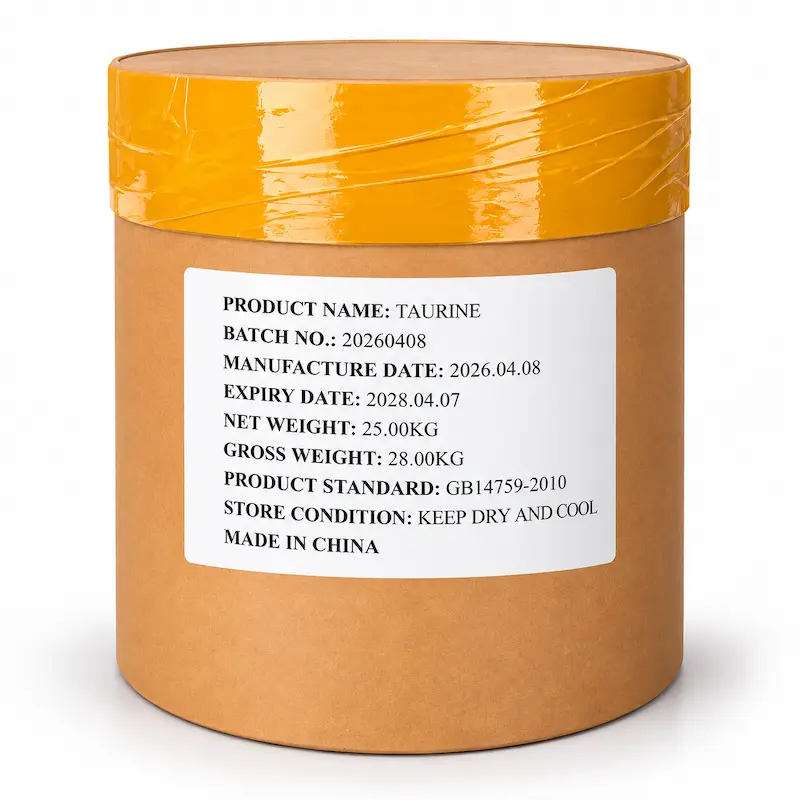
Item | Specification | Result |
Appearance | White crystalline powder, odorless | Pass |
Identification (Infrared Absorption) | Conforms | Conforms |
Clarity and color of solution | Clear and colorless | Pass test |
Chloride | < 0.011% | < 0.010% |
Sulfate | < 0.010% | < 0.010% |
Ammonium | < 0.02% | < 0.015% |
Heavy metals | < 10ppm | < 8ppm |
Iron | < 10ppm | < 10ppm |
Related substances | < 0.2% | < 0.2% |
Loss on drying | < 0.20% (105°C, 2 hours) | 0.09% |
Residue on ignition | < 0.1% | 0.07% |
Assay (on the dried basis) | 99.0%–101.0% | 99.4% |
pH | 4.1–5.6 | 5.0 |
Total plate count | NMT 1000/g | < 10/g |
Mold | NMT 100/g | < 10/g |
Yeast | NMT 100/g | < 10/g |
E.Coli | Negative/10g | Not found |
Salmonella | Negative/25g | Not found |
Key Functions and Benefits of Taurine
- Supports energy drink and sports nutrition formulas. Taurine is a standard ingredient in energy drinks and pre-workout products. It is often combined with caffeine, B vitamins, creatine or carnitine. Taurine is not caffeine and is not a stimulant on its own, so formulators use it alongside other actives.
- Supports normal cell function. Taurine takes part in osmoregulation (cell fluid balance), calcium signaling and bile salt conjugation. These are the reasons it is regarded as a conditionally essential nutrient.
- Supports heart, eye and nervous-system nutrition. Taurine is present at high levels in cardiac muscle, the retina and the brain. Many health care products list it for general wellness.
- Supports relaxation and sleep formulas. Interest in taurine for sleep has grown as it is blended with other calming ingredients such as glycine, GABA, L-theanine and magnesium. Magnesium taurate (magnesium taurine) is also a popular combined form.
- Essential for cats. Cats cannot make enough taurine themselves, so it must be supplied in their diet. Taurine deficiency in cats can seriously affect heart, vision and reproduction. This is why taurine in cat food is a basic requirement for complete feline diets.
- Supports dogs and aquaculture. Some dogs on certain diets, and many farmed fish and shrimp species, benefit from added taurine. This is why taurine for dogs and aqua feed use is growing.
Applications of Taurine
| Industry | Typical Products |
|---|---|
| Sports Nutrition & Beverages | Energy drinks, functional beverages, sports drinks, pre-workout powders, creatine-and-taurine blends |
| Animal Nutrition | Dry and wet cat food, dog food, treats, aqua feed |
| Nutritional Supplements | Taurine capsules and tablets (e.g. 1000 mg servings), health care products, infant formula and baby milks |
| Others | Pharmaceuticals, cosmetics, shampoos and daily-use chemicals |
Dosage note: Usage varies by product type and local regulations. Many beverage and supplement servings fall around 1000 mg of taurine, and some energy drinks contain around 1000 mg per serving. Please check the limits that apply in your target market. Our team can share technical data and documents to support your formulation.
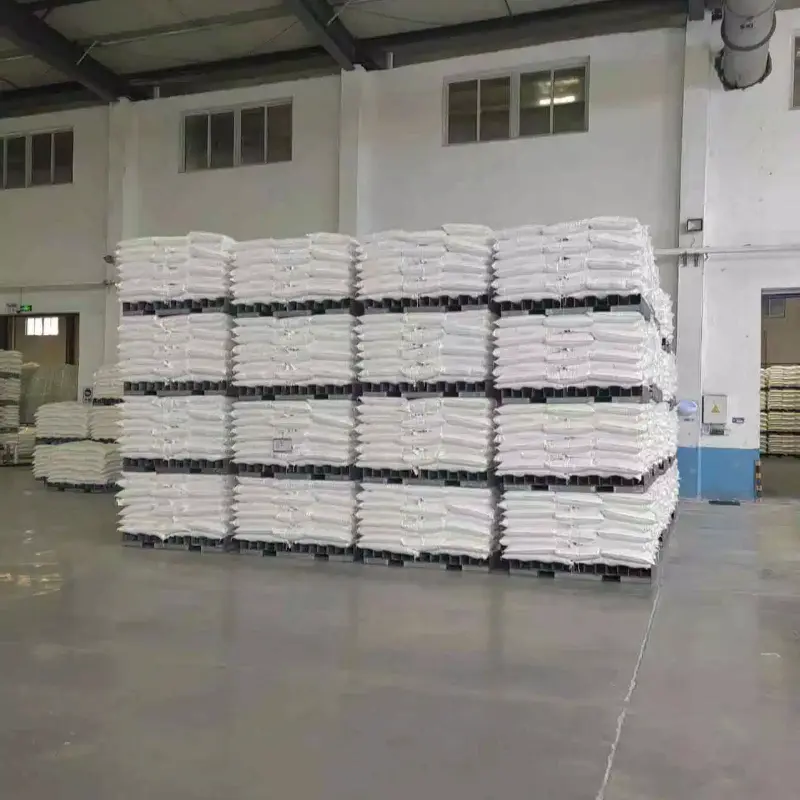
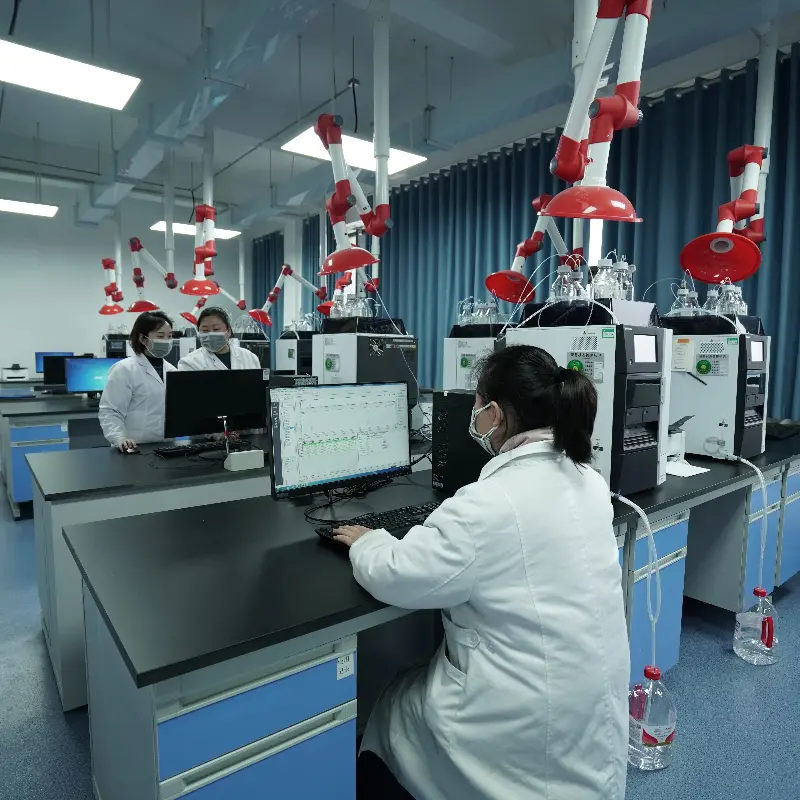
Factory
Package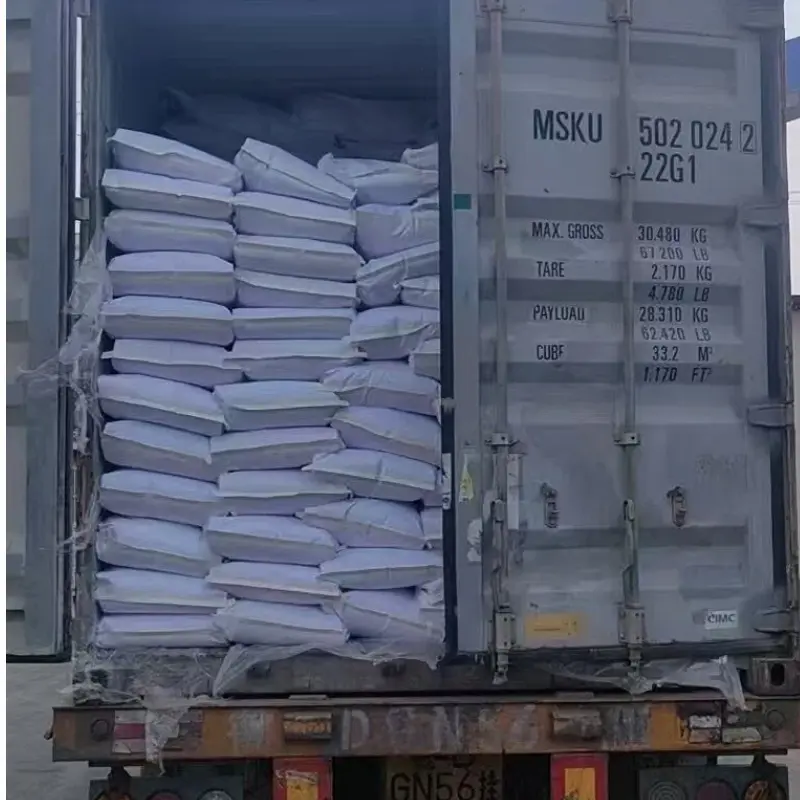
Exhibitions

FAQ
Q1: What is taurine and what is it used for?
Taurine is a sulfur-containing amino acid found naturally in the heart, brain, eyes and muscles. It is also found in meat, fish and shellfish. Commercially, taurine powder is used in energy drinks, sports nutrition, pet food, aqua feed, nutritional supplements and infant formula. It is also used in pharmaceuticals, cosmetics and daily-use chemicals.
Q2: Is taurine a stimulant, and is it the same as caffeine?
No. Taurine is an amino sulfonic acid and does not act as a stimulant on its own. It is often added to energy drinks alongside caffeine, B vitamins or creatine, which is why people confuse the two. Formulators use taurine for its nutritional role, not for a caffeine-like effect.
Q3: Why do cats need taurine, and do dogs need it too?
Cats cannot make enough taurine, so it must come from their food. This is why taurine in cat food is a basic requirement for complete feline diets. Most dogs can produce some taurine themselves, but certain diets and breeds may benefit from added taurine. Please follow the pet food and feed regulations of your target market.
Q4: Is your taurine synthetic or animal-derived?
Our pure taurine is made by chemical synthesis. It is not extracted from animal sources, so it is suitable for animal-free formulations. The name comes from Taurus because taurine was first isolated from ox bile in 1827, but modern commercial taurine has no animal origin.
Q5: How much taurine is used in a product, and how should it be stored?
Usage depends on the product type and local regulations. Many beverage and supplement servings are around 1000 mg of taurine. Please check the limits that apply in your market. Store taurine in a cool, dry, well-ventilated place away from moisture, and keep the bag sealed after opening.
Q6: Are you a taurine supplier in China, and what is your MOQ?
Yes. WEHENGFOOD is a China taurine supplier, manufacturer and exporter. Our MOQ for taurine powder is 100 KGS, and we ship worldwide.