Product Introduction
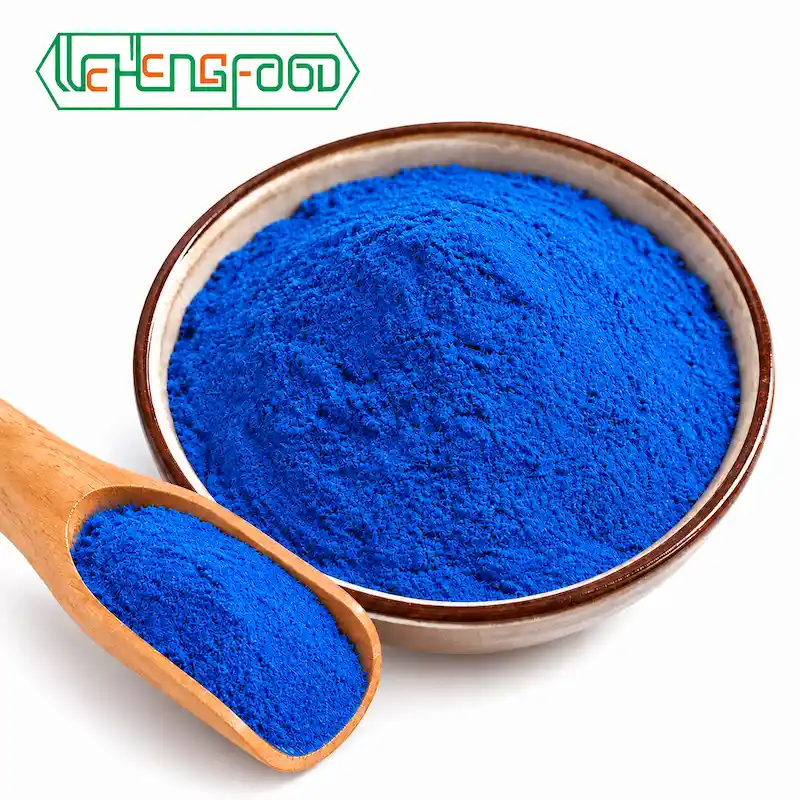
Phycocyanin powder, also sold as blue spirulina powder or blue spirulina extract, is a natural blue pigment-protein extracted from Spirulina platensis, a type of cyanobacteria. Unlike green chlorophyll or red-orange astaxanthin, phycocyanin gives a clear, vivid blue shade that is rare among natural colorants. This is why it is the leading natural replacement for synthetic Brilliant Blue (FD&C Blue No. 1) in clean-label foods.
Chemically, phycocyanin spirulina extract is a water-soluble protein complex. It is built from alpha and beta subunits that carry the chromophore phycocyanobilin, the part responsible for its phycocyanin color. It belongs to the same phycobiliprotein family as phycoerythrin, the red pigment found in red algae.
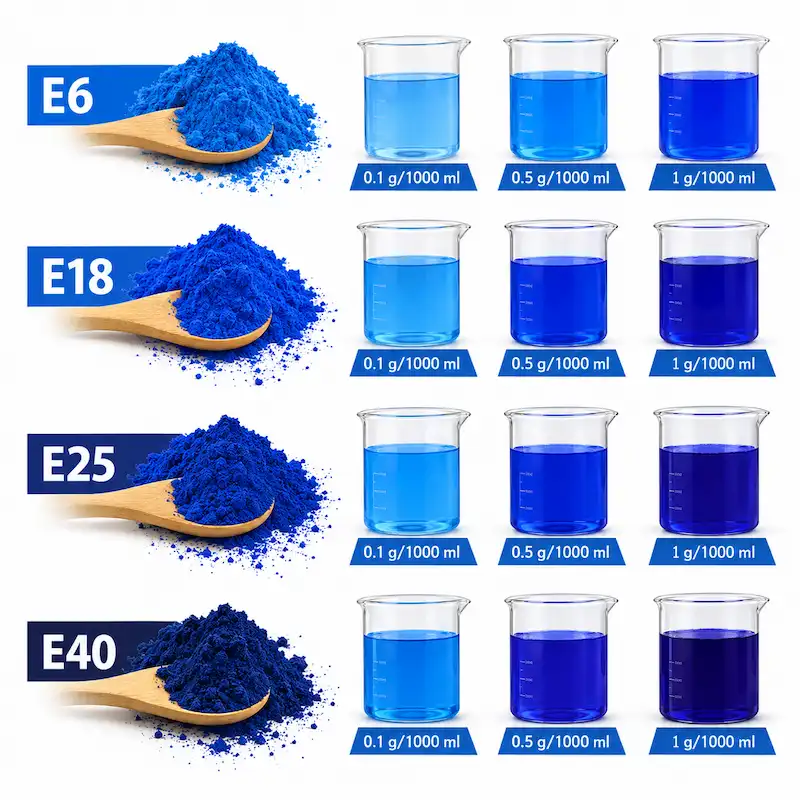
As a professional China phycocyanin supplier, manufacturer and exporter, WEHENGFOOD supplies five standardized grades, E3, E6, E18, E25 and E40. The “E” value is the color value (E1%/1cm at about 618 nm), so a higher E-number means a stronger blue and a higher phycocyanin content. You can choose the exact grade for your color depth, cost target and application.
Main Specifications in the Market
| Specification | E6 | E18 | E25 | E40 |
|---|---|---|---|---|
| Protein | 15~20% | 35~40% | 55~60% | 80~85% |
| Phycocyanin | 20~25% | 50~55% | 76% | 92% |
Which Grade Should You Choose?
- E3: Entry-level, low-cost grade. Suited to large-volume coloring where a light blue is enough, such as candies, icings and dry mixes.
- E6: Economical grade for soft drinks, jellies, ice cream and confectionery.
- E18: The most common all-round grade. A strong blue at a balanced price for beverages, dairy, bakery fillings, chewing gum and sugar panning.
- E25: High-strength grade. Gives deep blue at very low dosage, and suits premium beverages, yogurt and nutritional products.
- E40: Highest-purity grade, with up to 92% phycocyanin. Used in dietary supplements, cosmetics, and applications that need maximum color strength or high purity.
Certificate of Analysis
Item | Specification | Result | Method |
Basic Product Information |
|
|
|
Genus and Species | Spirulina platensis | Conform | TLC |
Part of the Plant | Whole herb | Conform | TLC |
Country of Origin | China | Conform | TLC |
Marker Compounds |
|
|
|
Color Value (10% E618nm) | >180 unit | 189 unit | UV |
Organoleptic Data |
|
|
|
Appearance | Fine Powder | Conform | GJ-QCS-1008 |
Color | Blue | Conform | GB/T 5492-2008 |
Odor | Characteristic | Conform | GB/T 5492-2008 |
Taste | Characteristic | Conform | GB/T 5492-2008 |
Physical Characteristics |
|
|
|
Particle Size | 100.0% pass 80 mesh | Conform | GB/T 5507-2008 |
Loss on Drying | <8.0% | 7.1% | GB/T 14769-1993 |
Ash | <8.0% | 6.5% | GB 5009.4-2016 |
Solubility | Soluble in water | Conform | Visual |
Chemical Tests |
|
|
|
Lead (Pb) | <0.5 ppm | Conform | ICP/MS or AAS |
Arsenic (As) | <0.5 ppm | Conform | ICP/MS or AAS |
Mercury (Hg) | <0.1 ppm | Conform | ICP/MS or AAS |
Cadmium (Cd) | <0.1 ppm | Conform | ICP/MS or AAS |
Microbiology |
|
|
|
Total Plate Count | <1000 CFU/g | 310 CFU/g | AOAC 990.12, 18th |
Total Yeast & Mold | <100 CFU/g | <30 CFU/g | FDA (BAM) Chapter 18, 8th |
Coliforms | <10 CFU/g | <10 CFU/g |
|
E. Coli | Negative | Negative | AOAC 997.11, 18th |
Salmonella | Negative | Negative | FDA (BAM) Chapter 5, 8th |
Pathogenic Bacteria | Negative | Negative | / |
Functions and Benefits
- Natural blue colorant: Provides a bright blue to blue-green shade, and green when blended with natural yellows. It is a clean-label alternative to synthetic blue dyes.
- Strong tinting power: High grades such as E25 and E40 need only a very small dose, which lowers cost per kilogram of finished product.
- Water-soluble: Dissolves easily in water-based systems, so it disperses evenly with no sediment.
- Natural protein source: It is a spirulina-derived pigment-protein, which fits plant-based and “free-from” positioning.
- Antioxidant research interest: Phycocyanin and phycocyanobilin are widely studied for antioxidant activity. Check local regulations before making any health claims.
- Fluorescent properties: Phycocyanin fluoresces strongly, so it is also used as a labeling reagent in research.
Applications and Uses
- Beverages: Soft drinks, sports drinks, blue spirulina lattes, energy drinks, alcoholic drinks.
- Confectionery: Hard candy, gummies, chewing gum, sugar panning, fondant, icing, sprinkles.
- Dairy and frozen desserts: Ice cream, yogurt, milk drinks, popsicles, puddings.
- Bakery and desserts: Cake decoration, fillings, glazes, jellies, mousses.
- Dietary supplements: Capsules, tablets, protein powders, spirulina benefits-driven wellness blends (E25 and E40).
- Cosmetics and personal care: Natural blue pigment for lipstick, eye shadow, shampoo, soap and bath products.
- Pet food and others: Natural coloring for pet treats, plus laboratory fluorescent reagent use.
Usage and Storage Tips
- Best pH: about 4.5–7.5. Below pH 4.5 the pigment can precipitate and the color may fade.
- Heat: Avoid long exposure above 65 °C. Add it after pasteurization or use a short heating time.
- Light and oxygen: Use opaque, well-sealed packaging.
- Storage: Keep in a cool, dry, dark place. Refrigerated storage extends color stability.
Factory
Package
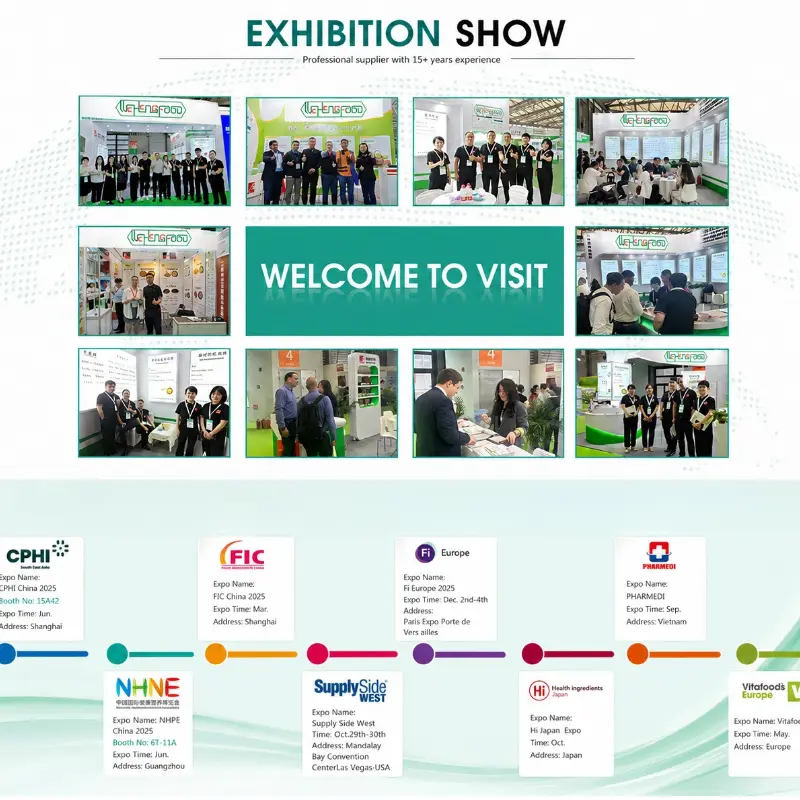
Exhibitions
FAQ
Q1: What is phycocyanin powder, and is it the same as blue spirulina powder?
Phycocyanin powder is a water-soluble blue pigment extracted from Spirulina platensis, a type of cyanobacteria. Blue spirulina powder is the common market name for the same ingredient, not whole spirulina.
Q2: What do E3, E6, E18, E25 and E40 mean?
The “E” number is the color value. A higher number means a stronger blue and higher phycocyanin content, from about 20~25% in E6 to about 92% in E40.
Q3: Which grade should I choose?
E3 and E6 suit candies, icings and soft drinks. E18 is the all-round grade for beverages and dairy. E25 gives deep blue at low dosage. E40 is for supplements and cosmetics.
Q4: Can phycocyanin replace synthetic blue dyes?
Yes. Phycocyanin color is a leading natural alternative to Brilliant Blue (FD&C Blue No. 1) in clean-label products. Please check regulations in your target market.
Q5: How stable is phycocyanin?
It works best at pH 4.5–7.5. Avoid long heating above 65 °C, strong light and oxygen, and store in a cool, dry, dark place.
Q6: Are you a China phycocyanin powder supplier?
Yes. WEHENGFOOD is a China supplier, manufacturer and exporter of phycocyanin powder in E3–E40 grades, with COA and worldwide shipping. Send your inquiry for pricing and samples.