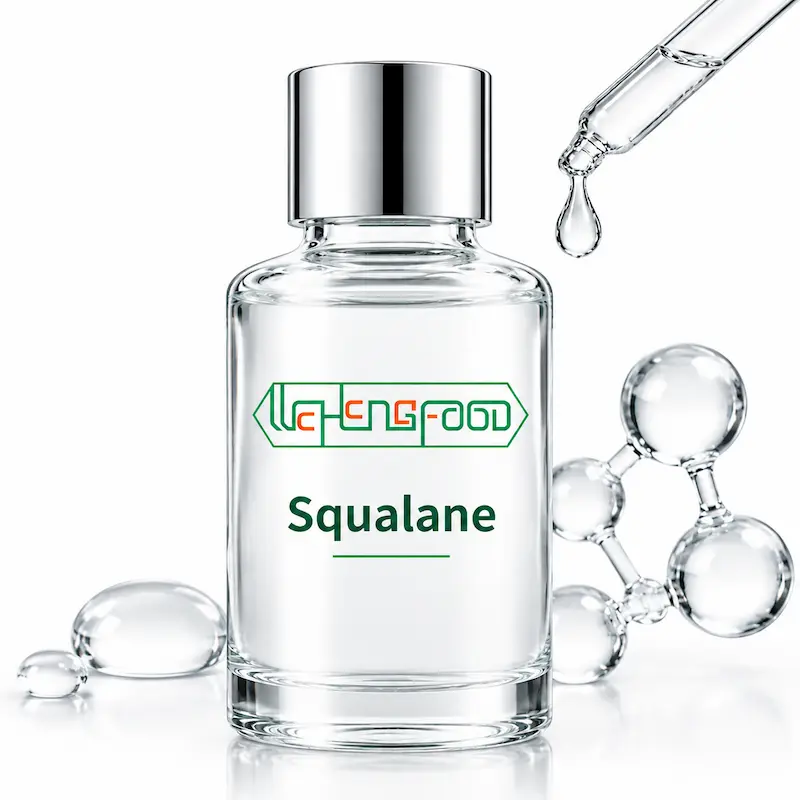
Product Introduction
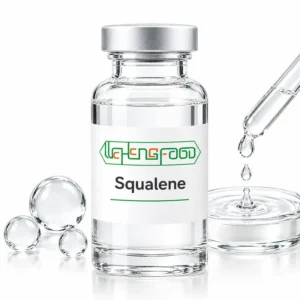
WEHENGFOOD is a China-based manufacturer, supplier, and distributor/exporter of cosmetic-grade Squalane. As a direct factory-source supplier, we offer competitive pricing on bulk and small-batch orders alike, with worldwide export capability and technical documentation (COA, MSDS, TDS) available for every shipment.
What Is Squalane?
Squalane is a saturated hydrocarbon oil produced by the hydrogenation of squalene. It is one of the lipids most structurally similar to human sebum, giving it exceptional compatibility with skin. Squalane is characterized by low polarity, neutral spreadability, and a pure, colorless, odorless profile. Due to the absence of reactive double bonds, it is highly resistant to oxidation and rancidity, and it also helps inhibit the growth of mold in formulations — making it an unusually stable emollient oil for long shelf-life cosmetic products.
Squalane ≠ Squalene
Although the names are similar, Squalane and Squalene are chemically distinct substances. Squalene (the unsaturated precursor) contains carbon-carbon double bonds and is more biologically reactive but also more prone to oxidation. Squalane, having been fully hydrogenated, loses these double bonds and therefore retains only part of squalene’s original bioactivity — but gains dramatically improved oxidative stability, shelf life, and formulation safety, which is why it is the preferred form for finished cosmetic products.
Fermentation-Derived, Non-Animal Sourcing
This Squalane originates from squalene produced by sugarcane fermentation, meaning 100% of its carbon atoms trace back to a renewable plant source rather than shark liver oil or other animal-derived material. It is subsequently hydrogenated to Squalane. This sourcing route offers:
- No animal-derived material — suitable for vegan/cruelty-free formulations
- Consistent, high-purity output unaffected by wild-catch supply fluctuations
- A stable, never-discoloring appearance over time
Certificate of Analysis
| Item | Specification | Result |
|---|---|---|
| Appearance | Clear, colourless, liquid | Conform |
| Identification | The retention time of the main peak of the solution should be consistent with the retention time of the main peak of the reference solution. | Conform |
| Purity (GC, %area) | ≥ 98.0% | 99.28% |
| Acid value | ≤ 0.2 mg KOH/g | 0.01 |
| Iodine value | ≤ 4 g I₂/100g | 0.24 |
| Saponification value | ≤ 3 mg KOH/g | 0.84 |
| Relative density | 0.800~0.815 | 0.8047 |
| Refractive index | 1.450~1.460 | 1.4505 |
| Ash | ≤ 0.5% | 0.02% |
| As* | ≤ 2 ppm | Conform |
| Pb* | ≤ 10 ppm | Conform |
| Cd* | ≤ 5 ppm | Conform |
| Hg* | ≤ 1 ppm | Conform |
| Ni* | ≤ 10 ppm | Conform |
| Total bacteria count | ≤ 100 cfu/mL | Conform |
| Mold and Yeast | ≤ 10 cfu/mL | Conform |
| Thermotolerant coliform bacteria / Staphylococcus aureus / Pseudomonas aeruginosa | Absent/mL | Not Detected |
| Conclusion | Comply with Specifications. | |
Key Functions & Benefits
Squalane is often described as a “universal” emollient because a single ingredient can deliver multiple functional benefits across several product categories, allowing formulators to simplify formulas while improving margins:
- Skin treatment: reduces the appearance of wrinkles and fine lines; brightens, moisturizes, and repairs the skin barrier
- Microbiome-friendly: promotes microbial diversity on the skin and supports microbiome stability
- Hand care / hand sanitizers: moisturizes skin and supports barrier repair in leave-on and rinse-off hand products
- Silicone-free formulations: enhances the performance and after-feel of silicone-free hair conditioners
Moisturizing Mechanism
Squalane blends readily with skin’s own natural oils, helping to lock in moisture and provide long-lasting hydration. With continued use, it can help improve the appearance of skin that is sagging, dry, flaking, rough, or dull, restoring a softer, more supple feel.
Barrier Repair Mechanism
Squalane is reported to accelerate epidermal repair and support the recovery of damaged skin cells by helping to open pores, promote microcirculation, and speed up skin cell turnover — supporting the skin’s natural barrier repair process.
Efficacy Data: Moisturizing Performance
Test method: Zebrafish embryo water-loss inhibition assay
Test concentration: 5%
| Test Group | Tail Area Shrinkage Inhibition Rate |
|---|---|
| Model control (untreated) | 0% |
| Glycerin (positive control) | 30% |
| Squalane (5%) | 99% |
Results were statistically significant (***p<0.001), demonstrating that this fermentation-derived Squalane provides a markedly stronger moisturizing/water-retention effect than the glycerin positive control under identical test conditions.
Sourcing Comparison: Why Fermentation-Derived Squalane
Squalane on the market is produced from several different sources:
- Animal/plant extraction route: olive oil, soybean oil, or shark liver oil → squalene extraction → hydrogenation → Squalane
- Sugarcane fermentation route (this product): sugarcane → fermentation → squalene → hydrogenation → Squalane
- Alternative fermentation route: sugarcane juice → fermentation → farnesene (a Squalane/hemi-squalane precursor) → multi-step chemical synthesis → Squalane/hemi-squalane
Sensory panel comparisons across synthetic squalane (hydrogenated polyisobutene), plant-derived squalane, and animal-derived (fish oil) squalane show that fermentation-derived Squalane performs strongly across all key sensory dimensions: squalane content/purity, product fluidity, spreadability, lightness/quick absorption, and moisturizing feel — combining the purity advantages of a synthetic source with the lightweight, fast-absorbing skin feel favored in modern formulations.
Why the Body Needs Topical Squalane
Squalene naturally makes up roughly 13% of human sebum (alongside wax esters/matrix ~25%, cholesterol ~2%, triglycerides ~57%, and other components ~3%). Newborns have the highest natural squalene levels in circulation (30%+), but the body’s own squalene reserves are reported to decline sharply between the ages of 30 and 40, correlating with visible skin dryness and reduced suppleness that many people notice with age. Topical Squalane is used cosmetically to help replenish this naturally declining lipid.
Applications
- “Oil-nourishes-skin” full-oil skincare systems: facial oils, serums, essences
- Skincare: face masks, toners/lotions, essences, creams
- Hair care: high-penetration moisturizing hair oils/serums, damage-repair hair masks, hair strand nourishment, gloss and smoothness enhancers — commonly used in “无硅” (silicone-free) conditioner and hair oil formulations
Recommended For
Squalane is suitable for all skin types and all age groups, including:
- Sensitive, easily irritated skin
- Thin, fragile skin with visible capillaries/redness (couperose-prone skin)
- Dry skin
- Low-tolerance skin (including acne-prone skin with impaired tolerance)
Factory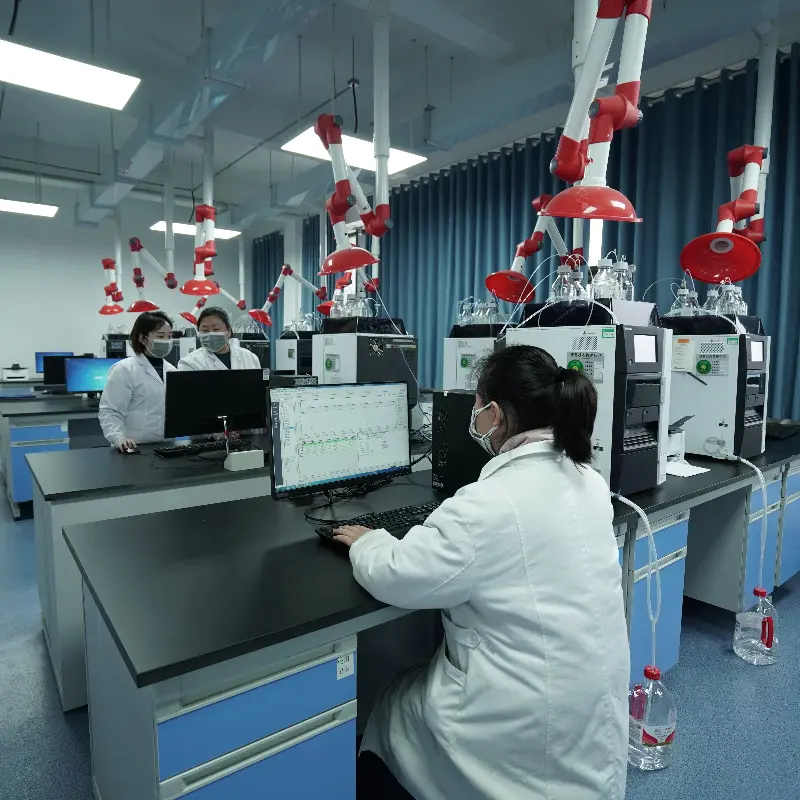 Package
 Exhibitions