Product Introduction
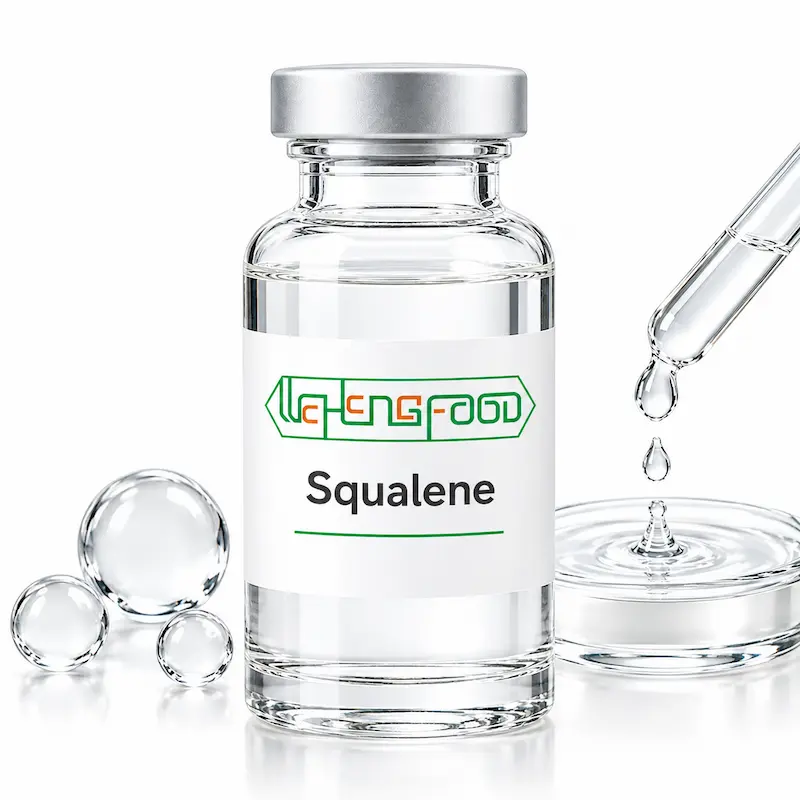
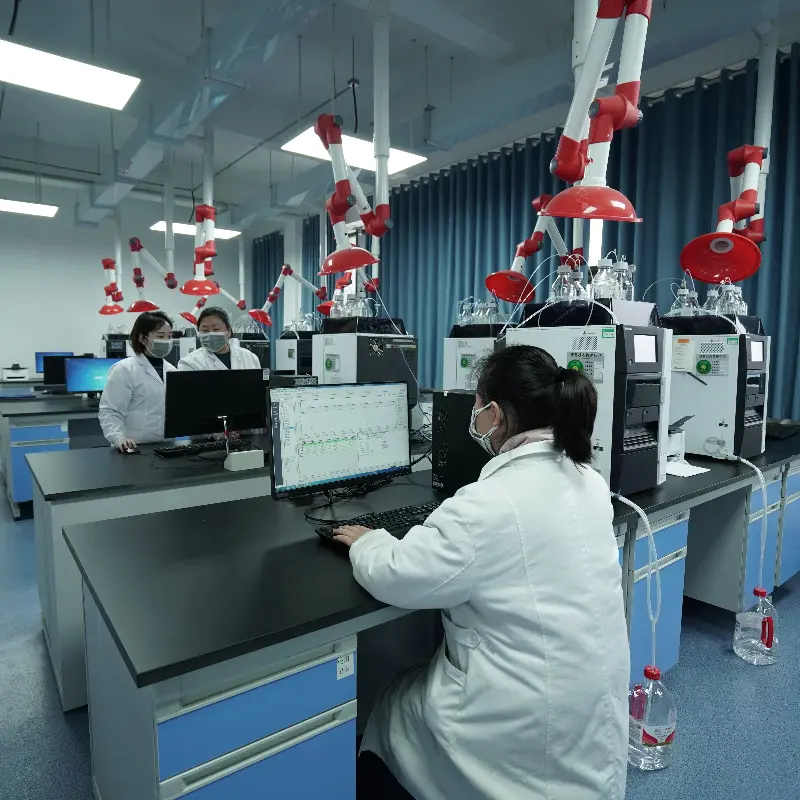
WEHENGFOOD is a China-based manufacturer, supplier, and distributor/exporter of high-purity, sugarcane-fermented Squalene for the global cosmetics and personal care industry. As a direct factory-source supplier, WEHENGFOOD ships this ingredient worldwide to skincare, color cosmetics, and hair care manufacturers, with flexible order sizes starting from small trial quantities (Min. Order: 100g) up to bulk industrial volumes.
What Is Squalene?
Squalene is a naturally occurring triterpene hydrocarbon found throughout the human body, with its highest concentration in the skin, where it makes up roughly 13% of sebum lipid composition. It plays a natural role in skin barrier function and lipid balance. Natural skin squalene levels begin to decline noticeably after age 26 and continue to decrease with age, which is one reason squalene is so widely used as a replenishing, barrier-supporting active in skincare formulations.
Because of its structural homology with the skin’s own lipids, squalene is exceptionally compatible with skin, absorbing quickly without a greasy after-feel and integrating seamlessly into the skin barrier.
Squalene vs. Squalane: Know the Difference
| Squalene | Squalane | |
|---|---|---|
| Structure | Unsaturated hydrocarbon, multiple double bonds | Saturated hydrocarbon (hydrogenated squalene) |
| Bioactivity | Very high — strong skin-repair activity | Slightly lower |
| Stability | Lower (oxidation-prone) | Excellent |
| Texture | Richer, suited to intensive repair | Light and silky, suited to daily moisturizing |
Formulators seeking maximum bioactivity and repair performance typically choose Squalene; those prioritizing long shelf-life stability and a lighter after-feel often choose Squalane.
Why Sugarcane-Fermented Squalene? The Sustainable Sourcing Advantage
Squalene has historically been sourced from three routes, each with very different quality, safety, and sustainability profiles:
| Source | Purity | Pyrogen/Endotoxin Risk | Color/Odor | Supply Reliability |
|---|---|---|---|---|
| Sugarcane fermentation (biosynthesis) | ≥98% | None | Colorless, virtually no color change over time; mild, clean odor | High — not subject to season, geography, or species availability |
| Shark liver oil (traditional) | ≥98% | High | Pale yellow, darkens over time; fishy odor | Low — regulated, restricted, and increasingly banned |
| Plant oil extraction (e.g., olive) | ~85% | Low | Yellow, more impurities, darkens over time; sour odor | Moderate — yield-limited and price-volatile |
Shark-derived squalene is in structural decline as a raw material for several converging reasons:
- Regulatory restriction: CITES Appendix II listings for basking sharks, whale sharks, and deep-sea sleeper sharks, plus an EU 2025 ban on the import and use of shark liver oil, are cutting off supply at the source.
- Contamination risk: shark liver, from an apex predator, readily bioaccumulates mercury, lead, arsenic, PCBs, and dioxins; illegal shark oil shipments have been found with mercury levels several times over the regulatory limit.
- Ethical/reputational risk: consumer and NGO pressure around shark harvesting makes this raw material increasingly unusable for reputation-conscious brands.
- Allergenicity: trace animal proteins/impurities in shark liver oil raise sensitization risk, particularly for sensitive skin.
Plant-derived squalene faces its own technical bottleneck: natural squalene content in plant sources is very low (olive oil ~0.5–2%; sugarcane or rice bran feedstock ~0.1–1%), and the co-extracted impurities (phytosterols, fatty acids, tocopherols, waxes, pigments) are chemically similar to squalene, making separation difficult. Mainstream extraction methods top out around 70–85% purity, while pushing to 90%+ purity requires costly molecular distillation or supercritical extraction, roughly doubling raw material cost.
Fermentation-derived (sugarcane-based) squalene solves both problems, delivering shark-oil-level purity (≥98%) with none of the sourcing, contamination, or ethical liabilities — which is why fermentation-based supply already accounts for over 50% of the current global squalene market.
Certificate of Analysis
Item | Specification | Result |
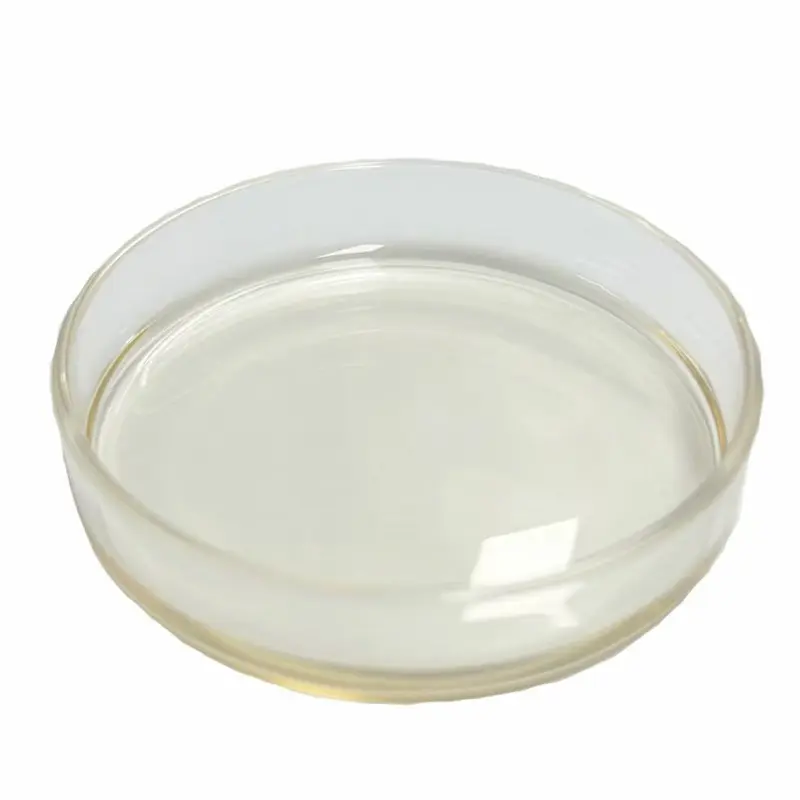
Appearance | Clear,colourless,oily liquid | Conform |
Odor | Characteristic odor of product | Conform |
Identification | The retention time of the main peak of the solution should be consistent with the retention time of the main peak of the reference solution. | Conform |
Purity | ≥ 98.0% | 99.19% |
Acid value | ≤1.0 | 0.21 |
Iodine value | 350~450,based on0.06g sample | 369.1 |
Peroxide value | ≤5.0 | 0.01 |
Saponification value | ≤5.0 | 0.01 |
As | ≤1ppm | Conform |
Pb* | ≤5ppm | Conform |
Cd | ≤1ppm | Conform |
Hg | ≤0.5ppm | Conform |
Microbiological Examination | Total bacteria count≤100 cfug | Conform |
| Mold and Yeast≤10 cfu/g | Conform |
| S.aureus/Pseudomonas aeruginosa Thermotolerant coliform bacteria;Absent/g | Conform |
Conclusion | Comply with Specifications. | |
Functions and Usages
Key Functions & Efficacy
Validated across a six-dimension anti-aging matrix: firming (supports collagen-related gene expression), anti-wrinkle (wrinkle area/AOI reduced from 7.92% to 3.52% over 4 weeks), moisturizing (steady hydration gains over 4 weeks), antioxidant (free-radical scavenging), brightening/spot-reducing (pigmentation area/AOI dropped from 14.55% to 6.40% over 4 weeks), and wrinkle repair (smooths deep lines, refines texture).
It also carries an anti-inflammatory mechanism, reducing phosphorylated P65-NF-κB signaling to suppress pro-inflammatory cytokines (TNF-α, IL-6, COX2), and has been shown to measurably improve skin lipid composition (lipidomics) after 4 weeks of use.
Formulation Performance & Stability
- Thermal stability: content and purity remain stable (~98–100%) after exposure to 100°C for up to 10 minutes, and after 60°C for 1–6 hours.
- Light stability: retains over 93% of content after 20 days of continuous light exposure.
- Long-term storage stability: content remains around 100–101.5% after 1–3 months at 4°C, indicating a well-preserved, non-degrading raw material.
- Formulated product stability: in 2% squalene emulsions, creams, and face creams, content remains stable (>95% retention) through 8 cycles of high/low temperature cycling (50°C/24h + 18°C/24h per cycle), with no change in appearance (milky white) or odor.
- Sensory profile: imparts a silky, easily-spreadable after-feel; remains lightweight and non-greasy even at high inclusion rates; shows good compatibility across emulsion types (O/W, W/O, liquid-crystal systems) without destabilizing the base formula; enhances the natural gloss/luster of finished products.
Applications
- Skincare: serums/repair essences (2–5%), moisturizing creams/lotions (1–3%), sun care/after-sun (~2%), toners/mists (0.1–1%), masks (1–3%), lip care (2–5%), and intensive ampoules/rescue masks (3–10%).
- Color Cosmetics: foundation/cushion (0.5–2%) for long-wear comfort; lipstick/lip gloss (1–3%) for supple, crack-resistant texture.
- Hair Care: hair oils/masks (2–5%) and shampoo/conditioner (0.1–1%) for damage repair and frizz control.
- Other: aftershave, body lotion, and hand cream for soothing, long-lasting moisturization.
It also functions as a general-purpose emulsifying-friendly moisturizer, antioxidant, and free-radical scavenger in traditional cosmetic bases, and as a superfatting agent in premium soaps.
Factory
Package
Exhibitions

FAQ
Q1: What is the minimum order quantity (MOQ) for Squalene, and can I buy a small trial amount?
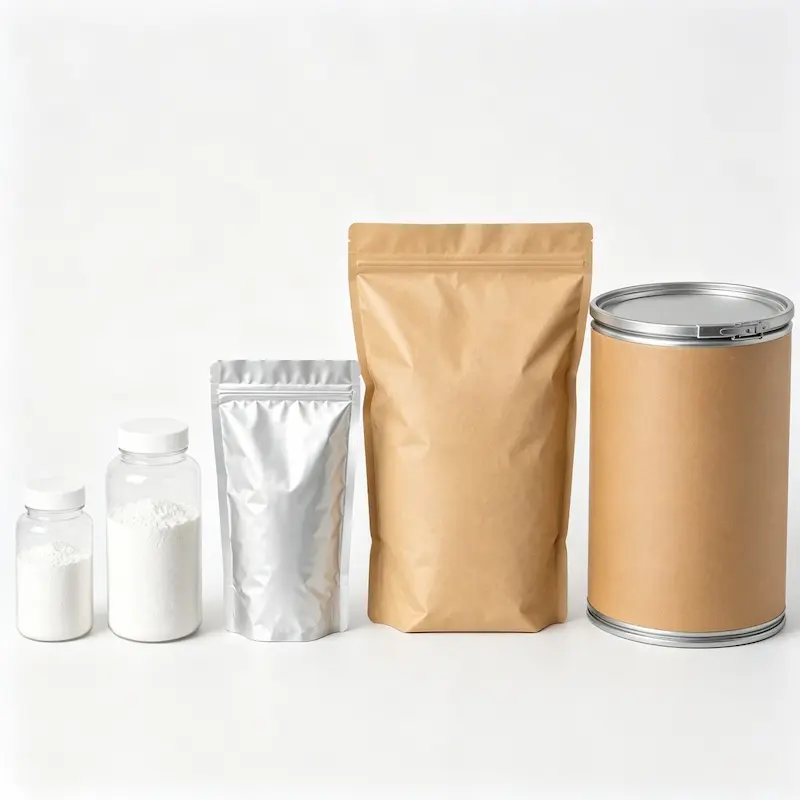
Yes. As a direct manufacturer and supplier, WEHENGFOOD accepts a minimum order of just 100 grams, making it easy for formulators, R&D labs, and small cosmetic brands to trial this Squalene before committing to bulk purchasing. Larger volumes in 1kg and 10kg packaging (and bulk quantities beyond that) are available for production-scale orders.
Q2: How is this Squalene different from shark-derived or plant-derived squalene?
This Squalene is produced through sugarcane fermentation (biosynthesis), achieving the same high purity (≥98%) as traditional shark liver-derived squalene but without any animal sourcing, heavy-metal/endotoxin contamination risk, or the increasingly severe regulatory restrictions on shark oil. Compared with plant-extracted squalene (typically only 70–85% purity, with more impurities and a shorter color/odor stability window), this fermentation-derived version offers markedly higher purity and better long-term stability.
Q3: What is the recommended usage level in cosmetic formulations?
The general recommended usage range is 0.1%–10.0%, depending on the product type and desired intensity of effect — for example, 0.1–1% in toners and mists, 1–3% in creams/masks, and up to 3–10% in intensive repair ampoules or rescue masks.
Q4: Is this Squalene stable in finished cosmetic formulations?
Yes. It remains chemically stable at 100°C for up to 10 minutes and at 60°C for several hours, and formulated emulsions/creams containing 2% squalene show minimal content loss (under 5%) after 8 cycles of high/low temperature stress testing, with no change in appearance or odor — supporting reliable shelf-life performance in real-world products.
Q5: What key skin benefits does this Squalene provide?
It is backed by a six-dimension efficacy profile: firming, anti-wrinkle, moisturizing, antioxidant, brightening/spot-reducing, and wrinkle-repair benefits, supported by in-vivo testing. It also has a documented anti-inflammatory mechanism, helping calm and protect stressed or sensitive skin.
Q6: What product types is this Squalene suitable for?
It is broadly compatible across skincare (serums, creams, masks, sun care, lip care, toners), color cosmetics (foundation, lipstick), and hair care (hair oils, masks, shampoo/conditioner), as well as aftershave and body/hand care products, thanks to its light texture, high compatibility with other ingredients, and non-greasy after-feel.