Product Introduction
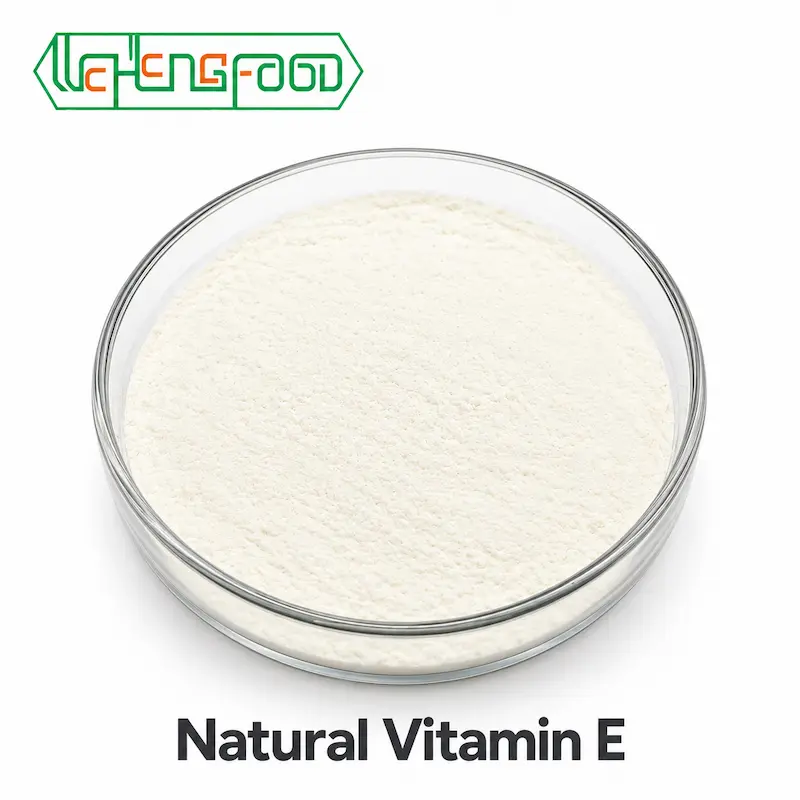
Natural vitamin E is a fat-soluble nutrient and antioxidant extracted and refined from plant oils and their by-products. Vitamin E is not a single molecule: the name covers eight related compounds, four tocopherols (alpha, beta, gamma, delta) and four tocotrienols. Among them, D-alpha tocopherol is the most biologically active form and the one most people mean when they ask “what is vitamin E”.
The “D-” prefix marks the natural stereoisomer found in nature. Synthetic vitamin E is written “DL-” and is a mixture of eight stereoisomers, so it delivers less activity per milligram. Because the body preferentially retains the natural form, brands that sell a vitamin E supplement or a clean-label food often specify natural vitamin E.
WEHENGFOOD is a China supplier and exporter of natural vitamin E. We offer the full range in bulk: mixed tocopherols, D-alpha tocopherol oil, D-alpha tocopheryl acetate (vitamin E acetate), tocopheryl acid succinate, nano water-dispersible powders and tocotrienol powders, so one source can cover supplements, foods, beverages and feed premixes.
Natural Vitamin E Forms and Specifications
The right form depends on the finished product: oils suit softgels and antioxidant blends, powders suit tablets and dry mixes, and nano water-dispersible powders suit clear drinks. Activity is expressed in IU per gram; for natural vitamin E, 1 IU equals 0.67 mg of D-alpha tocopherol.
Oil forms (food and nutraceutical)
Product | Specification | Typical application |
|---|---|---|
Mixed Tocopherols | 50%, 70%, 90%, 95% | Antioxidant for food and feed |
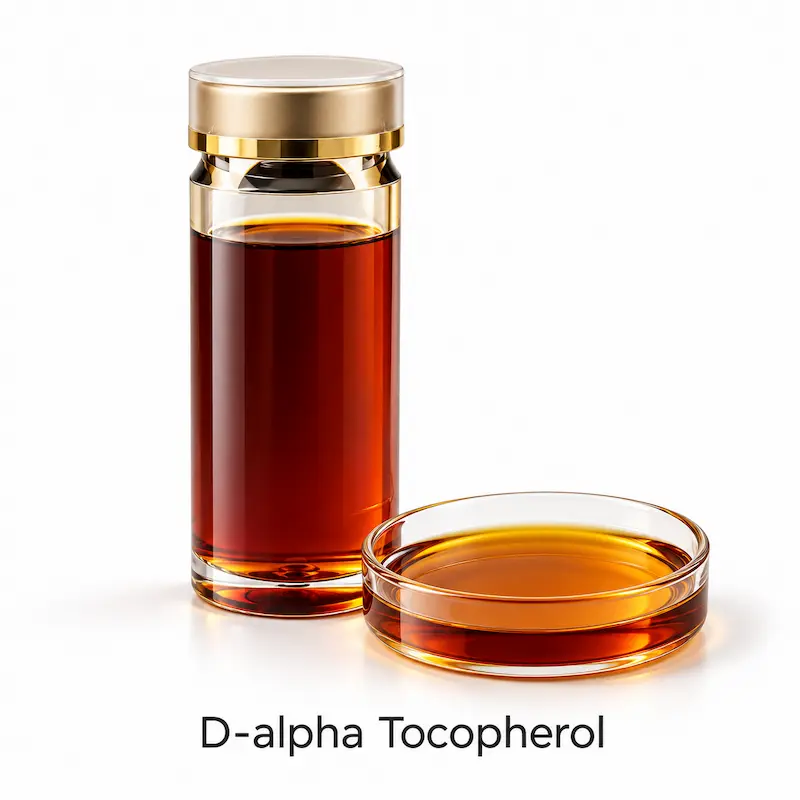
D-alpha Tocopherol | 1000 IU (67.1%); up to ~1430 IU (96%) | Softgels, spray-dried powders |
D-alpha Tocopheryl Acetate | 1000 IU (73.5%); up to ~1360 IU (96%) | Softgels, spray-dried powders |
Powder forms (food and nutraceutical)
Product | Specification | Typical application |
|---|---|---|
D-alpha Tocopheryl Acid Succinate Powder | 1210 IU, 1185 IU | Tablets, nutraceuticals |
D-alpha Tocopheryl Acetate Powder | 700 IU | Tablets, premix |
Mixed Tocopherols Powder | 30% | Tablets, premix |
D-alpha Tocopherol CWS Powder (Nano) | 200 IU (13.4%) | Water-soluble beverages |
Tocotrienol Powders | 20%, 30% | Hard capsules, premix |
Powder forms (feed)
Product | Specification | Typical application |
|---|---|---|
D-alpha Tocopheryl Acetate Powder (Feed Grade) | 340 IU (25%), 405 IU (30%), 540 IU (40%) | Swine, poultry, horses, premix |
D-alpha Tocopherol CWS Powder (Nano, Horse) | 200 IU (13.4%) | Water-soluble powder for horses |
Common pairings: vitamin E acetate is the stable, long-shelf-life choice for supplements, while free D-alpha tocopherol and mixed tocopherols are chosen when the ingredient itself must act as an antioxidant.
Certificate of Analysis
Inspection Item | Quality Requirements | Inspection Result | Test Method | Decision |
Description | White to light yellow free-flowing powder, no foreign matter and no odor. | Complies | Visual | Conforms |
Identification | The retention time of the principal peak conforms to that in the reference solution. | Complies | HPLC | Conforms |
Particle Size | 100% pass through sieve 40 mesh | 100% | USP <786> | Conforms |
Content of Total Tocopherols Assay | [d-(α + β + γ + δ)] ≥ 30.0% | 31.8% | HPLC | Conforms |
Loss on Drying | ≤ 5.0% | 1.3% | USP <731>; | Conforms |
Arsenic (as As) | ≤ 2.00 ppm | < 0.01 ppm | USP <211>; | Conforms |
Lead (as Pb) | ≤ 2.00 ppm | < 0.05 ppm | USP <251>; | Conforms |
Total Aerobic Microbial Count | ≤ 1000 cfu/g | 5 cfu/g | USP <2021>; | Conforms |
Total Moulds and Yeasts Count | ≤ 100 cfu/g | < 10 cfu/g | USP <2021>; | Conforms |
Enterobacterial | ≤ 10 cfu/g | < 10 cfu/g | USP <2021>; | Conforms |
Conclusion | The product is inspected in accordance with the stated standard; the results conform to the requirements and the product is judged to be qualified. |
Remarks | Storage: Store at ambient temperature. |
Functions of Vitamin E
The main function of vitamin E is to protect fats from oxidation. It donates a hydrogen atom to free radicals, which stops the chain reaction that damages cell membranes in the body and turns oils rancid in a product. That single mechanism explains most of its uses.
Antioxidant support for the body
Vitamin E sits in cell membranes and helps shield polyunsaturated fatty acids from oxidative stress. It also works with other antioxidants: when vitamin E neutralises a free radical, vitamin C and E together can regenerate it, which is why the two are often combined in one formula.
Daily nutrition and preventing deficiency
Vitamin E is an essential nutrient the body cannot make. A balanced diet usually supplies enough, but low-fat diets or fat-absorption problems can lead to vitamin E deficiency. A vitamin E supplement in softgel, tablet or fortified-food form is a common way to close the gap. Typical retail strengths are vitamin E 400 IU and vitamin E 1000 IU per capsule, and the upper intake level for adults is 1,000 mg of alpha-tocopherol per day, so formulators should keep dosing within local regulations.
Skin care benefits
In cosmetics, vitamin E for skin acts as an antioxidant and conditioning agent. It helps protect skin lipids, supports moisture retention and keeps oils in the formula stable. This is why it appears in a vitamin E serum, vitamin E cream, vitamin E lotion and vitamin E oil for face, hair and lips.
Natural preservation of food, oils and feed
Mixed tocopherols slow oxidation in edible oils, fried snacks, meat products, infant formula and animal feed. They extend shelf life and help manufacturers move away from synthetic antioxidants toward a clean-label ingredient list.
Applications and Uses
Foods such as sunflower seeds, almonds, hazelnuts and vegetable oils are the traditional vitamin E food sources. When a diet or a product needs more than these provide, manufacturers add natural vitamin E as an ingredient. Typical uses by industry:
- Dietary supplements: softgels with D-alpha tocopherol or tocopheryl acetate oil; tablets with tocopheryl acid succinate or acetate powder; hard capsules with tocotrienol powder; vitamin E capsule and vitamin E tablet formats.
- Functional food and beverages: nano water-dispersible D-alpha tocopherol CWS powder blends into clear drinks, enhanced waters and powdered drink mixes without cloudiness or oil rings.
- Food preservation: mixed tocopherols (50%-95%) protect edible oils, snacks, baked goods, meat and fat-rich ingredients from rancidity.
- Fortification and premixes: tocopheryl acetate and mixed tocopherols powders for vitamin premixes, infant and nutritional products.
- Animal nutrition: feed-grade tocopheryl acetate powder (25%, 30%, 40%) for swine, poultry and horses, plus a nano water-soluble powder designed for horses.
- Personal care: the same natural tocopherol and acetate oils are used as antioxidant and skin-conditioning ingredients in serums, creams, lotions and hair-care oils.
Safety note: Vitamin E is well tolerated at recommended levels. Very high supplemental intake can raise the risk of bleeding and may cause vitamin E side effects, so finished products should follow the dose limits set by the target market.
Natural vs Synthetic Vitamin E, and Why Buy from WEHENGFOOD
| Natural vitamin E | Synthetic vitamin E |
|---|---|---|
Label name | D-alpha tocopherol / D-alpha tocopheryl acetate | DL-alpha tocopherol / DL-alpha tocopheryl acetate |
Structure | One stereoisomer, identical to the form in nature | Mixture of eight stereoisomers |
Activity | 1 IU = 0.67 mg | 1 IU = 0.9 mg (acetate form) |
Positioning | Clean-label, plant-derived | Lower-cost option |
As a natural vitamin E manufacturer, supplier and exporter in China, WEHENGFOOD supplies oil, powder, nano water-soluble and feed-grade forms, with customised IU strengths for supplement, food, beverage and feed brands. Tell us your target dosage and format, and we will recommend the matching grade.
Factory
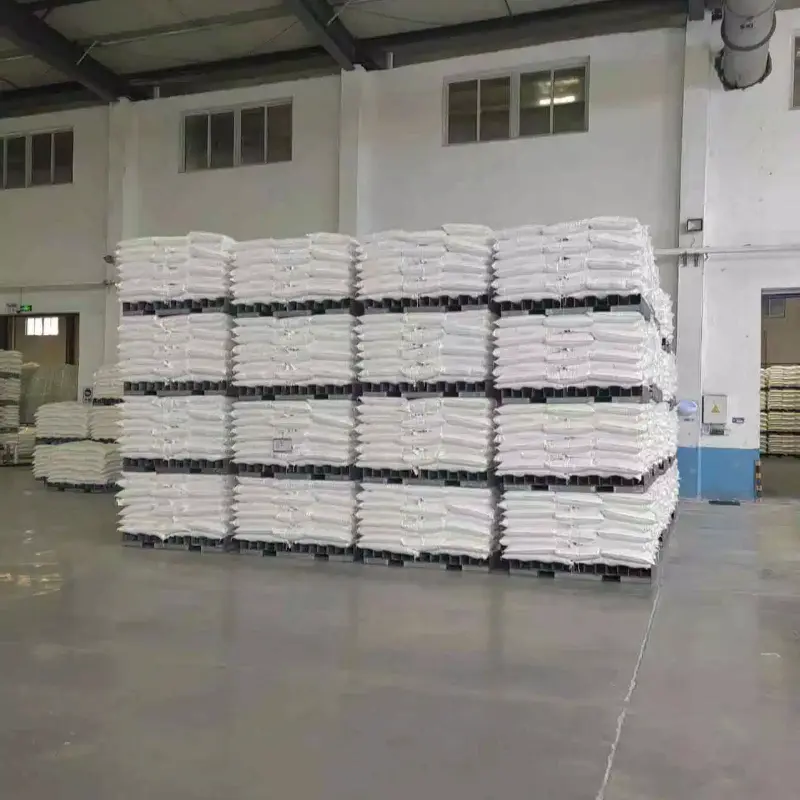

Package
Exhibitions

FAQ
Q1: What is natural vitamin E, and how is it different from synthetic?
Natural vitamin E (D-alpha tocopherol) is a single stereoisomer refined from plant oils. Synthetic DL-alpha tocopherol is a mixture of eight isomers with lower activity, so natural vitamin E suits clean-label supplements and foods.
Q2: What forms of natural vitamin E do you supply?
Oils: mixed tocopherols (50%-95%), D-alpha tocopherol (1000-1430 IU), tocopheryl acetate (1000-1360 IU). Powders: tocopheryl succinate, acetate, mixed tocopherols, nano water-soluble CWS and tocotrienols. Feed-grade acetate powder is also available.
Q3: What is vitamin E used for?
In supplements, it provides antioxidant nutrition in softgels, tablets and capsules. In food, oils and feed, mixed tocopherols slow rancidity and extend shelf life. It is also used in skin-care serums, creams and lotions.
Q4: Which form should I choose?
Softgels: D-alpha tocopherol or acetate oil. Tablets: succinate or acetate powder. Clear beverages: nano CWS powder. Food and oil preservation: mixed tocopherols. Send us your target dosage and application and we will recommend a grade.
Q5: Is vitamin E safe?
Yes, at recommended levels. The adult upper limit is 1,000 mg of alpha-tocopherol per day. Very high doses may increase bleeding risk, so follow the dose limits of your target market.
Q6: Are you a natural vitamin E supplier in China?
Yes. WEHENGFOOD is a China supplier and exporter of natural vitamin E in oil, powder, nano water-soluble and feed-grade forms, with customisable IU strengths.