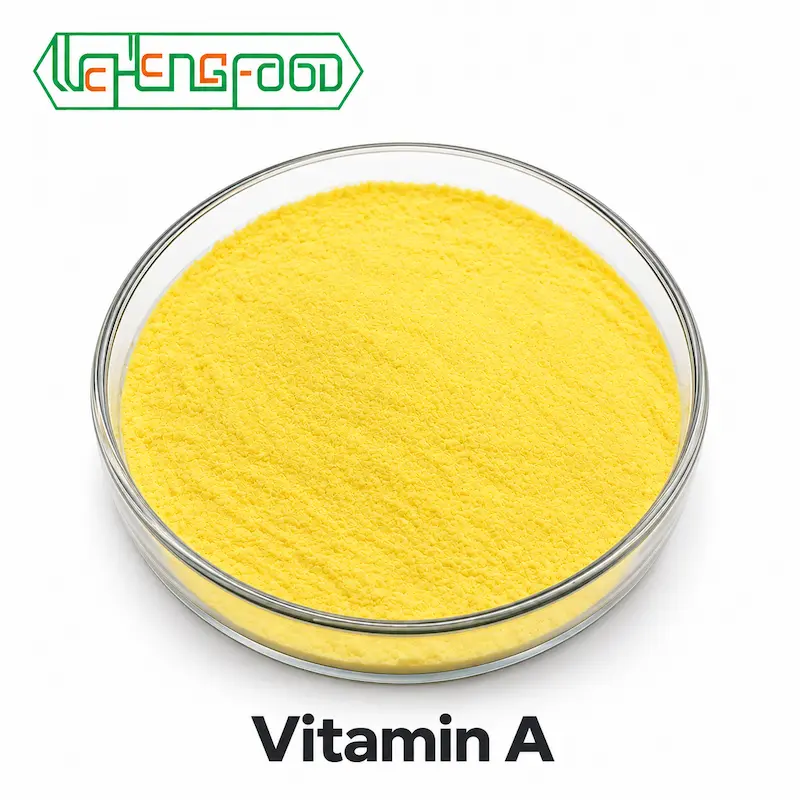
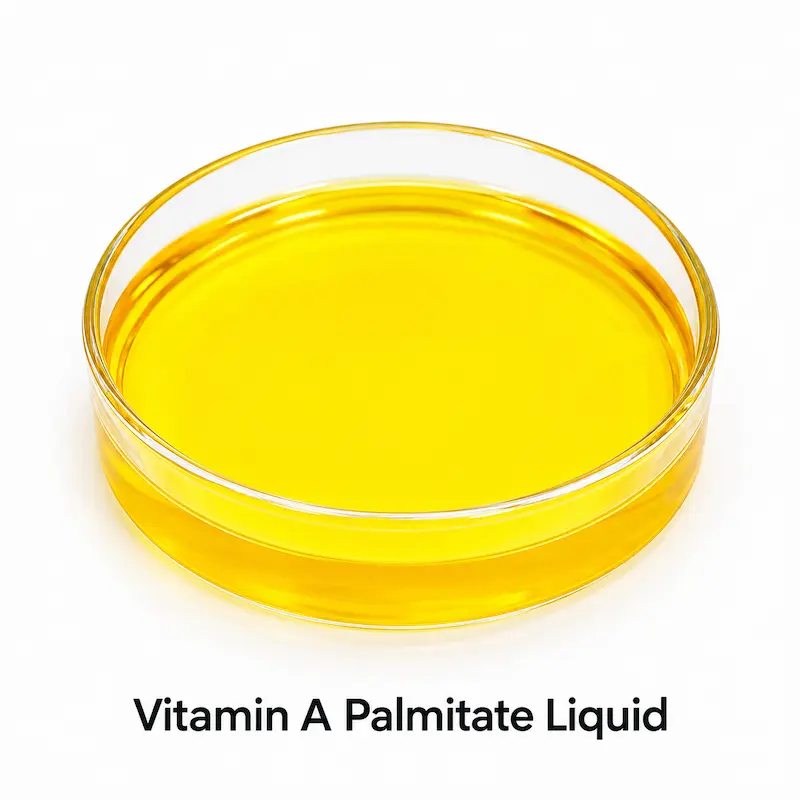
Product Introduction
Vitamin A is an essential fat-soluble vitamin. The human body cannot make enough of it, so it has to come from food, fortified products or vitamin A supplements. In its active form, vitamin A is retinol. The body also converts retinol into retinal and retinoic acid, which carry out most of its biological work.
For commercial use, retinol is supplied as stable esters: vitamin A acetate and vitamin A palmitate (also searched as retinol palmitate). Free retinol oxidizes easily, and the ester forms are much more stable in storage and processing.
As a China supplier, manufacturer and exporter, WEHENGFOOD supplies both esters in oil and powder forms, in a range of potencies.
Product Range and Specifications
| Product | Form | Specification |
|---|---|---|
| Vitamin A Acetate Oil | Oil | 1,000,000 IU/g |
| Vitamin A Acetate Powder | Powder | 325,000 IU/g · 500,000 IU/g |
| Vitamin A Palmitate Oil | Oil | 1,000,000 IU/g · 1,700,000 IU/g |
| Vitamin A Palmitate Powder | Powder | 250,000 IU/g · 500,000 IU/g |
Oil grades are concentrated and easy to blend into oil-based systems. Typical uses are vitamin A oil for softgels, vitamin A drops, edible oils and cosmetic oil phases.
Powder grades are protected by a carrier matrix, which makes them easier to dose and blend. They suit dry premixes, tablets and capsules, fortified flour and milk powder.
Custom potency and packaging are available on request.
Raw Material Source and Production Advantage
Natural sources of vitamin A include fish liver oil, such as cod liver oil, and plant-based beta carotene, which the body converts to retinol. Natural extraction depends on harvest and catch, so potency and supply can vary from batch to batch.
Certificate of Analysis
Item of Analysis | Specification | Results |
Appearance | Light yellow crystalline powder | Conform |
Solubility | Can be dispersed in water | Conform |
Loss on Drying | ≤ 2.0% | 0.8% |
Active Matter Content | 310000–330000 | Conform |
Lead (mg/kg) | ≤ 10.0 | Conform |
Arsenic (mg/kg) | ≤ 2.0 | Conform |
Cadmium (mg/kg) | ≤ 5.0 | Conform |
Mercury (mg/kg) | ≤ 1.0 | Conform |
Total Plate Count (CFU/g) | < 500 | < 100 |
Total Yeast & Mold (CFU/g) | < 100 | < 10 |
Escherichia coli | ND | ND |
Staphylococcus aureus | ND | ND |
Pseudomonas aeruginosa | ND | ND |
Storage: Store in tightly closed, light-resistant containers. Avoid exposure to direct sunlight, moisture, and excessive heat.
Shelf Life: 24 months when stored under the conditions specified above and kept in the original packaging.
Functions of Vitamin A
The main functions of vitamin A in food, nutrition and personal care are:
- Vision support. Retinal is a component of the visual pigment in the eye, which makes vitamin A important for normal vision, especially in low light.
- Immune function. Vitamin A helps maintain the skin and mucosal barriers that form the body’s first line of defence.
- Growth and cell differentiation. It supports normal cell development, bone growth and reproductive health.
- Skin health. In cosmetics, vitamin A and its esters are widely used for vitamin A for skin products such as creams and serums.
- Prevention of vitamin A deficiency. Fortifying staple foods is one of the most common ways to address deficiency of vitamin A, a public-health concern in many regions.
Applications of Vitamin A
Dietary supplements. Vitamin A palmitate and acetate go into softgels, capsules, tablets, multivitamins and vitamin A drops for infants and children. Oil grades suit softgels and drops, and powder grades suit tablets and capsules.
Food fortification. Vitamin A is added to cooking oil, margarine, milk and dairy, infant formula, flour, rice and breakfast cereals. Palmitate is the usual choice for oils and fats, and powder grades for dry products.
Animal feed. Vitamin A acetate is widely used in premixes for poultry, swine and aquaculture feed to support growth, vision and reproduction.
Cosmetics and skincare. Retinyl palmitate is a mild retinol derivative used in vitamin A cream, vitamin A serum and anti-aging formulas.
Pharmaceutical use. Vitamin A is used in nutritional preparations and in oral and topical products.
Dosage and Regulatory Note
Vitamin A is measured in IU. As a reference, 1 IU equals 0.3 µg retinol, 0.344 µg retinyl acetate, or 0.55 µg retinyl palmitate.
Because vitamin A is fat-soluble, the body stores the excess. Too much vitamin A over a long period can cause vitamin A toxicity (hypervitaminosis A), and high intakes are also a concern during pregnancy. We recommend that formulators follow the local regulatory limits for vitamin A in supplements and fortified foods in their target market. Our technical team can help with dosage calculation and overage design.
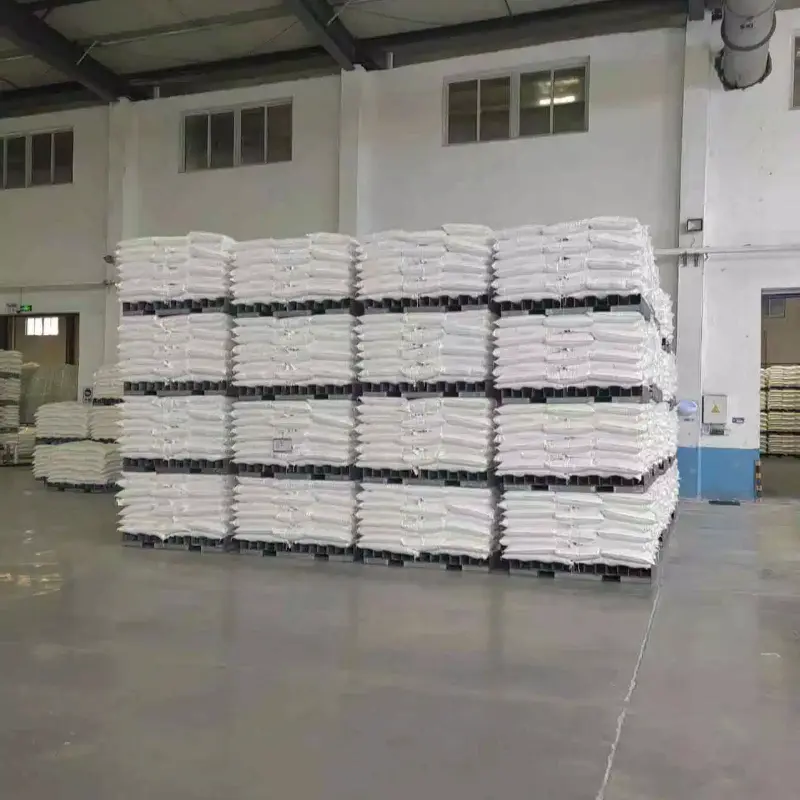
Factory

Package
Exhibitions

FAQ
Q1: What is the difference between vitamin A acetate and vitamin A palmitate?
Both are stable esters of vitamin A (retinol) with the same nutritional function. Acetate is more common in supplements and animal feed. Palmitate (retinyl palmitate) is preferred for edible oils, dairy, infant formula and skincare.
Q2: Should I choose vitamin A oil or powder?
Vitamin A oil (1,000,000-1,700,000 IU/g) suits softgels, vitamin A drops, edible oils and cosmetic oil phases. Vitamin A powder (250,000-500,000 IU/g) is easier to blend into dry premixes, tablets, capsules and fortified flour.
Q3: What is vitamin A used for?
It supports vision, immune function and skin health, and helps prevent vitamin A deficiency. Main uses are dietary supplements, food fortification, animal feed and cosmetics.
Q4: What is the source of your vitamin A?
Natural sources of vitamin A include cod liver oil and beta carotene. Ours is made by synthesis from beta carotene-type intermediates, which gives high purity, consistent IU potency and stable bulk supply.
Q5: How much vitamin A is safe?
Potency is measured in IU (1 IU = 0.3 µg retinol). Too much vitamin A over a long period can cause toxicity, and high intakes are a concern in pregnancy. Please follow the daily limits of your target market. We provide a COA and dosage support.
Q6: What is the minimum order quantity (MOQ) for vitamin A?
The Min. Order for vitamin A (acetate and palmitate, oil and powder) is 25 KGS.