Product Introduction
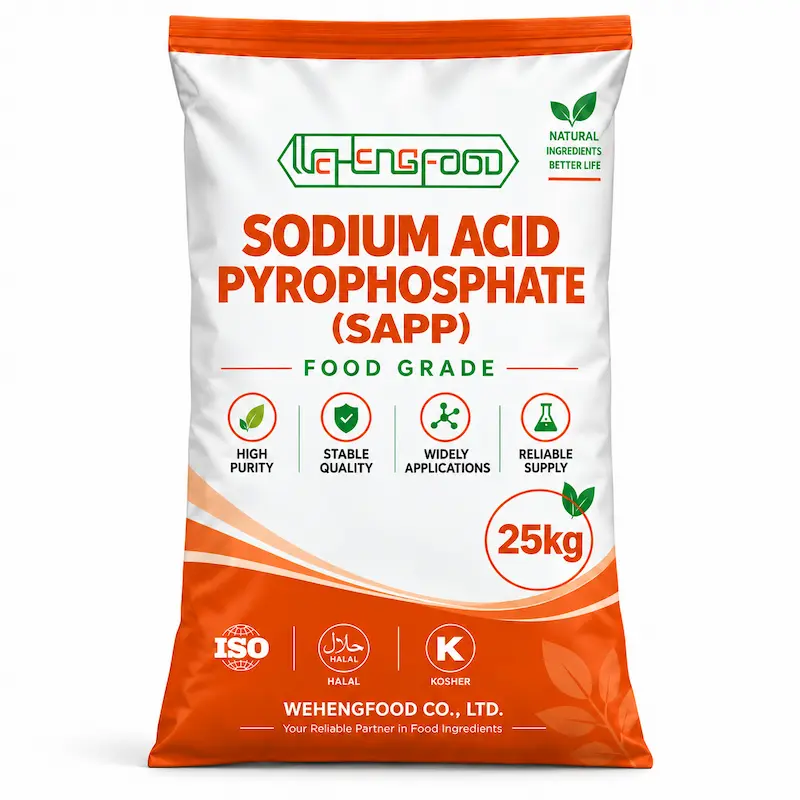
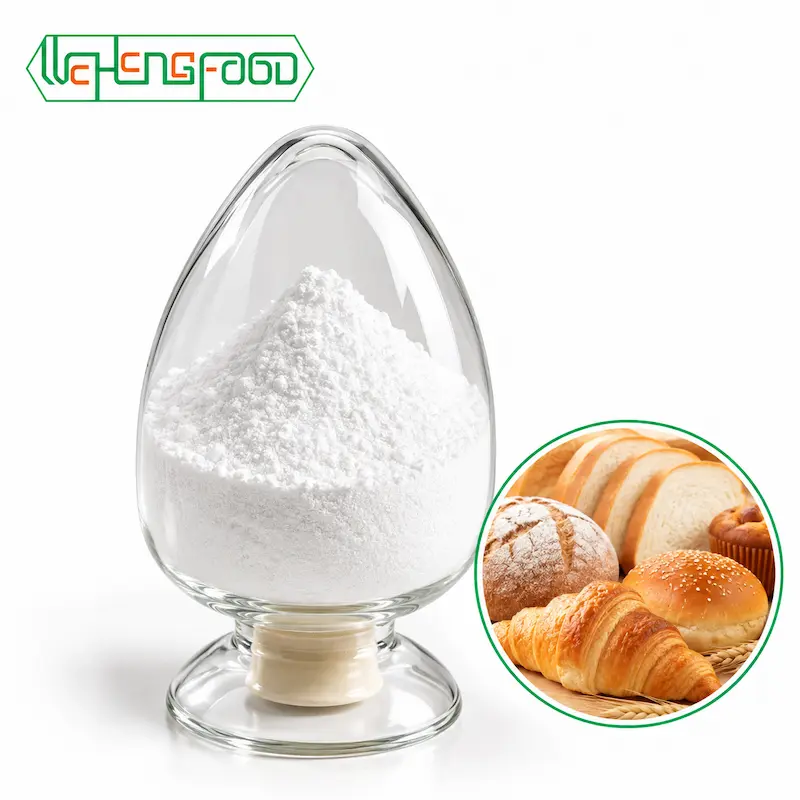
Sodium Acid Pyrophosphate (SAPP), also labeled E450 or E450(i) on ingredient lists, is a white, free-flowing, food grade powder and one of the most widely used leavening acids in the baking industry. When paired with sodium bicarbonate (baking soda) and moisture, it releases carbon dioxide in a controlled way, giving doughs and batters their rise, soft crumb and even cell structure. This is why SAPP is a core ingredient in commercial baking powder, self-rising flour and ready-to-bake mixes.
As an experienced China SAPP manufacturer, supplier and exporter, WEHENGFOOD supplies food grade Sodium Acid Pyrophosphate in ROR 10, 15, 22, 28 and 40. Among them, SAPP 28 (ROR 28) is the most common and best-selling grade. Its balanced, heat-activated release suits the widest range of recipes, from baking powder and cake mixes to cookies and frozen dough, which is why most bakeries and premix makers start with it. Whether you are blending your own baking powder with monocalcium phosphate and sodium bicarbonate, or developing a cake mix or noodle formula, our bulk SAPP delivers consistent quality, stable performance and reliable export supply.
Certificate of Analysis
Item | Specification | Result |
Assay | ≥95.0% | 98.50% |
P₂O₅ | 63.0-64.5% | 64.2% |
Loss on Drying | ≤0.5% | 0.1% |
pH | 3.7-5.0 | 3.9 |
Water Insoluble Matter | ≤0.50% | 0.1% |
Bulk Density | 800-1000 g/L | 900 g/L |
ROR | 28 | 28 |
Thru 100 Mesh | ≥90% | 98% |
As | ≤2 ppm | Conforms |
Pb | ≤2 ppm | Conforms |
Mercury | ≤1 ppm | Conforms |
Fluoride | ≤10 ppm | Conforms |
Key Functions of SAPP
- Controlled leavening acid: reacts with sodium bicarbonate to release CO₂ at the right stage of baking.
- Better volume and texture: supports uniform expansion, a fine crumb and a tender bite.
- Flexible release speed: multiple ROR grades for fast, medium or slow gas release.
- pH adjustment: acts as an acidulant and buffer in dough and batter systems.
- Process stability: the delayed action of slow grades gives manufacturers more tolerance in mixing, holding and freezing steps.
- Supporting roles in other foods: pyrophosphates such as SAPP are also used as quality improvers, for example to help prevent discoloration in processed potato products and to aid water retention in some meat and seafood systems (subject to local regulations and dosage limits).
Applications of SAPP
SAPP is a go-to leavening acid across the bakery and convenience-food industries:
- Cookies and biscuits: controlled spread and a crisp-tender texture
- Cakes and cupcakes: even rise and fine crumb
- Self-rising flour and cake mixes: stable performance during storage and at the point of use
- Baking powder (double-acting blends): often combined with monocalcium phosphate and sodium bicarbonate, with a carrier such as starch or dextrose to standardize strength
- Frozen dough and frozen noodle products: delayed gas release to survive freezing and thawing
- Pastries and croissant-style doughs: reliable lift and layer structure
- Waffles, pancakes and muffins: consistent rise and browning
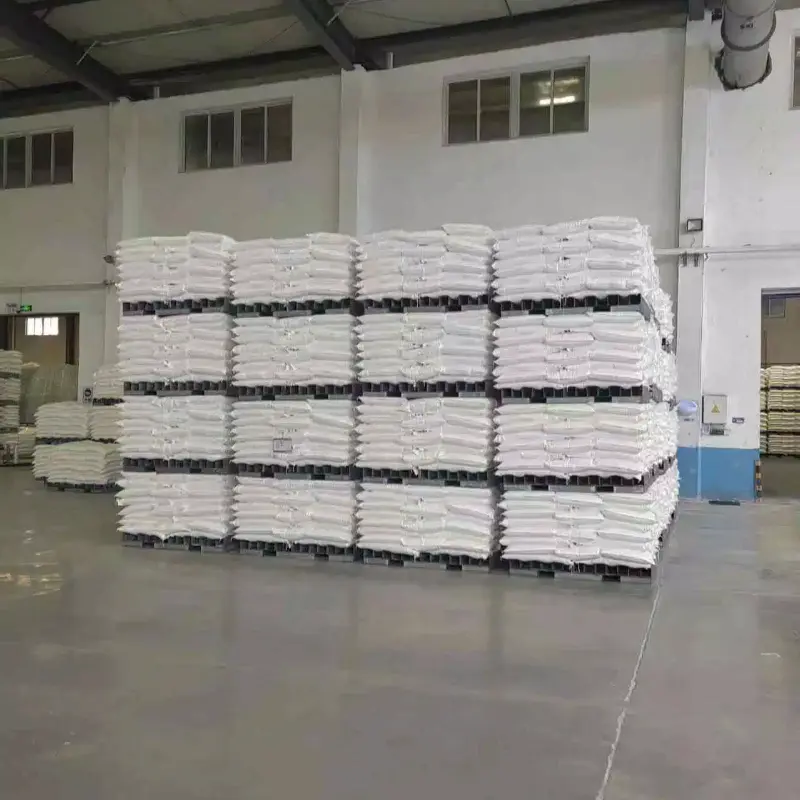
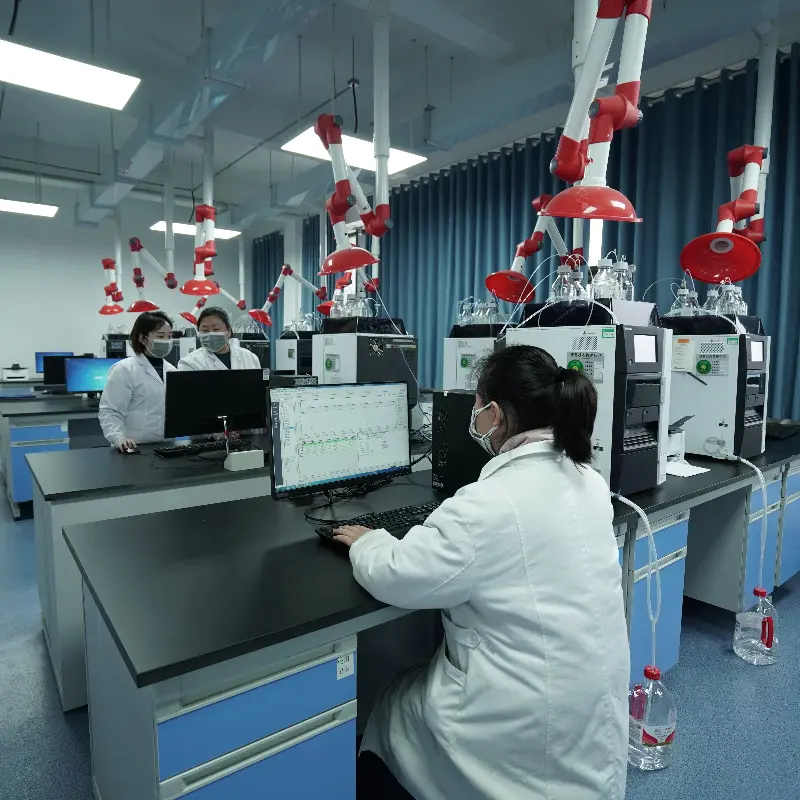
Factory
Package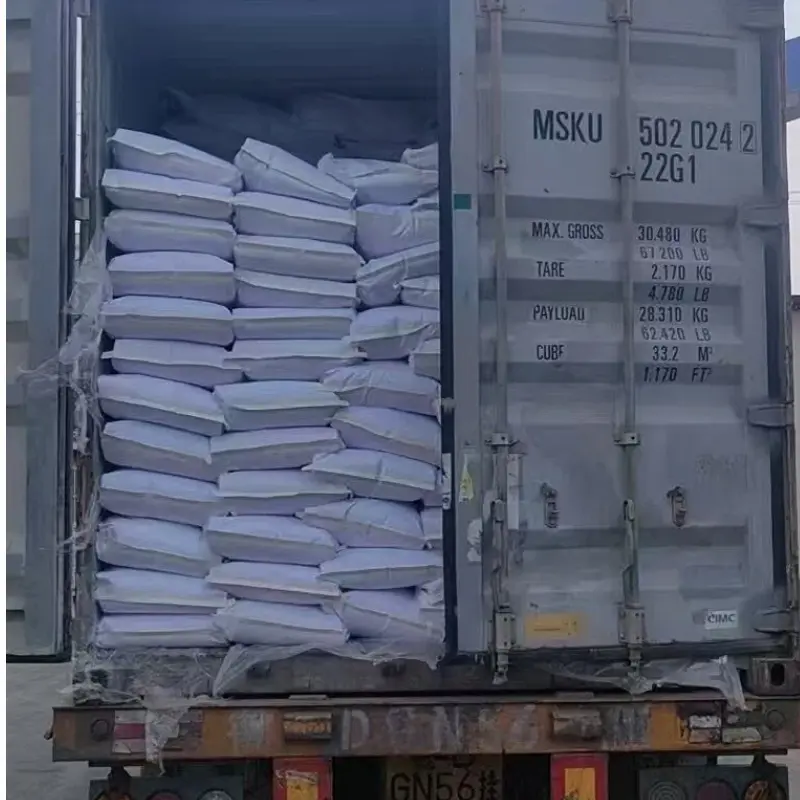
Exhibitions

FAQ
Q1: What is Sodium Acid Pyrophosphate (SAPP) and what is E450?
Sodium Acid Pyrophosphate (SAPP) is a food grade leavening acid with the chemical formula Na₂H₂P₂O₇. It is listed as E450(i) in the E-number system. In baking, it reacts with sodium bicarbonate to produce carbon dioxide, which makes doughs and batters rise.
Q2: What is SAPP used for in food?
SAPP is mainly used as a leavening acid in baking powder, cakes, cookies, pastries, waffles, muffins, self-rising flour, cake mixes and frozen dough or noodle products. It is also used in some potato and meat or seafood processing applications as a quality improver, within legal limits.
Q3: What does ROR mean, and which SAPP grade should I choose?
ROR stands for Rate of Reaction, which describes how fast the acid reacts with sodium bicarbonate. Lower ROR grades act faster, which suits quick-bake batters, while higher ROR grades act slower, which suits frozen, refrigerated and oven-activated products. We supply ROR 10, 15, 22, 28 and 40, and can recommend a grade based on your recipe.
Q4: What is the difference between SAPP and monocalcium phosphate in baking powder?
Both are leavening acids, but they release gas at different times. Monocalcium phosphate (MCP) generally reacts faster, during mixing, while SAPP reacts more slowly and is more heat-activated. Many double-acting baking powders blend the two to get a rise in both the bowl and the oven.
Q5: Is “sodium acid phosphate” the same as SAPP?
Not always. “Sodium acid phosphate” is sometimes used as a casual name for SAPP, but the term can also refer to monosodium phosphate. To avoid confusion, always confirm the product name and CAS No. 7758-16-9 for Sodium Acid Pyrophosphate.
Q6: Can I buy bulk food grade SAPP directly from a China manufacturer?
Yes. WEHENGFOOD is a China supplier, manufacturer and exporter of food grade SAPP in multiple ROR grades. Contact us at nancy@wehengfood.com or via WhatsApp for specifications, samples, pricing and minimum order quantity.